
Muscle Fit and Athletic Fit T-Shirts: Pattern Changes That Matter
How muscle fit and athletic fit T-shirts differ from a classic block: chest-to-waist drop, sleeve cap and bicep, hem sweep, stretch fabric and fit testing.
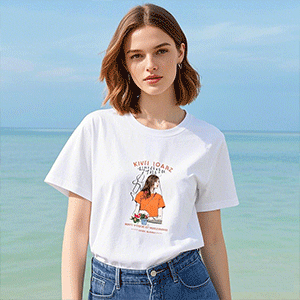
Answer first: A muscle fit or athletic fit T-shirt is not a classic T-shirt one size smaller. It is a different pattern. Five changes matter: a larger difference between chest and waist width (the chest-to-waist drop), a narrower sleeve with a shaped sleeve cap that sits close to the bicep, a shoulder that matches the wearer’s actual shoulder point, a hem sweep reduced so the body tapers rather than flares, and a fabric with enough stretch and recovery to be close-fitting without restricting movement. “Muscle fit” usually means the closest version, cut to show the chest, shoulders and arms; “athletic fit” usually means room through the chest and shoulders with a tapered waist. Neither term has a standard definition, so the brand must define both in the specification with measurements and fabric data, then prove them in a fit session with real wearers.
Our recommendations below are pattern-making practice, not figures from a published standard. Finetex lists fitted, classic, oversized, boxy, crop and long-body blocks on its T-shirt manufacturing page, with sizes from XS to 4XL and custom grading.
Chest-to-waist drop
The chest-to-waist drop is the difference between the chest width and the waist width of the garment. On a classic block the sides fall almost straight. On an athletic block the waist is narrower than the chest; on a muscle block the difference is larger again.
How to set it
- Start from your customer’s body, not a competitor’s garment. Body measurement tables such as ASTM D6240/D6240M, which covers adult males with chest sizes 34 to 52 in short, regular and tall, give a reference for chest and waist relationships. A gym-focused customer base may differ from a general population table, so treat any table as a starting point.
- Set the ease separately at chest and waist. Ease is garment measurement minus body measurement. A muscle fit uses less ease at the chest than a classic fit; at the waist, it uses enough to avoid pulling when the wearer sits or bends.
- Grade the drop, not only the chest. If every size has the same drop, larger sizes look boxier and smaller sizes look tight at the waist. Decide whether the drop grows, stays fixed or shrinks across sizes, and write it into the grading rule. Our article on grading rules for knit tops explains where this goes wrong.
| Point of measure | Classic fit | Athletic fit | Muscle fit |
|---|---|---|---|
| Chest width | Reference | Similar to classic or slightly less | Less than classic |
| Waist width | Close to chest | Narrower than chest | Narrower again |
| Shoulder width | Reference | Matches body shoulder point | Matches body shoulder point |
| Bicep width | Reference | Narrower | Narrowest |
| Sleeve opening | Reference | Narrower | Narrower, sits on the arm |
| Hem sweep | Close to chest | Reduced | Reduced, close to waist |
| Body length | Reference | Similar | May be slightly shorter; decide on the fit sample |
The table shows direction of change only. Your numbers depend on your customer and fabric; set them on the fit sample, not from a generic chart. Our list of the 12 measurement points for knit tops defines each point.
Sleeve cap and bicep
The sleeve is where muscle fits succeed or fail.
Sleeve cap height and shape
A taller, shaped sleeve cap lets a narrower sleeve sit cleanly on the shoulder and lets the arm move forward. A flat, low cap, typical of a classic T-shirt, is easy to sew and roomy, but if you narrow the bicep without changing the cap the sleeve pulls when the arm lifts. Changing the cap means changing the armhole on the body to match; both are a pattern job, not an adjustment at the sewing line.
Bicep and sleeve opening
A muscle fit sleeve is meant to sit close on the arm. Two practical points:
- Specify bicep width and sleeve opening as separate points of measure. The opening on its own does not tell the factory where the sleeve narrows.
- Choose the hem finish with stretch in mind. A rib cuff, a twin-needle hem or a coverstitch hem behave differently when the arm is flexed. Our Talk answer on T-shirt sleeve length and width compares options.
Hem and body length
Reducing the hem sweep makes the body taper. Too much reduction and the hem rides up; too little and the garment flares at the hips. Three choices to make:
- Straight or curved hem. A curved hem helps a shorter body sit well when the wearer moves.
- Hem finish. Twin-needle hems in a high-stretch fabric need the right stitch and thread so they do not crack when stretched.
- Body length. Some muscle fits use a slightly shorter body; if yours does, specify it so it does not happen by accident in grading.
Stretch: close-fitting without restriction
Fabric decides whether a muscle fit feels “close” or “tight”.
Structural stretch versus elastane
A plain cotton jersey stretches mostly in width; a 1×1 or 2×2 rib stretches more; elastane adds stretch and, importantly, recovery. Finetex’s custom fabric page lists stretch “engineered from structure or from 3–20% elastane”, and its T-shirt page lists cotton/elastane jersey at 180–230 gsm for shape retention in fitted and long-body fits.
Stretch and recovery must be tested
Ask for the fabric’s stretch and recovery to be measured and recorded in the fabric standard. Test methods exist for knitted fabrics, for example ASTM D2594 for stretch properties of knitted fabrics having low power (the 2020 edition page is marked historical, so confirm the current edition with your laboratory). The key questions:
- How far does the fabric stretch at a given load, in length and width?
- How much does it recover after stretching, and after washing?
- Does the neckline rib recover? Our article on neckline stability covers rib, tape and interlining choices.
Pattern and fabric go together
Stretch changes how much ease a pattern needs. A fabric with elastane and good recovery can carry less ease than a rigid jersey and still feel comfortable. The common failure runs the other way: a pattern developed on a high-stretch sample fabric is produced in a lower-stretch bulk fabric, and the same measurements suddenly feel tight across the chest and arms. Freeze the fabric, with its tested stretch and recovery, before you freeze the pattern, and re-check the fit if the fabric changes.
A note on recyclability
Elastane affects end-of-life too. A December 2025 working document of the European Commission’s Joint Research Centre on future textile ecodesign rules proposed that apparel with more than 15% elastane (20% for some nylon-rich blends) would score as non-recyclable. That is a draft design option, not law; we explain the context in our article on ESPR and ecodesign for T-shirts. Because custom stretch fabrics can range up to 20% elastane, check the percentage when you choose a high-stretch fabric.
Shoulder and neckline
A muscle fit draws attention to the shoulders, so the shoulder seam must sit on the wearer’s shoulder point. If it falls off the shoulder, the garment looks like a small classic T-shirt; if it sits inside, it pulls across the upper back. Specify shoulder width and shoulder slope, and check both on the fit sample with the arms relaxed and raised.
The neckline is usually a little higher and closer than on a relaxed T-shirt. A close neckline in a stretch fabric needs a rib with matching recovery; otherwise the neck looks wavy after a few washes. Our Talk answer on why T-shirt necklines stretch out explains the causes.
What the specification should contain
Before sampling, the tech pack for a muscle or athletic fit should include:
- Points of measure for chest, waist, hem sweep, shoulder width, bicep, sleeve opening, sleeve length and body length, with tolerances.
- The grading rule for each point, including how the chest-to-waist drop changes across sizes.
- The fabric standard: composition, gsm, structure, stretch and recovery values, and shrinkage limits.
- The seam and hem finishes, with stitch types.
- The fit description in words, so the factory knows what “close but not tight” means for your brand.
Fit testing
A muscle fit has to be tested on people who match the target customer, moving.
- Test on several builds per size, not one fit model.
- Use movements, such as reaching forward, lifting arms overhead and sitting, to check sleeve pull, hem ride-up and neckline.
- Record measurements and comments in one table and change the pattern once per round.
A recommended protocol for running such a session is the subject of our article on a fit session protocol for knit tops. Finetex’s apparel design service includes pattern making, grading and fit sampling, with development samples in 5–7 days and a graded size set in 10–12 working days, according to the published FAQ. For large customers, see our article on big and tall basics; for training use, our performance base layer specs.
Fact, advice and uncertainty
Fact: muscle fit and athletic fit are not defined by any standard we found; ASTM D6240 provides adult male body measurement tables; Finetex publishes fitted blocks, XS–4XL sizing with custom grading, cotton/elastane jersey at 180–230 gsm and elastane options of 3–20%.
Advice: define the fit by measurements (chest, waist, shoulder, bicep, opening, hem, length) and fabric stretch and recovery, change the sleeve cap and armhole together, and test on several real wearers per size while they move.
Uncertain: the exact ease values for your brand. They depend on your customers’ bodies and your fabric, and can only be set reliably through fit sampling.
Related reading
- Big & Tall Men’s Basics: Grading, Stretch and Sizing Gaps
- Performance Base Layers: Fabric Specs for Running and Training
- Garment Measurement Points for Knit Tops: The 12 Numbers Buyers Argue About
- Grading Rules for Knit Tops: Where Size Sets Fail
Frequently asked questions
What is the difference between muscle fit and slim fit?
There is no standard definition. In practice, slim fit narrows the whole body; muscle fit keeps room at the chest and shoulders, narrows the waist and sleeves more, and sits close on the arm.
Do muscle fit T-shirts need elastane?
Not always, but elastane improves recovery, which helps a close fit keep its shape. A rib or compact jersey can also work. Test stretch and recovery on the bulk fabric.
Can I make a muscle fit by grading down a classic T-shirt?
No. The sleeve cap, armhole, bicep, waist and hem all change shape, not only size. It needs its own pattern and fit sample.
How many wearers should test a muscle fit sample?
More than one per size, and of different builds within the target customer group. One fit model cannot show how the pattern behaves across real bodies.
Sources
- ASTM D6240/D6240M: Standard Tables of Body Measurements for Adult Male, Chest Size Range 34–52
- ASTM D2594: Standard Test Method for Stretch Properties of Knitted Fabrics Having Low Power
- European Commission JRC: Summary of the 3rd milestone working document, textiles preparatory study (Dec 2025)
Sample a muscle fit on your measurements
Send us your target measurements or a reference garment and the fabric you have in mind. We will build the pattern, test stretch and recovery on the bulk fabric, and send a fit sample with a measurement table.
Order a sample or see our custom T-shirt manufacturing options.
More factory-floor notes for brand owners
Selling Underwear in Germany: Textilkennzeichnung, LUCID and Packaging Law
German textile labelling, LUCID registration and packaging law for underwear brands after the PPWR and VerpackDG took effect…
Read more →
GSM to Ounce Converter and Fabric Weight Chart
Convert fabric weight between gsm and oz/yd² with the exact factor (1 oz/yd² = 33.906 g/m²), a T-shirt…
Read more →
First-Output Check: The In-Line Inspection That Saves Bulk
What to check on the first garments off each line: measurements, seams, labels and print against the approved…
Read more →
A Fit Session Protocol for Knit Tops: 12 Wearers, 5 Measurements
A recommended fit session protocol for knit tops: recruit 12 wearers, take five measurements, run a movement checklist,…
Read more →
Corporate Uniform Programs: Tendering, Sizing and Reorders
How to run a corporate uniform program with a factory: tender documents, sizing a workforce, producing many sizes…
Read more →
Currency Exposure for Apparel Buyers: Pricing in USD vs CNY
How USD/CNY moves change apparel costs and margins, with official 2025–2026 rate data, plus hedging options, quote validity…
Read more →Request a sample & pricing information
Send us your tech pack, target price or a reference sample — we reply with a quotation, a realistic lead time and a fabric recommendation within one working day.
- Free sampling plan & cost breakdown
- MOQ from 300 pcs per style
- Reply within 1 working day