
First-Output Check: The In-Line Inspection That Saves Bulk
What to check on the first garments off each line: measurements, seams, labels and print against the approved sample, plus retained samples and the decision.
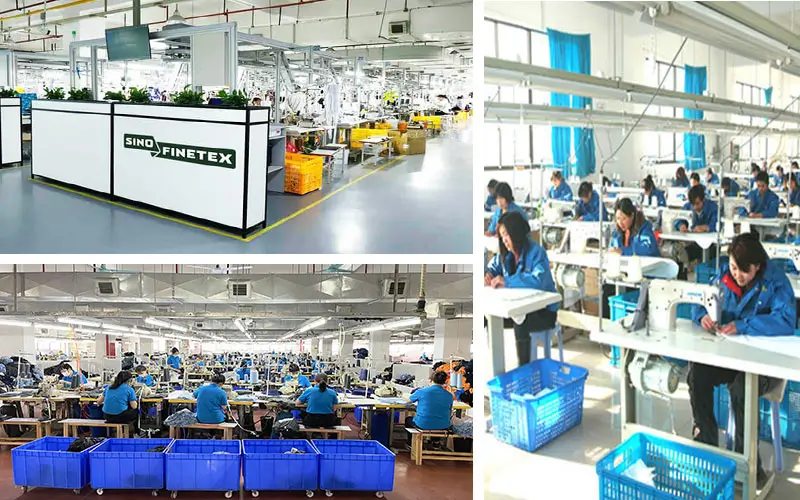
Answer first: A first-output check inspects the first garments that come off a sewing line, before the line has built up volume. It compares them with the approved pre-production sample and the specification: measurements across sizes, seam construction, stitch quality, labels and trims, print or embroidery placement, and fabric shade. Its value is timing. A systematic fault found in the first pieces affects a handful of garments and is corrected on the machine; the same fault found at final inspection affects the whole run and has to be sorted by hand. The check needs four things to work: a signed reference sample, a short written checklist, a retained sample for each approved size, and a clear rule for what happens when it fails.
This article explains the check as a recommended practice. It is not a summary of a standard; sampling plans for acceptance inspection are covered by ISO 2859-1 and are used at final inspection, not here. Finetex’s own quality gates are on its quality control page.
First piece, first output and why both matter
Two related checks are often confused:
- First piece. The first complete garment from a line after set-up, checked against the reference sample. It answers: has the line understood the garment?
- First output. The first batch of completed garments across the size range, usually a small number per size, checked after the line has started running at speed. It answers: does the line produce the garment consistently?
A first piece can be perfect because the most experienced operator made it slowly. The first output shows what normal running produces. Both are cheap; skipping either leaves the risk to the in-line and final inspections. Our Talk answer on inline versus final inspection explains how these checks relate.
When to run it
Run a first-output check whenever something changes: a new style, a new fabric lot, a new line or operator team, a reorder after a long gap, or a change to the pattern. Finetex’s published gates start before sewing, with a cutting check on the first bundle of each size for marker accuracy, ply count and panel dimensions, then in-line inspections at 30% and 70% of the run. A first-output check sits between cutting and the 30% inspection.
The checkpoints
Keep the checklist to what can fail systematically. Random defects are for the final audit.
| Area | What to check | Against |
|---|---|---|
| Measurements | Key points of measure on each size in the first output | Size chart and tolerances in the tech pack |
| Seams and stitches | Seam type, stitch type, stitch density, seam allowance | Specification and reference sample |
| Neckline and hems | Rib width and attachment, neck tape, twin-needle hem width | Reference sample |
| Labels | Position, content, size label matches garment | Label proofs and specification |
| Print or embroidery | Placement, size, colour, adhesion on each size | Approved strike-off |
| Fabric | Shade against standard, hand feel, visible defects | Fabric standard and shade band |
| Trims | Correct elastic, thread colour, buttons or snaps | Trim list |
Measurements
Measure every size in the first output, not only the sample size. Grading errors show on the largest and smallest sizes first. Our article on garment measurement points for knit tops lists the points buyers dispute most. Finetex’s QC page states that ten garments are measured at the start and end of the run against the size chart with tolerances, which makes the start-of-run figures part of the record.
Seams and stitches
Describe seams and stitches in the specification using a shared vocabulary so a check is objective. ASTM D6193, the standard practice for stitches and seams, provides classified stitch and seam types that a tech pack can reference. A first-output check confirms the line is using the specified stitch type and density, not a near substitute that looks similar until the garment is washed.
Fabric weight and shade
If the fabric lot is new, confirm weight and shade on the first output, not just at the fabric gate. Fabric weight can be measured using methods such as ASTM D3776; shade should be read against the approved standard under agreed light. Our GSM to ounce chart helps when suppliers quote different units.
Faults that usually show up first
These are the systematic problems a first-output check is designed to catch, because each one repeats on every garment until someone changes the machine, the pattern or the instruction:
- Grading drift on the largest or smallest size, where the base size is right but the increments are not.
- Wrong seam allowance or a folder set to the wrong width, which changes finished measurements and hem appearance.
- Neck rib attached at the wrong tension, giving a wavy or tight neckline that only shows after washing.
- Stitch density set lower than specified to gain speed, which weakens seams.
- Label in the wrong position or the wrong size label on a size, a common cause of retail chargebacks.
- Print placement measured from the wrong point, so the graphic sits too low on bigger sizes.
- Thread or elastic substitution when the specified item ran short.
None of these is visible in a single beautiful first piece made slowly. They appear when operators run at normal speed, which is why the first output, not only the first piece, should be checked.
Retained samples
A retained sample is a garment from the first output, approved and kept as the physical reference for the rest of the run. It solves a problem a photograph cannot: when an operator or inspector disagrees with a measurement, a hand feel or a shade, there is an object to compare with.
Practical rules:
- Keep one approved garment per size from the first output, tagged with the style, colour, size, date and the name of the person who approved it.
- Keep it at the line, not in an office, so it is used.
- Keep a second set with the order file for reorders.
- Replace it only with a new approval, never informally.
Finetex’s QC page states that retained samples are kept for every approved specification. The pre-production sample remains the master reference; the retained first-output sample shows what bulk looks like. Our Talk answer on proto, fit and PP samples explains where each sample sits.
The decision
A first-output check must end in one of three written decisions:
- Proceed. All checkpoints within specification.
- Proceed with correction. A fault found, cause identified, correction made on the line and confirmed on the next pieces. Pieces already made are sorted or reworked.
- Stop. A fault that cannot be corrected on the line, such as a pattern or fabric problem. The line moves to another style while it is resolved.
Write down who can make each decision. If only the buyer can approve a deviation, say so, and agree how fast the buyer will answer. A line waiting for an email is a line not producing. Our article on weekly WIP reports shows how a stoppage feeds into the delivery date, and line balancing and SMV explains why a line cannot simply run faster afterwards.
The record
A first-output record does not need special software. It needs:
| Field | Example entry |
|---|---|
| Style, colour, order number | As on the purchase order |
| Line and date | Line and shift identifiers |
| Sizes checked and quantity per size | Number of pieces per size |
| Measurements | Actual versus specification per point |
| Findings | Description and photo of each fault |
| Cause and correction | What was changed on the line |
| Decision and approver | Proceed, proceed with correction, or stop |
| Retained sample reference | Tag number |
Share the record with the buyer the same day. It becomes the first page of evidence that the final inspection report builds on; our guide to reading an inspection report and our underwear inspection checklist cover the later stages.
Fact, advice and uncertainty
Fact: Finetex publishes a cutting check on the first bundle of each size, in-line inspections at 30% and 70%, measurement of ten garments at the start and end of the run, retained samples for every approved specification, and an AQL 2.5 final audit.
Advice: add a written first-output check on every new style, fabric lot or line, measure all sizes, keep a retained sample per size, and record a decision with a named approver.
Uncertain: how much a first-output check saves on a given order. That depends on the fault it catches; no check finds every defect, and acceptance of the lot is still decided at final inspection.
Related reading
- Weekly WIP Reports: Five Numbers That Predict a Late Shipment
- Line Balancing and SMV: Why Your Order Takes 35 Days
- Chinese New Year Production Calendar: 2027 Cut-Off Dates
- Factory Audit Types: BSCI, Sedex, WRAP and What Each Proves
Frequently asked questions
What is a first-output inspection in apparel?
A check of the first completed garments from a sewing line, across the size range, against the approved sample and specification, done before the line builds volume.
How many pieces should a first-output check cover?
Enough to see every size at least once and to judge consistency. Agree the number per size with your factory; it is a diagnostic check, not an AQL sample.
Who should perform it?
The factory’s quality team should run it on every new style; a buyer’s inspector can attend for first orders or critical programmes.
Does it replace inline or final inspection?
No. It catches set-up faults early. In-line inspections catch drift during the run, and the final inspection decides acceptance of the finished lot.
Sources
- ASTM D6193: Standard Practice for Stitches and Seams
- ASTM D3776/D3776M: Standard Test Methods for Mass Per Unit Area (Weight) of Fabric
Build a first-output check into your next order
Send us your tech pack and the points you care about most. We will add them to the first-output and in-line checks, share the record and photos, and keep a retained sample for each approved size.
Request a quote or read how our quality control gates work.
More factory-floor notes for brand owners
Selling Underwear in Germany: Textilkennzeichnung, LUCID and Packaging Law
German textile labelling, LUCID registration and packaging law for underwear brands after the PPWR and VerpackDG took effect…
Read more →
GSM to Ounce Converter and Fabric Weight Chart
Convert fabric weight between gsm and oz/yd² with the exact factor (1 oz/yd² = 33.906 g/m²), a T-shirt…
Read more →
A Fit Session Protocol for Knit Tops: 12 Wearers, 5 Measurements
A recommended fit session protocol for knit tops: recruit 12 wearers, take five measurements, run a movement checklist,…
Read more →
Corporate Uniform Programs: Tendering, Sizing and Reorders
How to run a corporate uniform program with a factory: tender documents, sizing a workforce, producing many sizes…
Read more →
Muscle Fit and Athletic Fit T-Shirts: Pattern Changes That Matter
How muscle fit and athletic fit T-shirts differ from a classic block: chest-to-waist drop, sleeve cap and bicep,…
Read more →
Currency Exposure for Apparel Buyers: Pricing in USD vs CNY
How USD/CNY moves change apparel costs and margins, with official 2025–2026 rate data, plus hedging options, quote validity…
Read more →Request a sample & pricing information
Send us your tech pack, target price or a reference sample — we reply with a quotation, a realistic lead time and a fabric recommendation within one working day.
- Free sampling plan & cost breakdown
- MOQ from 300 pcs per style
- Reply within 1 working day