
GSM to Ounce Converter and Fabric Weight Chart
Convert fabric weight between gsm and oz/yd² with the exact factor (1 oz/yd² = 33.906 g/m²), a T-shirt weight chart and the unit mix-ups buyers make.
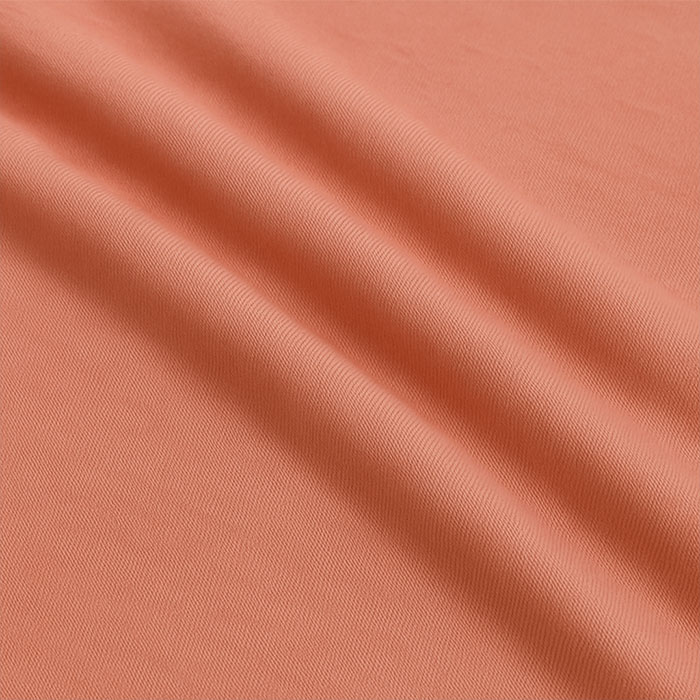
Answer first: To convert fabric weight, use one exact factor: 1 oz/yd² = 33.906 g/m². Divide gsm by 33.906 to get ounces per square yard, or multiply ounces per square yard by 33.906 to get gsm. A 180 gsm T-shirt jersey is about 5.31 oz/yd²; a 6 oz/yd² fabric is about 203 gsm. The factor comes from the definitions of the avoirdupois ounce and the yard; NIST lists 1 oz/yd² as 3.390 575 × 10⁻² kg/m². The common errors are not in the arithmetic. They come from mixing ounces per square yard with ounces per linear yard, and from comparing fabric weight before and after washing or finishing.
The conversion formula
| From | To | Calculation |
|---|---|---|
| g/m² (gsm) | oz/yd² | gsm ÷ 33.906 |
| oz/yd² | g/m² (gsm) | oz/yd² × 33.906 |
| oz/yd² | oz per linear yard | oz/yd² × fabric width in inches ÷ 36 |
The factor is exact enough for any purchasing decision. In the NIST Guide to the SI, Appendix B.8, the ounce (avoirdupois) per square yard converts to 3.390 575 × 10⁻² kilogram per square metre, which is 33.906 g/m² when rounded to three decimals. If you work in a spreadsheet, put the factor in its own cell and reference it, so nobody retypes it as 34 or 33.9.
Conversion chart: common knit weights
The left table covers the weights a basics programme normally specifies. Values are rounded to two decimals.
| gsm | oz/yd² | Typical use on Finetex’s published ranges |
|---|---|---|
| 120 | 3.54 | Lower end of Finetex’s 120–420 gsm production range |
| 140 | 4.13 | Lightweight T-shirt bodies |
| 150 | 4.42 | Combed cotton jersey, lower end |
| 160 | 4.72 | Classic crew neck (160–180 gsm) |
| 180 | 5.31 | Classic crew neck, upper end; compact jersey starts |
| 200 | 5.90 | Cotton/polyester upper end |
| 220 | 6.49 | Compact jersey and organic cotton, upper end |
| 240 | 7.08 | Heavyweight cotton starts |
| 260 | 7.67 | Streetwear bodies (260–320 gsm is the common request) |
| 280 | 8.26 | Heavyweight |
| 300 | 8.85 | Heavyweight |
| 320 | 9.44 | Heavy streetwear |
| 350 | 10.32 | Heavyweight cotton (240–420 gsm) |
| 380 | 11.21 | Heavyweight cotton (240–420 gsm) |
| 420 | 12.39 | Upper end of Finetex’s range |
The “typical use” column comes from the fabric guide on Finetex’s T-shirt manufacturing page, which lists combed cotton jersey at 150–180 gsm, compact jersey at 180–220 gsm, heavyweight cotton at 240–420 gsm and a classic crew neck at 160–180 gsm.
Going the other way, for buyers who brief in ounces:
| oz/yd² | gsm |
|---|---|
| 4.0 | 135.6 |
| 4.5 | 152.6 |
| 5.0 | 169.5 |
| 5.5 | 186.5 |
| 6.0 | 203.4 |
| 6.5 | 220.4 |
| 7.0 | 237.3 |
| 8.0 | 271.2 |
| 9.0 | 305.2 |
| 10.0 | 339.1 |
Where buyers mix up the units
Square yard or linear yard
An ounce figure on its own is ambiguous. Ounces per square yard is a mass per area, like gsm. Ounces per linear yard is the mass of one yard of fabric along the roll at its full width, so it depends on width. A 5.0 oz/yd² fabric that is 60 inches wide weighs about 8.33 oz per linear yard. If one supplier quotes per square yard and another per linear yard, the second fabric can look much heavier when it is not. Always ask which one is meant, and the width.
Before or after washing and finishing
Fabric weight changes with compaction, washing, brushing and dyeing. A garment that shrinks in length and width also gains weight per square metre. Agree in the specification whether the gsm refers to greige fabric, finished fabric before cutting, or the finished garment, and test the same state each time. ASTM D3776/D3776M describes options for measuring fabric mass per unit area, from full-width samples to small swatches, and notes that a small swatch result applies to the sample, not necessarily to the lot.
Same gsm, different garment
Gsm does not describe hand feel or opacity. Two 220 gsm jerseys can feel different because of yarn count, knit structure and compaction. Our Talk answer on whether the same GSM means the same heavyweight hoodie explains why, and our guide to T-shirt GSM for print brands covers weight choice for printing.
Tolerance not written down
A specification of “180 gsm” with no tolerance cannot be failed. Write a tolerance range into the fabric standard and agree how it is tested. Finetex’s quality control page states that incoming fabric inspection checks weight per square metre on 10% of the lot before cutting.
Using the chart in a spreadsheet
To build your own converter:
- Put 33.906 in cell A1 and name it “factor”.
- Enter gsm values in column B.
- In column C, enter =B2/A$1 for oz/yd².
- For linear yards, add the width in inches in column D and use =C2*D2/36.
Copy the tables on this page into the sheet if you want a ready reference. For heavier programmes, our article on heavyweight T-shirt GSM compares 220, 240 and 280 gsm.
Fact, advice and uncertainty
Fact: 1 oz/yd² = 33.906 g/m², from the NIST conversion factor checked on 16 November 2026; the chart values follow from it.
Advice: state gsm with a tolerance, the fabric state it refers to, and the test method; never accept an ounce figure without “per square yard” or “per linear yard” and the width.
Uncertain: how a given gsm will feel or perform. That depends on fibre, yarn, structure and finishing, which a weight figure does not capture.
Related reading
- MOQ Calculator: What 500 Pieces Really Costs per Style
- Landed Cost Calculator: FOB to Door in Six Inputs
- Men’s Polo Shirt Manufacturing: Pique, Interlock and Collar Construction
Frequently asked questions
How do I convert gsm to oz?
Divide gsm by 33.906 to get ounces per square yard. For example, 180 gsm ÷ 33.906 = 5.31 oz/yd².
How many gsm is a 6 oz T-shirt?
If 6 oz means 6 oz per square yard, it is about 203 gsm. If it means ounces per linear yard, you need the fabric width before you can convert.
Is a 200 gsm T-shirt heavyweight?
It is mid-weight. Finetex’s published fabric guide lists heavyweight cotton from 240 gsm, and its T-shirt page notes that streetwear programmes usually ask for 260–320 gsm.
Why does the measured gsm differ from the specification?
The sample may have been taken in a different state (before or after washing or finishing), a different test method may have been used, or the lot varies. Agree the state, method and tolerance in writing.
Sources
- NIST Guide to the SI, Appendix B.8: Factors for units listed alphabetically
- ASTM D3776/D3776M: Standard Test Methods for Mass Per Unit Area (Weight) of Fabric
Specify your fabric weight once, in both units
Send us your target weight in gsm or ounces, the fabric and the garment. We will confirm the weight in both units, state the tolerance and test state in the fabric standard, and sample on that basis.
Request a quote or compare fabrics in our apparel fabric selection guide.
More factory-floor notes for brand owners
Selling Underwear in Germany: Textilkennzeichnung, LUCID and Packaging Law
German textile labelling, LUCID registration and packaging law for underwear brands after the PPWR and VerpackDG took effect…
Read more →
First-Output Check: The In-Line Inspection That Saves Bulk
What to check on the first garments off each line: measurements, seams, labels and print against the approved…
Read more →
A Fit Session Protocol for Knit Tops: 12 Wearers, 5 Measurements
A recommended fit session protocol for knit tops: recruit 12 wearers, take five measurements, run a movement checklist,…
Read more →
Corporate Uniform Programs: Tendering, Sizing and Reorders
How to run a corporate uniform program with a factory: tender documents, sizing a workforce, producing many sizes…
Read more →
Muscle Fit and Athletic Fit T-Shirts: Pattern Changes That Matter
How muscle fit and athletic fit T-shirts differ from a classic block: chest-to-waist drop, sleeve cap and bicep,…
Read more →
Currency Exposure for Apparel Buyers: Pricing in USD vs CNY
How USD/CNY moves change apparel costs and margins, with official 2025–2026 rate data, plus hedging options, quote validity…
Read more →Request a sample & pricing information
Send us your tech pack, target price or a reference sample — we reply with a quotation, a realistic lead time and a fabric recommendation within one working day.
- Free sampling plan & cost breakdown
- MOQ from 300 pcs per style
- Reply within 1 working day