
Biodegradability Claims for Underwear: Tests and Honest Copy
What "biodegradable" and "compostable" must mean under the FTC Green Guides, which lab tests exist, why landfills matter and how to word underwear copy.

Answer first: An underwear brand can rarely make an unqualified “biodegradable” claim and defend it. Under the US FTC Green Guides, an unqualified degradable or biodegradable claim needs competent and reliable scientific evidence that the entire item will completely break down and return to nature within a reasonably short time after customary disposal, and the Guides state that items customarily disposed of in landfills, incinerators or recycling facilities do not meet that condition. A pair of briefs is usually thrown away in household waste, and it contains more than its main fabric: elastane, a nylon or polyester elastic waistband, polyester sewing thread, a printed or woven label. What a brand can do honestly is make a specific, qualified statement about a specific material, backed by a test whose conditions match the claim, such as “Cotton fabric; elastic waistband is not biodegradable”, or a compostability claim that says which composting conditions and which components it covers.
The rules and standards below were read on 20 November 2026. We have not run biodegradation tests ourselves, and we cite no test results; the point of this article is what a valid claim needs.
What the FTC Green Guides require
The Green Guides are published as 16 CFR Part 260. The eCFR timeline for Section 260.8 shows no changes after 3 January 2017, so the 2012 text still applies on our check date.
Degradable and biodegradable claims (16 CFR 260.8)
- It is deceptive to misrepresent, directly or by implication, that a product or package is degradable, biodegradable, oxo-degradable, oxo-biodegradable or photodegradable.
- An unqualified claim needs evidence that the entire item will completely break down and return to nature (decompose into elements found in nature) within a reasonably short period after customary disposal.
- It is deceptive to make an unqualified degradable claim for items entering the solid waste stream if they do not completely decompose within one year after customary disposal.
- Unqualified claims for items customarily disposed of in landfills, incinerators and recycling facilities are deceptive, because those locations do not present conditions in which complete decomposition will occur within one year.
- Qualified claims should explain the product’s ability to degrade in the environment where it is customarily disposed and the rate and extent of degradation.
One of the Guides’ own examples is useful here: a marketer that relied on soil burial tests for trash bags made a deceptive claim, because the bags go to landfills and incinerators, not soil.
Compostable claims (16 CFR 260.7)
Section 260.7 requires evidence that all the materials in the item will break down into, or become part of, usable compost in a safe and timely manner, in an appropriate composting facility or a home compost pile. A claim must be qualified if the item cannot be composted safely or in a timely manner at home, and if municipal or institutional composting facilities are not available to a substantial majority of consumers or communities where it is sold.
Industrial composting, home composting and the tests behind them
Industrial (municipal) composting runs hot, managed and fast; a home heap is cooler and slower. The published methods are written for particular materials and conditions, so the first question for any test report is: which method, on which material, under which conditions?
| Standard | What it measures | Written for | Relevance to underwear |
|---|---|---|---|
| ASTM D6400 | Requirements for labelling plastics “compostable in aerobic municipal and industrial composting facilities”, where thermophilic conditions are achieved | Plastics and products made from plastics | Packaging or polymer components; not cotton fabric |
| ISO 14855-1:2012 | Ultimate aerobic biodegradability under controlled composting, by measuring evolved CO₂ and disintegration | Plastics | A laboratory method, not a label |
| ISO 21701:2025 | Biodegradability of the hydrolysate of textile materials after accelerated hydrolysis, under controlled composting | Specific petroleum-based biodegradable man-made textiles (for example polybutylene succinate, polycaprolactone) | Only for those polymers; not cotton, modal or elastane |
| ASTM D5511 | Anaerobic biodegradation under high-solids anaerobic digestion conditions | Plastics | Closest to some managed landfills; see below |
| ISO 11721-1:2001 | Resistance of rot-retardant finished cellulose textiles to soil micro-organisms, compared with untreated fabric | Cellulosic textiles | A comparative test of finishes, not a biodegradability claim |
Two details from the standards’ own scopes are worth quoting to anyone writing copy. ISO 11721-1 says it is intended to show comparative performance rather than provide absolute values, and that fabrics with a high proportion of synthetic fibres can only be judged for changes in structure and appearance because of their inherent resistance to micro-organisms. ASTM D5511 says claims of performance shall be limited to the numerical result obtained in the test and not be used for unqualified “biodegradable” claims, and that results shall not be extrapolated past the actual duration of the test.
In this check we did not find a widely used standard written specifically for composting whole garments at home. If a supplier offers a “home compostable underwear” certificate, ask which standard it was issued against and what was tested.
The landfill reality
Most worn-out underwear is not composted. It goes into residual household waste, which ends up in landfill or incineration depending on the country and city. That is why the Green Guides tie the claim to customary disposal. ASTM D5511’s scope notes that its high-solids anaerobic method “may also resemble some conditions in biologically active landfills” where gas is recovered and biogas production is actively promoted; it does not say an ordinary landfill behaves that way.
Practical consequences for an underwear brand:
- A cellulosic fabric (cotton, modal, lyocell, viscose) is biodegradable as a material under suitable conditions, but that does not mean the garment will decompose in a landfill within a year.
- Elastane, nylon and polyester are not made to biodegrade; most underwear contains at least one of them, if only in the waistband and thread.
- Dyes, finishes and prints are part of “the entire item” and can affect both breakdown and compost safety.
- Incineration is not degradation at all.
For the related question of fibre fragments released during washing, see microplastics and knit fabric.
Writing honest copy
Claims to avoid
| Copy | Problem |
|---|---|
| “100% biodegradable underwear” | Unqualified; the garment includes non-degradable components; customary disposal is landfill or incineration |
| “Returns to the earth” | Same implied claim, without evidence for the whole item |
| “Compostable” (alone) | Needs evidence for all materials and qualification on home vs industrial composting and facility availability |
| “Eco-friendly because it biodegrades” | A generic environmental benefit claim; in the EU, generic claims are restricted, as our EU green claims article explains |
Claims that can be supported
| Copy | What you need |
|---|---|
| “Body fabric: 95% cotton, 5% elastane” | Accurate fibre content on the label (a legal requirement anyway) |
| “Cotton is a plant-based fibre; the elastane and waistband are synthetic and do not biodegrade” | Accurate composition; no unsupported performance claim |
| “Fabric tested to [method], [result] after [days] under [conditions]” | A real test report on your fabric, with the method’s limits stated |
| “Designed for disassembly: waistband can be cut off before textile recycling” | Only if the construction really allows it |
Material claims that are certifiable, such as organic content, are often more useful than biodegradability claims. Our article on GOTS vs OCS covers that route.
A checklist before you publish
- Define the item: whole garment, body fabric only, or packaging?
- Name the disposal route that the claim assumes, and compare it with where the product will customarily end up.
- Match the test to the claim: same material, same conditions, same timeframe.
- List every component: body fabric, elastic, thread, labels, prints, packaging.
- Qualify clearly and prominently, next to the claim, not in a footnote.
- Keep the evidence file with the test report and the bill of materials for that style.
Where the factory fits
A factory can tell you what the garment is made of, supply bills of materials and fibre content data, and arrange third-party testing on request. It should not supply a biodegradability claim without a test report. Our sustainability page states that when a brand asks for a claim without the documentation to support it, we decline and propose the closest substantiated alternative. For fabric options, start with our apparel fabric selection guide; for branding on a private label programme, the same claim rules apply to hangtags and packaging.
Fact, advice and uncertainty
Fact: the FTC Green Guides treat unqualified biodegradable claims as deceptive for items customarily disposed of in landfills, incinerators or recycling facilities, and require compostable claims to be qualified for home versus facility composting and facility availability. The published biodegradation methods we reviewed are written for plastics or for specific materials, and several state their own limits on claims.
Advice: describe materials accurately, make only qualified claims tied to a test that matches the disposal route, and include every component of the garment in the assessment.
Uncertain: whether the FTC will update the Green Guides, and how biodegradation of whole garments behaves in real landfills, which varies widely and is not covered by a simple test.
Related reading
- EU Green Claims Rules: Apparel Claims You Can No Longer Make
- Microplastics and Knit Fabric: What Shedding Tests Show
- GOTS vs OCS: Which Organic Claim Fits Your T-Shirt
- GRS vs RCS: Recycled Polyester Claims That Hold Up
Frequently asked questions
Can I call cotton underwear biodegradable?
Not without qualification in the US, in our reading of the Green Guides. Most underwear is customarily disposed of in landfills or incinerators, and it usually contains elastane, synthetic elastic and thread. A qualified, material-specific statement is safer.
Is compostable the same as biodegradable?
No. A compostable claim needs evidence that all materials become usable compost in a safe and timely manner in a composting facility or home pile, and must be qualified if home composting or facility access is limited.
Which test proves underwear is biodegradable?
None proves it for the whole garment in every setting. ASTM D6400 and ISO 14855-1 are written for plastics, ISO 21701 for specific biodegradable man-made textiles, and ISO 11721-1 is a comparative test of rot-retardant finishes.
Does the EU allow “biodegradable” on clothing?
Generic environmental claims are restricted under EU consumer law, and any specific claim needs substantiation. Check the wording with a lawyer for each EU market.
Sources
- eCFR: 16 CFR 260.8, Degradable claims (FTC Green Guides)
- eCFR: 16 CFR 260.7, Compostable claims (FTC Green Guides)
- ASTM D6400: Labeling of plastics designed to be aerobically composted in municipal or industrial facilities
- ASTM D5511-18: Anaerobic biodegradation under high-solids anaerobic-digestion conditions
- ISO 11721-1:2001 preview: Soil burial test, assessment of rot-retardant finishing
- ISO 14855-1:2012, Ultimate aerobic biodegradability of plastics under controlled composting (abstract checked on iso.org, 20 November 2026)
- ISO 21701:2025, Textiles, accelerated hydrolysis and biodegradation under controlled composting of the hydrolysate (abstract checked on iso.org, 20 November 2026)
Check a claim before it goes on the box
Send us the style, the fibre content and the wording you want to use. We will confirm the bill of materials for every component and, if you want a test, propose a third-party laboratory method with cost and timing before anything is booked.
Request a quote or browse our apparel fabric selection guide.
More factory-floor notes for brand owners
Naturally Dyed Underwear: What Should Buyers Test Before Bulk?
Plan naturally dyed underwear testing for wash and rub fastness, shade variation, and reorder approval. Match color and…
Read more →
Hidden Pockets in Boxer Briefs: Where Should They Sit?
Choose hidden pockets in boxer briefs by testing placement, access, load, and movement in comparable samples before approving…
Read more →Silk Underwear Sourcing: What Can a Buyer Approve from a Sample?
Use a silk underwear sourcing checklist to verify fiber composition, compare stretch and seams, and approve care and…
Read more →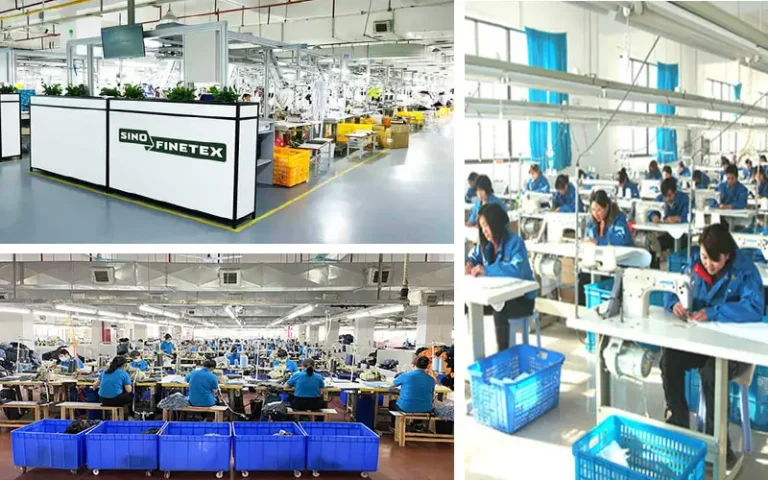
Adaptive Men’s Underwear: How Do You Test Side Openings?
Test side openings in adaptive men's underwear with seated and one-handed dressing checks, closure placement reviews, and a…
Read more →Microfiber Underwear Fabric: What Should Buyers Specify?
Specify microfiber underwear fabric by verified fiber content, knit structure, stretch, and wash performance. Use a sample checklist…
Read more →Skin-Tone Underwear Color Matching: How Do You Approve a Range?
Plan skin-tone underwear color matching with physical swatches, stretch checks, and a repeatable shade approval record for production…
Read more →Request a sample & pricing information
Send us your tech pack, target price or a reference sample — we reply with a quotation, a realistic lead time and a fabric recommendation within one working day.
- Free sampling plan & cost breakdown
- MOQ from 300 pcs per style
- Reply within 1 working day