
CMT vs Full Package: Should You Buy Fabric Yourself?
Buying fabric yourself (CMT) versus full package: cash tied up, leftover stock, shade and shrinkage risk, customs assists and a simple decision tree for brands.
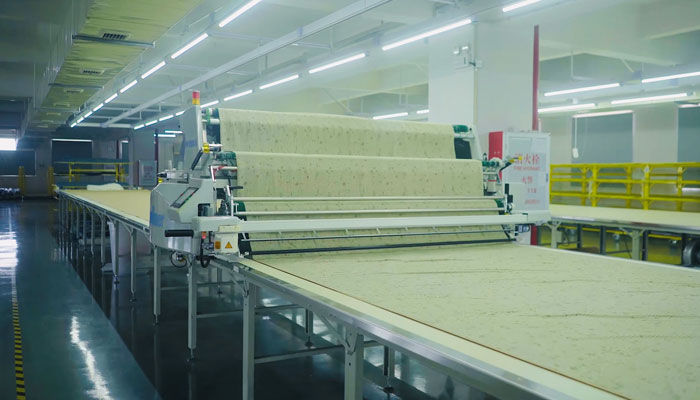
Answer first: Buying fabric yourself and paying a factory only to cut, make and trim (CMT) can lower the unit price on paper, but it moves four things onto your balance sheet: the cash for the fabric, often paid weeks before the garments exist; the leftover fabric and the mill’s minimum; the risk that the fabric shrinks, twists or varies in shade; and the paperwork, including the US rule that buyer-supplied materials are an “assist” whose value is added to the customs value. Full package puts the fabric, trims and their risks with the factory, at a margin you can see if the quote is broken down. CMT tends to make sense for brands with their own fabric programme, enough volume to meet mill minimums across several styles, a technical team that can approve fabric, and a reason to control the fabric (a proprietary knit, a certified supply chain, or a fabric used by several factories). For a first collection of a few styles in the 300 to 1,000 piece range, full package is usually the lower-risk choice.
The customs rules cited were read on 20 November 2026 from the eCFR. Valuation and origin are fact-specific, so confirm your situation with a licensed customs broker.
The models, defined
| Model | What the factory does | What the buyer supplies |
|---|---|---|
| CM (cut and make) | Marking, cutting, sewing, finishing, packing | Fabric, trims, pattern, often packaging |
| CMT (cut, make, trim) | As CM, plus sourcing or attaching trims | Fabric and pattern; trims depend on the contract |
| Full package (FOB) | Fabric and trim sourcing, production, packing; often pattern and sampling | Design brief or tech pack, approvals |
The names are used loosely. Our article on cut-and-sew scope and cost explains why the scope should be written out line by line rather than referenced by an acronym, and our full-package definition lists what the package should include. This article is about the buyer’s decision: should you take the fabric on yourself?
Cash tied up
In full package, the fabric is part of the garment price and is paid on the garment’s payment terms, which are confirmed in the proforma invoice; the factory finances the fabric between buying it and being paid for the finished goods.
In CMT, you pay the mill directly, usually before knitting or dyeing, and then pay freight to the factory. The cash goes out earlier and in a different currency or to a different counterparty.
| Cash item | Full package | CMT |
|---|---|---|
| Fabric purchase | Inside the garment price, paid on garment terms | Paid to the mill, usually before production |
| Freight of fabric to factory | Factory’s cost | Buyer’s cost and arrangement |
| Mill minimum above your need | Factory’s problem to plan | Buyer’s leftover stock |
| Cutting allowance and defects | Inside the price and the factory’s risk | Must be agreed as an allowance; excess is a dispute |
| Re-knit after a failed lot | Factory’s cost if the fabric failed the specification | Buyer negotiates with the mill |
A useful way to see it is to add the fabric cash to your working-capital plan, not your cost sheet. Our articles on payment terms for small buyers and currency exposure cover the financing side.
Leftover fabric and minimums
Fabric is bought in mill minimums, not in garment quantities. Our published figures illustrate the gap: an MOQ of 300 pieces per style is possible on stock fabric, but a fully custom knit or dye lot usually starts at around 1,000 pieces per colour because that is the mill’s minimum. In full package, the factory can sometimes consolidate several customers’ orders on stock fabric; a buyer buying alone cannot.
In CMT, the arithmetic is yours:
- Consumption per garment comes from the factory’s marker, at the size ratio you ordered.
- Cutting allowance for waste and end losses has to be agreed in advance.
- Mill minimum and roll lengths round the order up.
- Leftover after the run is either held for a reorder, sold, or written off.
Leftover fabric is only valuable if the reorder uses the same fabric, in the same colour, before it ages. Our MOQ calculator shows how component minimums turn into cost per unit.
Shade, shrinkage and fabric quality
This is the risk most first-time CMT buyers underestimate. If the fabric is wrong, the factory can sew it perfectly and the garment will still be wrong.
- Shade variation: different dye lots can differ visibly. A factory using its own fabric bundles cut panels by shade so dye lots never mix inside a garment; our quality control gates include shade bundling at cutting and an incoming fabric inspection on 10% of the lot for weight, shade continuity, shrinkage and visual defects. In CMT, you need to agree who inspects the fabric on arrival and what happens to a failed lot.
- Shrinkage and spirality: a knit that shrinks beyond tolerance produces garments that measure out of tolerance, and the factory will reasonably say the making-up was correct.
- Width and weight: a narrower or lighter fabric than ordered changes the marker and the consumption, and so the number of garments you can cut.
- Lead time: if a lot fails, a re-knit and re-dye restarts the fabric clock, and the factory’s line slot may be lost.
See our notes on reordering a colour from a different dye lot and custom fabric sourcing for how mills and factories control repeatability.
Responsibility and paperwork
Who answers for a defect
In CMT, the boundary has to be written down: the factory answers for workmanship to the approved sample; the buyer and the mill answer for the fabric’s properties. Without a documented receipt of the fabric (quantity, rolls, condition), an agreed waste allowance and a clause for abnormal loss, a shortfall at the end of the order becomes an argument in which the factory holds the evidence.
Customs: buyer-supplied fabric is an assist
Under US valuation rules, 19 CFR 152.102 defines an assist as materials, components and similar items incorporated in the imported merchandise, tools, dies and moulds, merchandise consumed in production, and certain engineering, design and artwork done outside the United States, when supplied by the buyer free of charge or at reduced cost. 19 CFR 152.103 adds the apportioned value of any assist to the price actually paid or payable. In plain terms: if you buy fabric and send it to the factory, the factory’s CMT invoice is not the customs value; the fabric value has to be declared too. Under-declaring it is a valuation error, not a saving.
Origin
Buying fabric in another country does not usually move the origin of a cut-and-sewn garment. Under 19 CFR 102.21, the country of origin of most such apparel is generally where it is wholly assembled, so a garment sewn in China from fabric bought elsewhere is generally a product of China for marking and for China-specific duties. Free trade agreement rules are different again; our article on Mexico and Central America explains the yarn-forward rule.
| Topic | Full package | CMT |
|---|---|---|
| Customs value | Garment invoice | Garment invoice plus assists (fabric, trims, tools, foreign design work) |
| Country of origin | Generally where assembled | Generally where assembled |
| Fabric compliance documents (fibre content, test reports, certificates) | Factory obtains from its mill | Buyer obtains from its mill and passes to factory |
| Defect boundary | Factory to the finished specification | Split between factory (workmanship) and buyer/mill (fabric) |
What to ask before accepting a CMT quote
If you do go the CMT route, get these answers in writing before the fabric ships:
- Consumption: the agreed consumption per garment, the marker it is based on and the size ratio it assumes.
- Receipt: how the factory records rolls, quantity and condition on arrival, and how quickly it reports a discrepancy.
- Inspection: whether the factory inspects your fabric before cutting, to which criteria, and who pays for re-testing.
- Allowance: the cutting and end-loss allowance, and the rule for losses above it.
- Leftovers: whether remaining fabric is returned, credited or stored for a reorder, and for how long.
- Trims: which trims the factory sources and which you supply, with the same receipt and allowance rules.
A factory that answers these questions clearly is telling you it has run CMT before. Vague answers usually mean the risk will be settled after the order, when you have the least leverage.
A decision tree
Answer the questions in order; the first “no” usually points to full package.
- Do you have a reason to control the fabric? A proprietary knit, a certified chain of custody you own, or one fabric shared by several factories. If not, full package is simpler.
- Does your volume meet the mill minimum per colour across your styles? If you need 300 pieces and the mill sells the equivalent of 1,000, you are buying leftover stock.
- Can you approve fabric technically? Someone has to read test reports, approve lab dips and reject a failed lot.
- Can you finance the fabric earlier? Model the cash on a timeline, including freight and duty on the assist.
- Is the factory willing to work CMT on your fabric, with a written waste allowance and receipt procedure? Many full-package factories accept CMT only on terms.
If all five are “yes”, CMT can be the better model, especially as a programme scales and one fabric feeds many styles. Many brands use a hybrid: the brand nominates the mill and fabric specification, and the factory buys from that mill under its own purchase order. That keeps fabric control without moving the fabric risk and the assist paperwork onto the brand.
How we work
We run full-package programmes in which fabric knitting, dyeing, cutting, sewing, printing, embroidery, labels, hangtags and retail packaging sit inside one supply chain under a single purchase order, with knitting and dyeing through partner facilities. Prices are broken down by component (fabric consumption, labour operations, trims, packing, margin), so you can see what the fabric costs inside the package rather than having to buy it to find out. Our custom fabric service covers nominated or developed fabrics. If you already own a fabric programme, tell us; whether CMT is workable depends on the fabric and the order, and we will say so in the quotation. The clothing factory sourcing guide and our apparel cost breakdown put both models in context.
Fact, advice and uncertainty
Fact: under US valuation rules, buyer-supplied materials are assists whose apportioned value is added to the price paid or payable; under 19 CFR 102.21 the origin of most cut-and-sewn apparel is generally where it is wholly assembled. Mill minimums are usually per fabric and colour and can exceed a small brand’s garment quantity.
Advice: start with full package unless you have a clear reason and the volume to control fabric; if you choose CMT, write down receipt, inspection, waste allowance and abnormal-loss rules, and declare assists correctly with your broker.
Uncertain: the real saving of CMT for your programme, which depends on your mill prices, minimums, leftover rate and cost of capital rather than on the CMT price alone.
Related reading
- Apparel Cost Breakdown: Fabric, CMT, Trims, Packing and Overhead
- Sampling Cost Recovery: What Factories Build Into the Quote
- Building a Landed Cost Sheet: FOB, Freight, Duty, Fees
- Subcontracting: How to Know If Your Order Is Outsourced
Frequently asked questions
Is CMT cheaper than full package?
The CMT price is lower because it excludes fabric and often trims, but the total cost can be higher once you add the fabric at mill minimums, freight, leftover stock, financing and your own time.
Who pays if buyer-supplied fabric shrinks or varies in shade?
Usually the buyer, because the factory answers for workmanship rather than the fabric’s properties. Agree inspection, tolerances and a procedure for failed lots in writing.
Do I declare my fabric to US Customs if I supply it to the factory?
Yes. Materials supplied by the buyer free or at reduced cost are assists under 19 CFR 152.102, and their apportioned value is added to the customs value under 19 CFR 152.103.
Does buying fabric in another country change the garment’s origin?
Generally not for cut-and-sewn apparel, which takes the origin of the country where it is wholly assembled under 19 CFR 102.21. Free trade agreements have their own rules.
Sources
- eCFR: 19 CFR 152.102, Definitions (assist)
- eCFR: 19 CFR 152.103, Transaction value
- eCFR: 19 CFR 102.21, Textile and apparel products (country of origin)
See the fabric cost inside a full-package quote
Send your tech pack, fabric specification and quantity per colour. We will quote full package with fabric, trims, labour and packing shown as separate lines, and tell you whether your own fabric could be used instead.
Request a quote or read about our custom fabric development.
More factory-floor notes for brand owners
Naturally Dyed Underwear: What Should Buyers Test Before Bulk?
Plan naturally dyed underwear testing for wash and rub fastness, shade variation, and reorder approval. Match color and…
Read more →
Hidden Pockets in Boxer Briefs: Where Should They Sit?
Choose hidden pockets in boxer briefs by testing placement, access, load, and movement in comparable samples before approving…
Read more →
Silk Underwear Sourcing: What Can a Buyer Approve from a Sample?
Use a silk underwear sourcing checklist to verify fiber composition, compare stretch and seams, and approve care and…
Read more →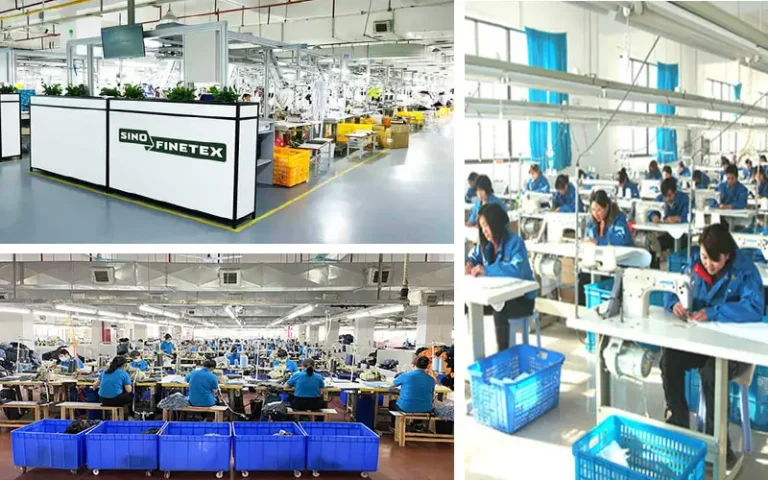
Adaptive Men’s Underwear: How Do You Test Side Openings?
Test side openings in adaptive men's underwear with seated and one-handed dressing checks, closure placement reviews, and a…
Read more →Microfiber Underwear Fabric: What Should Buyers Specify?
Specify microfiber underwear fabric by verified fiber content, knit structure, stretch, and wash performance. Use a sample checklist…
Read more →Skin-Tone Underwear Color Matching: How Do You Approve a Range?
Plan skin-tone underwear color matching with physical swatches, stretch checks, and a repeatable shade approval record for production…
Read more →Request a sample & pricing information
Send us your tech pack, target price or a reference sample — we reply with a quotation, a realistic lead time and a fabric recommendation within one working day.
- Free sampling plan & cost breakdown
- MOQ from 300 pcs per style
- Reply within 1 working day