
Cropped and Boxy T-Shirts for Streetwear
How to specify cropped and boxy streetwear tees: length-to-width ratio, shoulder drop, heavyweight jersey, shrinkage control and the fit sample sequence.
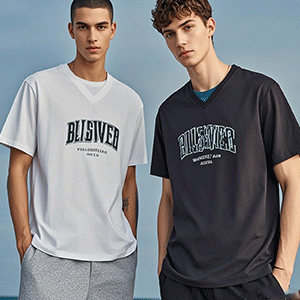
Answer first: A boxy T-shirt is defined by proportion rather than size: a wide, straight body whose length is short relative to its chest width, shoulders that drop onto the upper arm, and a fabric heavy enough to hold the shape instead of collapsing into folds. A cropped tee pushes the same idea further by shortening the body until the hem sits at or above the waistband. The useful number to put in a tech pack is the ratio of body length to chest width (both measured flat), together with the shoulder drop and the fabric weight, and then a shrinkage limit, because a heavyweight cotton body that shrinks a few centimetres in length after washing stops looking cropped and starts looking wrong. Start from one reference size, approve it on a wearer, and grade length more gently than width so small sizes do not look long and large sizes do not look like tents.
There is no industry standard for “boxy” or “cropped”; the numbers below are worked examples we use to explain the ratios, not market data. Your fit sample decides.
Proportions: the ratio that defines the silhouette
Measure the garment flat. Chest width is the straight measurement across the body about 2.5 cm below the armhole (write your own point of measure into the spec); body length is from the high point of the shoulder to the hem. Our measurement points article covers the definitions.
The ratio of length to chest width is what customers see:
| Silhouette | Length ÷ chest width (flat) | Worked example, size M | What it looks like |
|---|---|---|---|
| Classic fit | Clearly above 1.3 | Chest 52 cm, length 72 cm (1.38) | Longer than wide; sits below the waistband |
| Oversized, long | Around 1.15–1.2 | Chest 61 cm, length 70 cm (1.15) | Wide and long; the example used in our oversized size chart Q&A |
| Boxy | Around 1.0–1.1 | Chest 61 cm, length 64 cm (1.05) | Almost square when laid flat |
| Cropped boxy | Below 1.0 | Chest 61 cm, length 56 cm (0.92) | Wider than long; hem near or above the waistband |
The classic, boxy and cropped rows are our own illustrative figures, chosen to show the ratio; they are not a recommended size chart. Two other measurements decide whether the ratio reads correctly on a body:
- Sweep (hem width): a boxy tee is straight; if the sweep is narrower than the chest, the body tapers and looks fitted.
- Sleeve: a wide, slightly longer sleeve opening balances a wide body. A narrow sleeve on a boxy body looks like a classic tee that is too big.
Dropped shoulders
The shoulder seam moves off the natural shoulder point and onto the upper arm. ISO 8559-1 defines the body landmarks, including the shoulder point, that pattern makers use as a reference for this. The drop is the distance from that natural shoulder point to the seam. Our oversized example uses a 7 cm drop at size M.
What changes when the shoulder drops:
- Shoulder width in the spec grows by roughly twice the drop.
- Sleeve cap gets lower and flatter, because the seam now sits on a narrower part of the arm.
- Armhole depth usually increases, which adds ease under the arm but, if overdone, makes the garment lift as a whole when the arm is raised.
- Sleeve length is shortened by about the drop so the sleeve still ends at the intended point.
The balance between sleeve cap, armhole depth and arm movement is a separate topic, covered in our article on sleeve and armhole balance. Getting it wrong is the most common reason a boxy sample looks right on the table and wrong on a person.
Heavyweight fabric
Boxy and cropped tees depend on fabric weight to hold the silhouette. On our T-shirt manufacturing page we list heavyweight cotton at 240–420 gsm for streetwear bodies with a structured drape, and our oversized and boxy T-shirt page discusses cotton jersey from 220 to 420 gsm. Weight alone does not decide the look:
| Fabric choice | Effect on a boxy tee | Watch for |
|---|---|---|
| Heavier gsm | Holds a square shape, fewer folds | Heat and weight in summer; higher fabric cost |
| Tighter knit at the same gsm | Smoother surface, better print base, less twist | Stiffer hand |
| Open-end vs ring-spun or combed yarn | Changes hand and surface | Pilling and hand-feel targets |
| Garment dye or enzyme wash | Softer, vintage hand | Additional shrinkage and shade variation |
| Rib collar height and weight | A heavier, taller rib suits a heavy body | Neck stretch-out; see neckline stability |
To convert weights for a US buyer, use our GSM to ounce chart.
Shrinkage: the cropped tee’s biggest risk
In a regular tee, a little length shrinkage is a minor complaint. In a cropped tee, the hem position is the design, so length shrinkage changes the product. Garment-dyed and washed heavyweight bodies need particular care because shrinkage happens partly in the wash process and partly at the customer’s first wash.
What to put in the specification:
- Test method: dimensional change after washing to ISO 5077 (the standard’s preview describes the procedure), or the method your retailer specifies.
- Limits for length and width separately; length matters more for cropped styles.
- When to test: on the finished garment after the wash or dye process, not only on greige fabric. We test shrinkage after finishing on washed programmes.
- Care label: the instruction must match the tested care. In the US, the care labelling rule requires a reasonable basis for the care instructions on the label.
Grading cropped and boxy styles
A boxy tee graded with classic-fit increments often breaks at the ends of the size range. Common corrections, which your fit sessions should confirm:
- Width can grade normally; length should grade less, or a cropped XL becomes a regular-length tee and a cropped S becomes a crop top.
- Keep the drop proportional, or adjust it slightly between sizes, so the shoulder seam lands in the same place on the arm.
- Check the ratio in every size, not only the reference size. A spreadsheet column for length ÷ chest width catches the problem before the size set.
Our articles on grading rules for knit tops and on running a fit session protocol explain how to test this.
A one-page spec for a boxy tee
Put these fields on the first page of the tech pack so the factory and your team work from the same numbers:
| Field | Example entry | Why |
|---|---|---|
| Reference size | M | Everything else grades from it |
| Chest width (flat) and point of measure | 61 cm, 2.5 cm below armhole | Defines the width |
| Body length (HPS to hem) | 64 cm | Sets the ratio |
| Length ÷ chest width | 1.05 | The silhouette in one number |
| Shoulder drop | 7 cm from shoulder point | Seam position on the arm |
| Sweep | Equal to chest width | Keeps the body straight |
| Sleeve opening and length | Wide, length adjusted for drop | Balances the body |
| Fabric | Weight, yarn, knit, finish | Drives drape and shrinkage |
| Shrinkage limit after wash | Length and width separately | Protects the hem position |
| Hem and collar | Hem width, rib height | Finishes the look |
The example entries are illustrative. Replace them with the measurements of your approved sample.
Common sample problems
- The hem flips or rolls: often a hem that is too narrow for a heavy fabric, or a stitch with too little stretch.
- The body swings forward: front and back lengths or shoulder slope need adjusting, which is common when the drop is large.
- The collar looks small: a wide body needs a proportionate neck width and rib height.
- The crop rides up: usually too much armhole depth or too little sleeve ease; check with arms raised.
Development sequence
- Reference garment or sketch: send a tee you like, with what you want to change (“same width, 6 cm shorter, more drop”).
- Fabric decision first: weight, yarn, knit and finish, because they change the pattern.
- Development sample in the real fabric: a sample in a lighter stand-in fabric will mislead you.
- Wear test: check the hem position standing, sitting and with arms raised.
- Wash test: wash the sample as the care label will say and re-measure.
- Size set: check the ratio across sizes.
- Print or embroidery strike-off on the bulk fabric; heavy jersey and puff or discharge prints behave differently from standard ink on light jersey. See our T-shirt printing guide.
Our published timings: a development sample takes 5–7 working days after artwork and fabric are confirmed, a full size set 10–12 working days, and bulk production 15–45 days after deposit and pre-production approval. MOQ starts at 300 pieces per style on stock fabric. A cropped hoodie raises the same questions; our cropped hoodie proportions Q&A covers it.
Fact, advice and uncertainty
Fact: there is no standard definition of boxy or cropped; the silhouette comes from the ratio of length to width, shoulder drop, sleeve width and fabric weight. Care labels in the US must have a reasonable basis.
Advice: specify the length-to-width ratio and drop on a reference size, choose the fabric before the pattern, test shrinkage on the finished garment and grade length more gently than width.
Uncertain: how your customers will read “boxy” or “cropped” and which size they will choose; state it on the product page and track returns by reason.
Related reading
- Raglan and Baseball Tees: Construction and Decoration
- Muscle Fit and Athletic Fit T-Shirts: Pattern Changes That Matter
- Henley T-Shirts: Placket Construction and Demand
- Grading Rules for Knit Tops: Where Size Sets Fail
Frequently asked questions
What makes a T-shirt boxy?
A wide, straight body whose length is close to its chest width when laid flat, dropped shoulders, a wide sleeve and a fabric heavy enough to hold the shape.
How much should the shoulder drop on a boxy tee?
It is a design choice. Our oversized example uses 7 cm at size M; decide it on a reference sample and keep the seam position consistent across sizes.
What fabric weight suits boxy streetwear tees?
We offer heavyweight cotton from 240 to 420 gsm for structured streetwear bodies. The right weight depends on season, hand-feel and print method; sample it.
Why did my cropped tee get shorter after washing?
Length shrinkage, often higher after garment dye or washing. Set a length limit, test the finished garment after washing and match the care label to the test.
Sources
- ISO 8559-1:2017 preview: Anthropometric definitions for body measurement
- ISO 5077:2007 preview: Determination of dimensional change in washing and drying
- eCFR: 16 CFR Part 423, Care labeling of textile wearing apparel
Sample a boxy body in the real fabric
Send a reference tee or sketch with the width, length and drop you want, plus your target fabric weight. We will propose fabric options and develop a sample in that fabric for a wear and wash test.
Request a sample or see our T-shirt manufacturing options.
More factory-floor notes for brand owners

Naturally Dyed Underwear: What Should Buyers Test Before Bulk?
Plan naturally dyed underwear testing for wash and rub fastness, shade variation, and reorder approval. Match color and…
Read more →
Hidden Pockets in Boxer Briefs: Where Should They Sit?
Choose hidden pockets in boxer briefs by testing placement, access, load, and movement in comparable samples before approving…
Read more →
Silk Underwear Sourcing: What Can a Buyer Approve from a Sample?
Use a silk underwear sourcing checklist to verify fiber composition, compare stretch and seams, and approve care and…
Read more →
Adaptive Men’s Underwear: How Do You Test Side Openings?
Test side openings in adaptive men's underwear with seated and one-handed dressing checks, closure placement reviews, and a…
Read more →Microfiber Underwear Fabric: What Should Buyers Specify?
Specify microfiber underwear fabric by verified fiber content, knit structure, stretch, and wash performance. Use a sample checklist…
Read more →Skin-Tone Underwear Color Matching: How Do You Approve a Range?
Plan skin-tone underwear color matching with physical swatches, stretch checks, and a repeatable shade approval record for production…
Read more →Request a sample & pricing information
Send us your tech pack, target price or a reference sample — we reply with a quotation, a realistic lead time and a fabric recommendation within one working day.
- Free sampling plan & cost breakdown
- MOQ from 300 pcs per style
- Reply within 1 working day