
Hidden Pockets in Boxer Briefs: Where Should They Sit?
Choose hidden pockets in boxer briefs by testing placement, access, load, and movement in comparable samples before approving the garment for a bulk order.
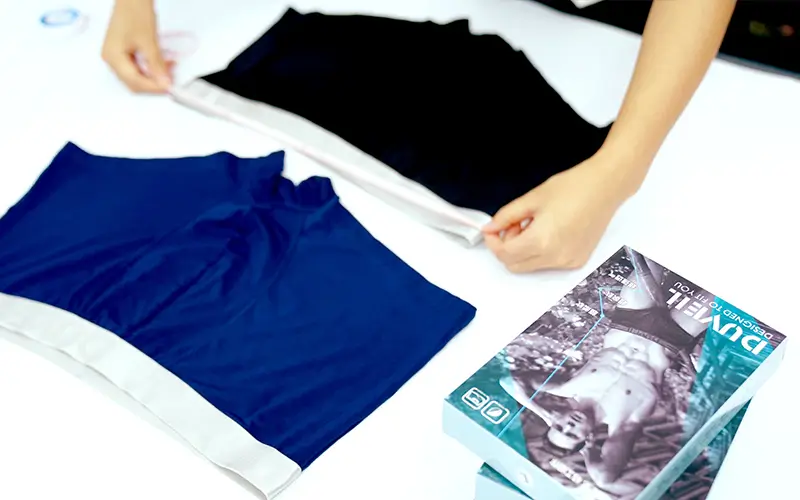
Hidden pockets in boxer briefs can carry small items, but their usefulness depends on where they sit and what the wearer can reach. A pocket that works empty may drag the leg opening down under load. A pocket that looks discreet in a flat photograph may be hard to use under trousers. Define the load and wearing scenario before choosing the location.
Last updated: November 26, 2026
Where should hidden pockets in boxer briefs sit?
Place hidden pockets in boxer briefs where the intended item can be reached under outer clothing without changing fit or creating an uncomfortable contact point. Compare an empty and a loaded sample with a plain control. Try the intended movements and check whether the opening stays usable after laundering and after the fabric returns to rest.
Define the item before drawing the pocket
Put the intended objects on the brief or use equivalents with the same dimensions and mass. Agree which item is the largest, whether the wearer needs quick access, and what outer clothing they are likely to wear. A broad instruction to add a storage pocket leaves the pattern maker guessing. Write what the pocket must hold and how it must be used. The Frank and Beans example of boxer briefs with pockets demonstrates an actual product with built-in storage, but the fit and capacity of any other design have to be assessed separately.
Assess each item with the wearer standing and seated. Test opening and closing with both the usual hand and the hand someone might actually use while moving or carrying something. Also try putting the garment on with the pocket empty. The entry can catch a finger or fold inward before any item has been placed inside. Note where an object presses against the body. Change placement if the opening can be reached only by pulling the waistband or rotating the garment uncomfortably.
Separate attachment from access and retention
A side position can make the opening easy to reach under suitable outer clothing, but test where the pocket sits against the hip or thigh. A waist placement can create a different access path and may pull on the band when loaded. Consider the proposed closure, what touches skin, and whether the pocket is stitched to a stable seam or relies on the body fabric to carry the weight. Ask the maker to identify the stitch and seam construction when preparing the sample. ASTM D6193 is a reference for stitch and seam terminology. Product-specific conditions and thresholds still need to be agreed.
Test a soft load and any intended rigid load. Compare standing, sitting, stairs, and the activity named in the brief. Check whether the item stays positioned without constant adjustment. This is a wear check within the conditions you specify. It does not establish that a pocket protects valuables, keeps the payload dry, or holds a device securely in every activity. Consider using a plain insert if a heavy or sharp item is not appropriate for the trial.
Use a control and compare after care
Compare the same pattern, fabric, and size with and without the proposed pocket. Record the location and size of the pocket and what changed in the assembly. Review whether the extra layers are visible, rub, or affect the leg opening. Use the Finetex underwear wear-test plan to hold the comparison conditions steady. The sports underwear program guide can help define which movements matter for your range.
Check the same samples after the intended care process. ISO 6330 describes domestic washing and drying procedures for textile testing. Agree on the procedure with the factory or lab. Compare opening size, edge distortion, recovery, and attachment against the unwashed control. Make sure any retention check uses the same object as before, since changing the object can hide a change in the pocket.
Record where it goes in production
Draw the placement from a feature the sewing team can find, such as a side seam or waistband edge, and give the pocket bag and opening their own measurements. Attach the fit notes and name the acceptance criteria. Decide which sizes need a placement check and how changes will be approved. Use the Finetex boxer brief range to identify the baseline fit and construction for a product brief before adding a storage feature.
Questions about hidden pockets
Will an internal pocket affect the outside silhouette?
Check the empty and loaded sample under the actual outer garment. A change can be visible only in motion or once the item is added.
Should the pocket grow as the boxer brief size grows?
Decide separately whether placement, opening length, and capacity change across sizes. The same object can require different placement even when the pocket dimensions stay the same.
Is a closure always necessary?
Compare access and retention with the intended item and activity. An added closure may make the object easier to retain or harder to reach, depending on the placement and wearing conditions.
More factory-floor notes for brand owners
Naturally Dyed Underwear: What Should Buyers Test Before Bulk?
Plan naturally dyed underwear testing for wash and rub fastness, shade variation, and reorder approval. Match color and…
Read more →
Silk Underwear Sourcing: What Can a Buyer Approve from a Sample?
Use a silk underwear sourcing checklist to verify fiber composition, compare stretch and seams, and approve care and…
Read more →
Adaptive Men’s Underwear: How Do You Test Side Openings?
Test side openings in adaptive men's underwear with seated and one-handed dressing checks, closure placement reviews, and a…
Read more →Microfiber Underwear Fabric: What Should Buyers Specify?
Specify microfiber underwear fabric by verified fiber content, knit structure, stretch, and wash performance. Use a sample checklist…
Read more →Skin-Tone Underwear Color Matching: How Do You Approve a Range?
Plan skin-tone underwear color matching with physical swatches, stretch checks, and a repeatable shade approval record for production…
Read more →
Underwear Product Photography: What Should Brands Show?
Plan underwear product photography with a clean main image, construction close-ups, accurate color variants, and a checklist for…
Read more →Request a sample & pricing information
Send us your tech pack, target price or a reference sample — we reply with a quotation, a realistic lead time and a fabric recommendation within one working day.
- Free sampling plan & cost breakdown
- MOQ from 300 pcs per style
- Reply within 1 working day