
Two Factories, One Decision: A One-Page Scorecard
A printable one-page scorecard for comparing two clothing factories: eight weighted criteria, 1-5 scoring anchors, on-site evidence and a decision rule.
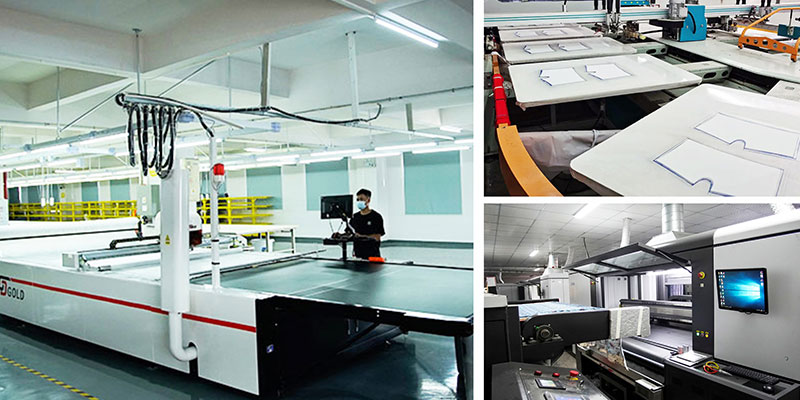
Answer first: When two factories look similar on price, compare them on eight weighted criteria instead: product capability, quality system, compliance and traceability, lead-time reliability, quote transparency, development and communication, capacity and flexibility, and commercial terms. Score each from 1 to 5 against written anchors, record the evidence behind every score, multiply by the weight, and apply two rules: a gate (any score of 1 on compliance or quality rules a factory out, whatever the total) and a decision line (if the weighted totals are close, run a small trial order rather than deciding on paper). The table below is ready to print; the weights are a starting point that you should adjust to your product and risk.
The weights and thresholds in this scorecard are our suggested method, not an industry standard or survey data. The OECD’s garment due diligence guidance, read on 20 November 2026, recommends that supplier assessments include on-site visits, chemical tests and quality certificates, and this sheet is built to capture that evidence.
The eight weighted criteria
| # | Criterion | Suggested weight | What it covers |
|---|---|---|---|
| 1 | Product capability | 20 | Has it made this product, fabric and construction before? |
| 2 | Quality system | 15 | Inspection gates, measurement reports, defect tracking |
| 3 | Compliance and traceability | 15 | Social audits, fabric and cotton origin documents, labelling |
| 4 | Lead-time reliability | 15 | Written schedules, approval calendar, history of on-time shipment |
| 5 | Quote transparency | 10 | Component breakdown: fabric, labour, trims, packing, margin |
| 6 | Development and communication | 10 | Sampling speed, consolidated comments, a named contact |
| 7 | Capacity and flexibility | 10 | Free capacity for reorders, ability to split or move shipments |
| 8 | Commercial terms | 5 | MOQ, payment terms, Incoterms |
| Total | 100 |
Price is deliberately not a criterion. Compare price separately, on the same specification, after the scorecard; otherwise a lighter fabric or a missing packing item wins on cost. Our apparel cost breakdown shows what to line up.
Scoring anchors (1 to 5)
Score against what you can see, not what you are told.
| Score | Meaning | Example (quality system) |
|---|---|---|
| 5 | Proven with documents and observed on site | Inspection reports for a recent order shown; in-line check seen on the floor |
| 4 | Documented, not observed | Sample reports provided; not seen in operation |
| 3 | Described clearly, partly documented | Process explained; some records |
| 2 | Claimed, not evidenced | “We do AQL” with no reports |
| 1 | Absent or contradicted | Records refused or inconsistent |
Use the same anchors for every criterion. Our scored method for choosing a factory explains the thinking behind scoring capability instead of comparing claims.
Evidence to collect on site
| Criterion | Ask to see | Watch for |
|---|---|---|
| Product capability | A garment in production like yours; machine types for your seams | Your product only in the showroom |
| Quality system | Last inspection report, measurement report, defect log | Reports with no dates or lot numbers |
| Compliance and traceability | Audit reports, fabric supplier names, cotton origin documents | Missing tiers; see factory audit types |
| Lead-time reliability | A written schedule from a past order, with dates | Only verbal promises |
| Quote transparency | A component breakdown for your style | One unit price only |
| Development and communication | Sampling room, its own staff and machines | Samples made on bulk lines |
| Capacity and flexibility | The production plan for the next three months | “We can do anything” |
| Commercial terms | Proforma invoice template | Terms that change after the sample |
For US imports, the traceability line matters more than its weight suggests. CBP’s UFLPA page explains the rebuttable presumption that goods made wholly or in part in Xinjiang, or by entities on the UFLPA Entity List, are prohibited; our guide to UFLPA documents lists what a factory must supply. That is why compliance is a gate, not just a score.
Inspection results are easier to compare if both factories inspect to the same sampling scheme; ISO 2859-1 sampling indexed by AQL is the common reference.
The decision line
- Gate: a score of 1 on quality system or on compliance and traceability excludes the factory.
- Weighted total: sum of (score × weight) ÷ 5, giving a result out of 100.
- Clear winner: if one factory leads by 10 points or more, choose it and compare prices on the same specification.
- Close call: if the gap is under 10 points, place a trial order of one style with the better-priced factory, or split one style between both, and re-score after delivery. Our article on China plus one covers how to split without splitting quality.
A hypothetical example of the arithmetic: a factory scoring 4 on capability (weight 20) earns 4 × 20 ÷ 5 = 16 of the 20 available points. Scores of 4, 3, 5, 4, 5, 4, 3 and 3 across the eight criteria give 16 + 9 + 15 + 12 + 10 + 8 + 6 + 3 = 79 out of 100. The scores are invented for illustration only.
The 10-point line is our suggestion; set your own before you score, so the result is not adjusted to match a preference.
Printable scorecard
Copy this table into a spreadsheet or print this page. Fill one column per factory.
| Criterion (weight) | Factory A score (1–5) | Factory A evidence | Factory B score (1–5) | Factory B evidence |
|---|---|---|---|---|
| Product capability (20) | ||||
| Quality system (15) | ||||
| Compliance and traceability (15) | ||||
| Lead-time reliability (15) | ||||
| Quote transparency (10) | ||||
| Development and communication (10) | ||||
| Capacity and flexibility (10) | ||||
| Commercial terms (5) | ||||
| Gate passed? (Y/N) | ||||
| Weighted total (/100) |
For the documents to request before a visit, use our tech pack template, and see the clothing factory sourcing guide for the wider process.
Fact, advice and uncertainty
Fact: the OECD garment guidance recommends supplier assessments that include on-site visits, chemical tests and quality certificates; CBP enforces a rebuttable presumption against goods linked to Xinjiang or the UFLPA Entity List.
Advice: score both factories against the same evidence anchors, keep price separate, treat compliance and quality as gates, and use a trial order when the result is close.
Uncertain: how a factory performs on your product under real deadlines; only a delivered order shows that.
Related reading
- Factory Audit Types: BSCI, Sedex, WRAP and What Each Proves
- Subcontracting: How to Know If Your Order Is Outsourced
- Tech Pack Template: The 14 Pages a Factory Needs
- MOQ Calculator: What 500 Pieces Really Costs per Style
Frequently asked questions
What should a factory scorecard include?
Capability, quality system, compliance and traceability, lead-time reliability, quote transparency, development and communication, capacity and commercial terms, each scored against evidence and weighted.
Should price be part of the score?
We suggest comparing price separately, on an identical specification, after scoring. Otherwise a cheaper but lighter or less complete quote can win.
How do I score a factory I cannot visit?
Score only what is documented and cap unobserved items at 4. A third-party audit or inspection company can provide the on-site evidence.
Sources
- OECD Due Diligence Guidance for Responsible Supply Chains in the Garment and Footwear Sector (PDF)
- CBP: Uyghur Forced Labor Prevention Act
- ISO 2859-1:1999 preview: Sampling schemes indexed by AQL
Score us against the sheet
Bring this scorecard to a visit or a video call. We will show the documents behind each line: inspection and measurement reports, audit reports, a component costing and a written schedule for your style.
Contact us to arrange it or read our clothing factory sourcing guide.
More factory-floor notes for brand owners
Naturally Dyed Underwear: What Should Buyers Test Before Bulk?
Plan naturally dyed underwear testing for wash and rub fastness, shade variation, and reorder approval. Match color and…
Read more →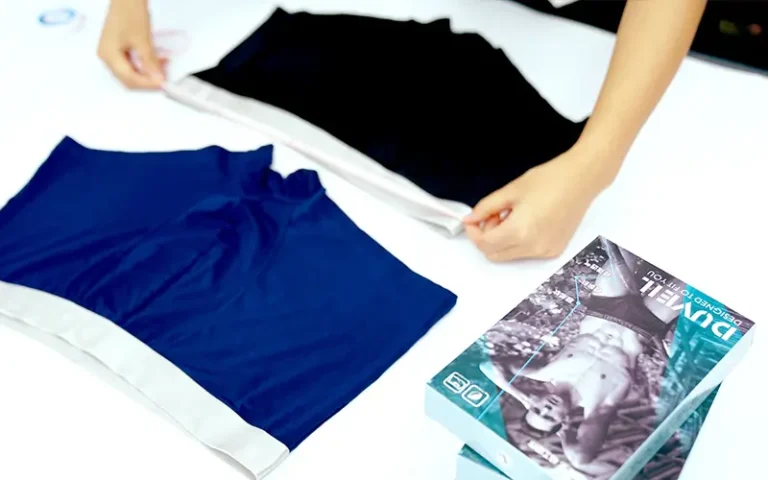
Hidden Pockets in Boxer Briefs: Where Should They Sit?
Choose hidden pockets in boxer briefs by testing placement, access, load, and movement in comparable samples before approving…
Read more →
Silk Underwear Sourcing: What Can a Buyer Approve from a Sample?
Use a silk underwear sourcing checklist to verify fiber composition, compare stretch and seams, and approve care and…
Read more →
Adaptive Men’s Underwear: How Do You Test Side Openings?
Test side openings in adaptive men's underwear with seated and one-handed dressing checks, closure placement reviews, and a…
Read more →Microfiber Underwear Fabric: What Should Buyers Specify?
Specify microfiber underwear fabric by verified fiber content, knit structure, stretch, and wash performance. Use a sample checklist…
Read more →Skin-Tone Underwear Color Matching: How Do You Approve a Range?
Plan skin-tone underwear color matching with physical swatches, stretch checks, and a repeatable shade approval record for production…
Read more →Request a sample & pricing information
Send us your tech pack, target price or a reference sample — we reply with a quotation, a realistic lead time and a fabric recommendation within one working day.
- Free sampling plan & cost breakdown
- MOQ from 300 pcs per style
- Reply within 1 working day