
Boxer Briefs Manufacturing in China: Specs That Decide Fit, Cost and Reorder Rate
A boxer brief programme is decided by five measurements, the gusset, and the waistband. See how Chinese factories build them, what MOQ applies, and what to…
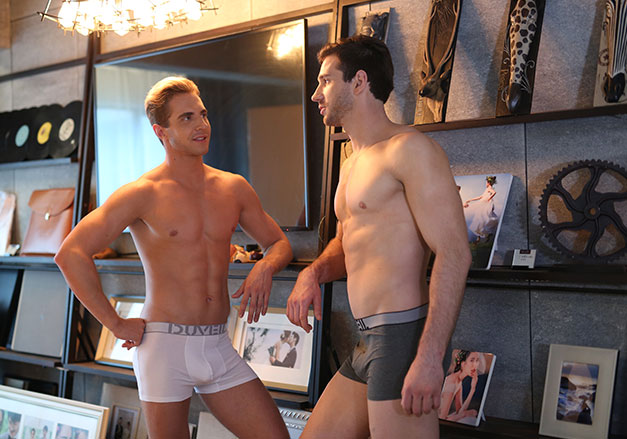
Boxer briefs look simple and behave like a precision product. Five measurements, one gusset decision and one waistband choice determine whether customers reorder or return, and each of them has a cost consequence the quotation will not explain unless you ask. Getting those six decisions right at the specification stage is what makes the second order cheaper than the first.
Which measurements define a boxer brief block?
Waist, rise, thigh, inseam and leg opening.
Those five points describe how the garment sits and moves, and they interact: a higher rise changes where the waistband lands, which changes how the leg opening cuts across the thigh.
| Measurement | What it decides | Common failure |
|---|---|---|
| Waist | Band position and grip | Digging in when the band is too narrow |
| Rise | Where the garment sits on the body | Riding up at the back |
| Thigh | Comfort during movement | Tightening on active customers |
| Inseam | Coverage and the visual silhouette | Riding up under trousers |
| Leg opening | Whether the hem stays put | Rolling or cutting in |
Lock them in writing with tolerances rather than approving them by eye. A tolerance that is too wide turns the measurement into a suggestion and invites drift between lots; one that is too tight produces rejections for variation no customer would notice. Ask the factory which tolerance it can hold on each point, then set the chart to that answer, and measure a size set rather than a single sample before approving bulk.
How do fabric and gusset choices affect cost?
They set both the comfort floor and the price floor.
Most boxer briefs are built on a stretch knit — modal, bamboo, combed cotton or a nylon blend with spandex — and the gusset is often a second fabric chosen for breathability, adding a material and an operation.
A fabric the factory already runs keeps the price at the garment minimum and makes the reorder realistic; a developed quality adds a knitting and dyeing minimum and can disappear between seasons. The composition also determines how you will describe the product, so ask for the ratios in writing: a blend of 95% modal / 5% spandex behaves differently from 87% nylon / 13% spandex and should be specified deliberately rather than inherited. On the gusset, ask whether it is a separate panel or a folded extension, which fabric it uses and how it is finished, because those three answers explain most of the visible difference between two samples that photograph identically.
Does pouch construction matter to customers?
It matters to the customers who choose the product for it.
Boxer briefs are built with a flat front, a contoured pouch or no pouch construction at all, and the choice changes both the pattern and the fit conversation.
A contoured pouch adds pattern work and a seam, and it is the feature performance and comfort-led brands build their story on. A flat front is simpler, cheaper and suits a value or basic positioning, where the customer is buying a familiar fit. Neither is better in the abstract, but the decision belongs in the specification rather than in the sample room, because it changes the block, the grading and the cost. Ask which constructions the factory runs today; a pattern library that includes several pouch shapes is a reasonable indicator that the block has been developed for different use cases rather than inherited from one style.
Which waistband choice affects the most?
Construction and width, not the logo.
A woven band, a jacquard band, a printed band and plain elastic behave differently after repeated washing, and the width affects both how the garment feels and how premium it reads.
Because the band is attached late in production and is the most visible element of the finished product, it is also the component most often substituted when a supply problem appears. Specify the construction, the width, the elasticity and the supplier in the approved sample, and require written approval with a photograph before any change. Ask how the band is tested for recovery after washing; a band that returns to its original circumference is what keeps the garment wearable, and it is the single most useful quality signal on a boxer brief.
What does inseam length change?
Coverage, silhouette and the market it suits.
Short inseams read as trunks and suit warm climates and close-fitting trousers, while longer inseams suit athletic use and customers who want thigh separation.
Inseam is one of the few specifications that changes the product category rather than just the fit, so it is worth deciding deliberately and stating it in the style name as well as in the specification. Buyers who try to cover both ends of the market with one inseam usually end up with a length that suits neither, and the fix afterwards means a second pattern and a second size set. If your range needs both, treat them as two styles from the beginning and share the fabric, the waistband and the packaging so the additional cost is limited to the pattern work.
What should you expect for minimums and size sets?
A component-based minimum and a measured size set.
The minimum is set by the fabric lot, the dye lot, the waistband tooling and the line changeover, confirmed per design and colour, and the size set is what protects you from a grading error in bulk.
Ask which of your choices sets the minimum for a boxer brief programme. The answer is usually the fabric if you have nominated a developed quality, the waistband if you have chosen a jacquard band, and the colour count if you are launching several shades. Each of those can be adjusted independently, which means a first order can usually be made viable by changing one decision rather than by increasing the quantity. Where the factory produces a measured size set, ask for the recorded values rather than a statement that the sizes were checked, and keep those values with the approved sample.
How should a boxer brief be wear-tested?
Through a working day, then through repeated washing.
The two tests answer different questions: a day of wear reveals whether the block rides up or cuts in, while repeated washing reveals whether the waistband recovers and the fabric keeps its shape.
Wear the sample under the kind of clothing your customers will wear it with, because a fit that works under loose trousers can be uncomfortable under tailored ones. Note specifically whether the leg opening rolls, whether the back rise stays in place when sitting, and whether the thigh measurement tightens during movement. Then wash the sample several times and reassess before approving; the changes that appear between the third and tenth wash are the ones that generate returns. Record what you approved, including the measurements and the fabric reference, so the bulk order is measured against a standard rather than a recollection of how the sample felt on the day it arrived.

Which quality points are specific to boxer briefs?
Elastic recovery, gusset construction and leg hem behaviour.
Beyond general inspection, a boxer brief has three components that fail in characteristic ways: the waistband, the gusset seam and the leg opening.
Ask the inspection plan to cover all three explicitly. Waistband checks should confirm recovery rather than appearance alone; the gusset should be inspected for seam integrity and flatness, since a lumpy join is felt rather than seen; the leg opening should be checked for rolling after the elastic is set. Measurement verification per size belongs in the same plan, because a single size drifting outside tolerance is a grading problem rather than a sewing problem and needs a different correction. Where the order value justifies it, a final inspection at a stated acceptance level gives you a record that is useful if the batch underperforms in market.
What signals that a boxer brief core is working?
Reorder rate and return reasons, not the first order.
A core style shows itself when a meaningful share of customers buy the same specification again and when the returns that do occur are about fit expectations rather than construction faults.
Both signals point at the specification rather than at marketing. A high reorder rate with few fit returns says the block and the size chart are aligned with the market; a moderate reorder rate with returns clustered on one size says the grading needs attention; returns that mention the waistband or the leg opening point at the elastic specification. Read the reasons before changing the product, and change one variable at a time so the effect is visible. Buyers who treat the first reorder as a test of the specification rather than a repeat of the first order usually end up with a core style that holds its position for several seasons, and with a measurement file that makes each following order faster than the last.
FAQ
What is the difference between boxer briefs and trunks?
The inseam is the main difference. A trunk has a shorter leg that finishes higher on the thigh, while a boxer brief covers more of the leg. Because the difference changes the pattern and the size grading rather than just the styling, the two styles should be specified as separate references even when they share fabric and waistband.
Which fabric is best for boxer briefs?
It depends on the positioning. Modal and bamboo blends are chosen for softness, combed cotton for familiarity and breathability, and nylon or polyamide blends with spandex for performance and recovery. Ask for the composition by percentage and confirm the fabric is one the factory runs continuously, so the reorder can be repeated.
What MOQ applies to a custom boxer brief order?
The minimum is built from the fabric lot, the dye lot, the waistband tooling and the line changeover, confirmed per design and per colour. Ask which of your specifications sets the threshold: a running fabric, one colour and a standard waistband will always sit lower than a developed fabric with a jacquard band.
How do I improve the reorder rate on a boxer brief?
Start with the size chart and the waistband. Measure the size set rather than sampling one size, publish accurate measurements on the product page, and specify a band tested for recovery. Returns that cluster on one size indicate a grading issue, while complaints about the band or the leg opening indicate the elastic specification.
Next step for your team: send the Finetex Global team your boxer brief reference and target market, and ask for the measurement chart, the pouch and inseam options, the waistband constructions available and the size-set process.
Sources: OEKO-TEX STANDARD 100; 16 CFR Part 303 textile labelling; ISO 9001 quality management; Supima — extra-long staple cotton; Lenzing — TENCEL™ branded lyocell.
More factory-floor notes for brand owners

Sample Revision Limits: How to Control Underwear Development Cost and Calendar
A sample revision limit should control scope, not block necessary correction. The buyer and factory need to distinguish…
Read more →
Lab Dips and Strike-Offs for Underwear: Approval Steps That Prevent Delays
A lab dip approves a dyed textile shade; a strike-off approves printed artwork on the intended substrate. They…
Read more →
Color MOQ Planning: How to Share Fabric Across Multiple Underwear Styles
Color MOQ planning works best when a brand treats dyed fabric as a shared material platform rather than…
Read more →
Underwear Fabric Utilization: How Marker Efficiency Changes Unit Cost
Fabric utilization converts a fabric quotation into a garment cost. The calculation must account for pattern area, fabric…
Read more →
Open Costing for Men’s Underwear: Reading Fabric, Trim, Labor and Overhead Lines
An open-cost sheet is useful only when every line is tied to a measurable specification, a purchasing unit…
Read more →Global Apparel Sourcing Outlook 2026: Cotton, Freight and Supply-Chain Risk
A data-led 2026 apparel sourcing outlook on cotton balances, freight volatility, supplier diversification, lead time, compliance and practical…
Read more →Request a sample & pricing information
Send us your tech pack, target price or a reference sample — we reply with a quotation, a realistic lead time and a fabric recommendation within one working day.
- Free sampling plan & cost breakdown
- MOQ from 300 pcs per style
- Reply within 1 working day