
Custom Boxer Briefs: Deciding What to Customise and What to Leave Alone
Custom boxer briefs fail when brands customise the wrong layer. Learn which elements - fit block, fabric, waistband, print - justify cost, and which add risk…
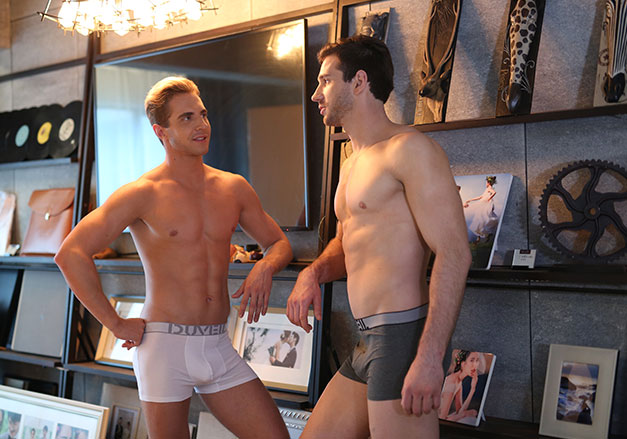
Customisation is not a single decision, and treating it as one is how brands spend their first-order budget on elements customers never notice. Four layers can be changed on a boxer brief — the fit block, the fabric, the waistband and the decoration — and they differ enormously in cost, risk and how much they influence a purchase. Ranking them before you brief a factory is the cheapest design decision you will make.
What are the four layers of customisation, in order of value?
Waistband, fabric, decoration, fit block.
Ranked by visibility per unit of cost, the waistband delivers most, followed by fabric choice, then decoration, with a proprietary fit block last because it is the most expensive and the least visible to a customer.
| Layer | What it costs | What the customer notices |
|---|---|---|
| Waistband | Tooling per construction | Brand identity in use; fit retention |
| Fabric | Lot minimums if not running | Softness, stretch, how it washes |
| Decoration | Setup per colourway | Visual identity; durability of the mark |
| Fit block | Pattern and grading work | Comfort and return rate |
The ranking is not a rule about importance; it is a rule about sequence. A brand with a limited budget should secure the waistband and a suitable running fabric first, because those two decisions affect every unit sold. The fit block matters more in the long run, but it is also the layer where an error is most expensive to correct, so it is better attempted once the style has proven demand rather than on the first order.
When is a proprietary fit block worth the tooling?
When the fit itself is the reason customers buy.
A brand whose proposition is comfort, support or a specific silhouette needs its own block, because a factory block is shared and cannot be adjusted between seasons without development work.
The signals that justify the spend are specific: a style that reorders reliably, reviews that mention fit rather than price, or a competing product appearing in the same block. Until one of those appears, a factory block with your waistband and your branding usually delivers a better return on the same budget, because the customer cannot see the pattern. Where you do commit, confirm in writing what transfers: the measurement chart, the graded nest and the file formats, because a block that lives only in the supplier’s system is not an asset you own. It is also worth asking what the block would cost to adjust in a later season, so the commitment is understood as an ongoing relationship rather than a one-off purchase.
What do fabric and weight changes cost in practice?
A lot minimum, or nothing at all.
Choosing between qualities the factory already runs costs nothing beyond the price difference, while developing a new fabric adds a knitting and dyeing minimum and a longer schedule.
The distinction is worth testing early, because it usually decides whether a first order is viable. Ask for the list of compositions currently in production with their ratios, then ask which of them suits a boxer brief in your target market. A running 95% modal / 5% spandex or 93% bamboo / 7% spandex quality will behave predictably across orders, whereas a new blend must be knitted, dyed, tested and then re-available for the reorder. Where you do want something exclusive, a change in weight or finish within a running fibre family is often a cheaper route to differentiation than an entirely new composition.
Does decoration survive on knitwear?
Only if method and placement suit knitwear.
Screen printing, DTG, heat transfer and sublimation each behave differently on a stretch knit, and a mark that performs on a flat cotton panel can crack where the fabric moves with the body.
The practical approach is to test rather than assume. Ask for a decorated sample and put it through repeated washing before approving the method, and pay attention to placement: a print across the seat or the thigh sits directly on the largest stretch zone, while a mark on the waistband or a small logo on the leg is far more durable. Where the decoration is the product’s visual idea rather than a brand mark, decide the method during specification rather than in the artwork file, and ask whether an all-over print requires a different fabric or a sublimation route that only works on synthetic blends.
Which waistband construction should carry the brand?
The one whose durability matches your positioning.
Woven, jacquard and printed bands all carry a logo, but they differ in how the mark is made, how the band behaves after washing, and what tooling each requires.
A woven band with a name in the weave reads as premium and holds its appearance through repeated washing; a printed band is cheaper to set up and suits a graphic identity; a heat-transfer mark on a plain band is the lowest-tooling route to a branded look. Because the band is the component most often substituted when supply gets tight, name the construction and the supplier in the approved sample and require written approval before any change. Ask how the band is tested for recovery, and specify the width — it changes both how the garment feels and how the product reads in listing photography.
How should custom sizing be handled?
Customise the fit direction, then measure every size.
A custom block does not mean unlimited sizes; it means you define the measurements and the increments, and then verify them with a produced size set rather than a single sample.
The measurements that most often need adjustment are the rise, the thigh and the leg opening, and each can be changed without rebuilding the whole block. Ask the factory to propose the grading increments and explain what they imply for the extremes of the range, because a block that fits well at medium can pull at the smallest size and ride up at the largest. Record the measured values rather than nominal ones, keep them with the approved sample, and use the same numbers in your product listing so customers compare the garment against the chart you actually shipped.
What should a custom sample be tested for?
Fit in use, then behaviour after washing.
Wear the sample for a working day under the clothing your customers will wear, then wash it repeatedly and reassess the waistband, the leg openings and the gusset before approving bulk.
Note specifically whether the leg opening rolls, whether the back rise stays in place when sitting, and whether the thigh measurement tightens during movement. After washing, check that the band returns to its original circumference and that any decoration is still flat and intact. Anything you approve should be recorded with measurements and a retained reference pair, so the bulk order is produced against a written standard rather than a shared impression of a sample that has since been worn.

Which customisation mistakes cause returns?
Approving a block on one sample size.
Both are specification errors rather than manufacturing faults, which is why they survive a final inspection and only appear once customers start wearing the product.
- A proprietary block approved on one sample size rather than a measured size set.
- Decoration placed across the seat or thigh, where the fabric moves most.
- A waistband chosen for appearance without testing recovery after washing.
- A size chart in the listing that does not match the garments shipped.
- A fabric selected for its story rather than its behaviour on the body.
Each is visible before bulk if the specification is tested properly, and each is expensive afterwards. The common thread is approval by impression: a sample that looks right, a chart copied from a competitor, a band chosen from a photograph.
Measurement and wash testing replace all three, and neither is expensive. A measured size set and a decorated sample that has been through ten wash cycles will surface most of these problems while they still cost a sample rather than a container, and the records you keep from those tests become the standard for every following order.
How does a custom programme’s cost change with volume?
Tooling is fixed; unit cost falls.
Pattern work, waistband tooling and decoration setup are incurred once, so their contribution per garment falls as the order grows, while fabric and making costs stay roughly proportional.
The practical consequence is that a custom programme makes most sense when you intend to reorder. A bespoke waistband used once is an expensive decoration; the same band across three seasons becomes part of the product’s identity at a negligible cost per unit. Ask the factory to show the same specification at the next quantity band and to explain what would move the price, then decide which custom elements you intend to keep and which were only for the first order. That question usually reveals that one of the four layers can be postponed, which frees budget for the layers customers actually notice.
FAQ
Where can I find custom-made boxer briefs for my brand?
Look for a knitwear factory that runs boxer briefs continuously, publishes its fabric compositions, and offers waistband and decoration customisation with a size-set process. Ask which styles and fabrics are in production now, what tooling each branding option requires, and how the minimum is composed for your specification.
How much does custom boxer brief manufacturing cost?
The premium comes from four decisions: a proprietary fit block, a developed fabric, a branded waistband and custom decoration. Each can be added separately, so a first order can carry one bespoke element and stay close to a stock price. Ask for the cost of each layer separately rather than a single all-in figure.
Does custom printing survive washing on boxer briefs?
It depends on the method, the fabric and the placement. Prints placed across the seat or thigh sit on the largest stretch zone and fail sooner. Ask for a decorated sample, wash it repeatedly before approving, and prefer a waistband or heat-transfer mark where the decoration is a brand element rather than the product’s visual idea.
What is the minimum order for custom boxer briefs?
The minimum is set by the components: the fabric lot, the dye lot, the waistband tooling and the line changeover, confirmed per design and per colour. A running fabric in one colour with a standard band sits lowest; a developed fabric with a jacquard band and several shades sits highest. Ask which of your choices sets the threshold.
Next step for your team: tell the Finetex Global team which of the four customisation layers you want to own, and ask for the tooling, minimum and lead time attached to each before you commit the budget.
Sources: OEKO-TEX STANDARD 100; 16 CFR Part 303 textile labelling; ISO 9001 quality management; Textile Exchange standards; Supima — extra-long staple cotton.
More factory-floor notes for brand owners

Sample Revision Limits: How to Control Underwear Development Cost and Calendar
A sample revision limit should control scope, not block necessary correction. The buyer and factory need to distinguish…
Read more →
Lab Dips and Strike-Offs for Underwear: Approval Steps That Prevent Delays
A lab dip approves a dyed textile shade; a strike-off approves printed artwork on the intended substrate. They…
Read more →
Color MOQ Planning: How to Share Fabric Across Multiple Underwear Styles
Color MOQ planning works best when a brand treats dyed fabric as a shared material platform rather than…
Read more →
Underwear Fabric Utilization: How Marker Efficiency Changes Unit Cost
Fabric utilization converts a fabric quotation into a garment cost. The calculation must account for pattern area, fabric…
Read more →
Open Costing for Men’s Underwear: Reading Fabric, Trim, Labor and Overhead Lines
An open-cost sheet is useful only when every line is tied to a measurable specification, a purchasing unit…
Read more →Global Apparel Sourcing Outlook 2026: Cotton, Freight and Supply-Chain Risk
A data-led 2026 apparel sourcing outlook on cotton balances, freight volatility, supplier diversification, lead time, compliance and practical…
Read more →Request a sample & pricing information
Send us your tech pack, target price or a reference sample — we reply with a quotation, a realistic lead time and a fabric recommendation within one working day.
- Free sampling plan & cost breakdown
- MOQ from 300 pcs per style
- Reply within 1 working day