
Can a long-sleeve undershirt work as a thermal base layer?
Can a long-sleeve undershirt work as a thermal base layer? What makes a base layer warm, fabric choices, fit, moisture handling, tests and honest product claims.
Part of T-Shirts, Undershirts & Tank Tops in Finetex Talk — buyer questions answered by the Finetex editorial team.
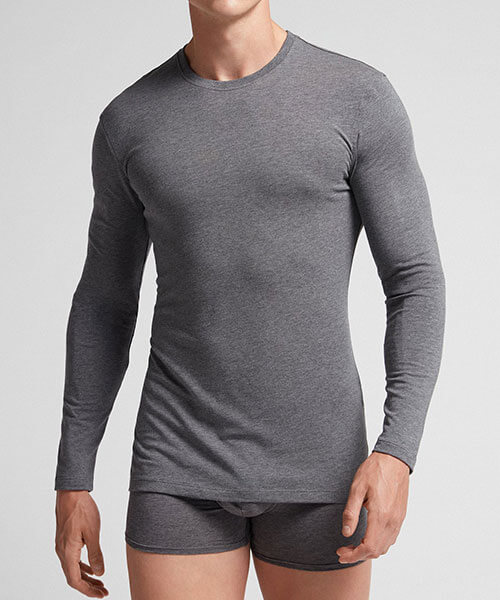
A brand sells a light long-sleeve undershirt for office wear. Winter customers ask whether it can be used as a thermal base layer for outdoor activities, and the team is wondering whether to market it that way or develop a separate product.
Short answer: A long-sleeve undershirt can add some warmth as a first layer, but most office undershirts are not designed as thermal base layers. Warmth from a base layer comes mainly from trapping still air close to the skin and from staying dry. Thin, smooth jersey traps little air; brushed, waffle, grid or rib structures and heavier fabrics trap more. For active use, moisture handling matters too: cotton holds sweat and feels cold when damp, while polyester, nylon, merino wool or blends move moisture and stay warmer during and after activity. A close fit keeps the trapped air layer near the skin. So the honest answer is that a light cotton or modal undershirt suits mild cold and indoor use, while a real thermal layer needs a warmer structure and suitable fibres. If you want to make thermal claims, measure thermal resistance with ISO 11092 on the fabric and compare it with alternatives.
What makes a base layer warm
- Still air trapped by brushed, waffle or grid structures.
- Fabric weight and thickness.
- Staying dry: moisture conducts heat away from the body.
- A close fit without gaps at neck, wrists and waist.
Fabric choices
- Light cotton or modal jersey: comfortable, mild warmth, poor when sweaty.
- Brushed polyester or nylon blends: warmer, dry faster.
- Merino wool or wool blends: warm and odour resistant, higher cost.
- Grid fleece: warm with good breathability for active use.
Testing
- Thermal and water-vapour resistance with ISO 11092.
- Liquid moisture management with AATCC TM195.
- Wear trials in cold conditions, both still and active.
Product positioning
Keep the office undershirt as an undershirt, and describe its warmth modestly, for example adds a light layer. If demand is strong, develop a dedicated thermal style with a warmer fabric, longer cuffs and body, and a closer fit.
A worked example
As an illustration, a brand could compare its cotton undershirt with a brushed polyester blend and a grid fleece in ISO 11092 tests and a cold-weather wear trial, then decide whether a separate thermal line is worth developing.
Fit and construction details
Thumb loops, longer cuffs, a longer back and flat seams help a base layer stay in place under outer layers. A brushed inner face feels warmer on contact but can pill, so check pilling on brushed options.
Limits
Warmth depends on outer layers, activity and climate. Lab values do not translate directly into comfort.
Facts, recommendations and uncertainty
Established: warmth comes from trapped air and staying dry. Recommendation: keep claims modest for thin undershirts and develop a dedicated thermal style for real cold. Uncertain: how much warmth your customers expect.
Sources and further reading
- ISO 11092:2026 — Thermal and water-vapour resistance, sweating guarded-hotplate test
- AATCC TM195 — Liquid moisture management properties of textile fabrics
Standards and regulations are referenced by their published scope. Test parameters, cycles and pass levels should be agreed with your laboratory for the specific product; legal requirements should be confirmed for each destination market.
Three more perspectives
Ask fabric mills for thermal and moisture test reports on candidate fabrics, and compare minimums and lead times, because brushed and grid fabrics often have longer development times. Check that any thermal claim on packaging and listings is supported by test data on the actual fabric you buy. If the thermal style is new to the factory, request a development timeline and the minimum for the special fabric before committing, and keep the office undershirt unchanged.
Develop a thermal version with longer sleeves and cuffs, a longer body and a closer fit, and test it under outer layers in still and active conditions. Check comfort at seams and cuffs, since base layers are worn for long periods next to the skin. Decide which activities the thermal layer targets, such as commuting, hiking or skiing, because each needs a different balance of warmth and breathability.
Check fabric weight and thickness per lot against the approved standard, because warmth depends on them. Inspect brushed fabrics for even brushing and shedding. Record test and wear-trial results with the fabric lot so later complaints can be traced. Check brushed fabrics for pilling and shedding after washing. Measure cuff and body length after washing, since short cuffs leave gaps at the wrist.
Related products
← More in T-Shirts, Undershirts & Tank Tops · All Talk topics · Ask us about your programme
More factory-floor notes for brand owners

What should I check on a novelty hoodie such as an eye-mask hood?
What to check on a novelty hoodie such as an eye-mask hood: hood structure and lining, visibility and…
Read more →How should I size a unisex hoodie?
How to size a unisex hoodie: choosing a base block, body measurement ranges, ease, sleeve and body length,…
Read more →What care instructions should a hoodie carry?
What care instructions a hoodie should carry: the elements of a complete washing instruction, warnings for prints and…
Read more →
How do I match colour across hoodie and jogger sets?
How to match colour across hoodie and jogger sets: same fabric lot, rib and trims, dyeing method, shade…
Read more →How many colourways can I order at hoodie MOQ?
How many colourways a hoodie order can include at MOQ: how factories set minimums per style, colour and…
Read more →Why does a dark hoodie stain other clothes?
Why dark hoodies stain other clothes: dye bleeding in washing, rubbing transfer, perspiration, unfixed dye and pigment, and…
Read more →Request a sample & pricing information
Send us your tech pack, target price or a reference sample — we reply with a quotation, a realistic lead time and a fabric recommendation within one working day.
- Free sampling plan & cost breakdown
- MOQ from 300 pcs per style
- Reply within 1 working day