
De Minimis Reform: What It Means for Small Apparel Importers
The US $800 de minimis exemption is suspended and repealed from July 2027. What it means for small apparel brands: entry types, DDP and cost per…
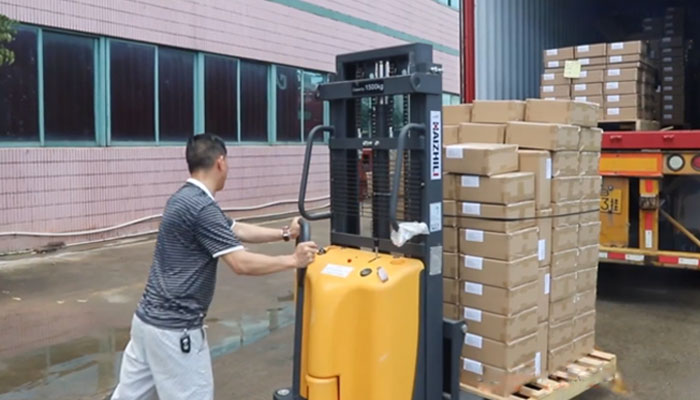
Answer first: The US de minimis exemption that let apparel parcels worth $800 or less enter duty-free is suspended for every country and every mode, and Congress has repealed it for commercial shipments from 1 July 2027. Small apparel brands now pay duty and Section 301 layers on every parcel, so 500–3,000 piece orders usually cost less landed as consolidated freight with formal entry than as direct-to-consumer parcels.
For several years a small apparel brand could keep stock in China and ship single orders to US customers by express or post, with each parcel entering under Section 321 without duty. That model no longer works. This article explains what changed, in date order, how the remaining entry routes compare for a brand ordering 500 to 3,000 pieces, and how to rebuild unit costs. Dates and rules were checked on US government sources on 11 November 2026. Confirm the current position with a licensed customs broker before you change your fulfilment model.
What changed, in date order
| Date | Action | Effect for apparel parcels |
|---|---|---|
| 2 May 2025 | E.O. 14256 | Duty-free de minimis suspended for products of China |
| 4 July 2025 | One Big Beautiful Bill Act, Public Law 119-21, §70531 | Statutory repeal of the commercial de minimis privilege, effective 1 July 2027 |
| 29 August 2025 | E.O. 14324 | Duty-free de minimis suspended for low-value imports of all countries |
| 20 February 2026 | Supreme Court decision on IEEPA tariffs; E.O. 14388 | IEEPA tariffs ended, but the de minimis suspension was expressly continued |
| 24 June 2026 | CBP interim final rules | Suspension written into CBP regulations indefinitely, for postal and non-postal shipments |
| 24 July 2026 | CBP postal rule provisions take effect | New informal entry process for mail shipments up to $2,500 |
| 20 January 2027 | Extended compliance date (91 FR, 22 October 2026) | Formal entry requirement for certain mail shipments, including those subject to Chapter 99 duties |
| 1 July 2027 | Statutory repeal takes effect | Commercial de minimis ends in law, not only by suspension |
The practical point is that waiting for a court case or a new administration to restore duty-free parcels is not a plan. The suspension survived the IEEPA ruling, it is now in CBP regulations, and the statute itself repeals the commercial privilege from mid-2027. Gifts and travellers’ personal articles keep their separate exemptions, which do not help a brand selling goods.
What it means for a parcel of clothing
Every commercial parcel now needs an entry, and every entry pays the duties that apply to the goods. For China-origin knit apparel, as checked on 11 November 2026, that means the general HTS rate plus Section 301 List 4A (+7.5%) and the 2026 forced-labour Section 301 duty (+12.5%). Our article on Section 301 tariffs on Chinese apparel explains the layers.
CBP’s e-commerce FAQ sets out the entry types that remain:
- Informal entry is generally allowed for shipments valued at $2,500 or less, subject to eligibility.
- Formal entry is required for shipments above $2,500 and for certain merchandise, for example goods subject to antidumping or countervailing duties.
- Mail shipments up to $2,500 use the new postal informal entry process unless formal entry is required or elected.
Each parcel therefore carries the duty itself, plus whatever the carrier or broker charges to file the entry and collect payment. For a parcel containing two T-shirts, the filing and handling cost can be a significant share of the product value. That is the real change: fixed per-entry costs are now spread over a handful of units rather than over a container.
The three models for a 500–3,000 piece order
A brand ordering a first or second production run has three realistic ways to bring goods into the US.
Model A: DTC parcels from China
Goods stay in China and each customer order ships by express courier or post, with an informal entry per parcel.
- Works when: order values are high, volumes are small, and you need to test demand without US stock.
- Costs: duty on every parcel, a per-parcel entry or clearance charge, and international parcel freight per order.
- Risks: slow and variable delivery, return logistics across borders, and higher exposure to classification or valuation errors repeated across thousands of entries.
Model B: Consolidated freight, formal entry, US fulfilment
The whole order ships as LCL or FCL ocean freight, or by air, to a US warehouse or 3PL. One formal entry covers the shipment; customer orders ship domestically.
- Works when: you have committed to the range and can hold inventory.
- Costs: duty on the shipment value once, one broker fee, a customs bond, the Merchandise Processing Fee and, for ocean freight, the Harbor Maintenance Fee, plus warehousing.
- Risks: inventory and cash tied up; the need for an Importer Security Filing on ocean freight; one detention affects the whole order.
Model C: DDP to your warehouse
The supplier or its forwarder quotes a delivered price including freight, duty and clearance, and a US party acts as importer of record.
- Works when: you want a single landed price and do not want to manage the entry yourself.
- Costs: usually built into the delivered price, with a margin for the risk the supplier carries.
- Risks: you must know who the importer of record is, what value and classification were declared, and who answers CBP questions later. Ask for the entry documents.
Comparing the models on one order
The table compares where costs fall. It does not contain prices, because freight, broker and 3PL rates vary by lane and season; fill in your own quotes.
| Cost line | A: DTC parcels | B: Freight + formal entry | C: DDP to warehouse |
|---|---|---|---|
| Duty and Section 301 | Per parcel, on parcel value | Once, on shipment value | Included in DDP price |
| Entry filing | Per parcel | One entry | Included |
| Customs bond | Depends on entry type; ask the carrier or broker | Required for formal entry | Supplier or its agent |
| International freight | Per parcel (high per unit) | Per shipment (low per unit) | Included |
| Domestic last-mile | Included in parcel | 3PL pick, pack, ship | 3PL pick, pack, ship |
| Inventory in the US | None | Full order | Full order |
| Who answers CBP | Carrier/broker for you | You and your broker | The DDP importer of record |
For most apparel orders above a few hundred pieces, Model B or C produces a lower landed cost per unit, because duty is the same percentage either way while freight and entry costs are shared across many more units. Model A keeps flexibility, and some brands keep it for a small test range while moving core styles to Model B.
How to rebuild your unit cost
Rebuild the cost from the shipment level down, not from the unit up:
- Start with FOB value per style and total shipment value.
- Apply the general duty rate and each Section 301 layer to the customs value for each style.
- Add per-shipment costs: broker fee, bond, MPF, HMF (ocean), ISF filing and terminal charges.
- Add international freight and insurance for the shipment.
- Add US warehousing, pick-pack and last-mile delivery per order.
- Divide shipment-level costs by units shipped, then add the unit-level costs.
- Compare that landed unit cost with your Model A quote for the same volume.
Our shipping and logistics page lists the FOB, CIF, DAP and DDP terms we quote, and our guide to FOB versus DDP for apparel explains who carries which risk.
A simple decision rule
If you cannot yet forecast sales by size and colour, keep a small test range on Model A and accept the higher cost per unit as the price of learning. Once a style has sold through its first run and you can predict a reorder, move that style to Model B or C. Review the split every season: the styles that justify US inventory are the ones with steady demand across a full size curve, while slow movers and new colours can stay on parcels or on a short DDP run until they prove themselves. Whatever the split, write the duty basis and the check date next to each cost line so the decision can be repeated when rates change.
What changes on the factory side
The factory’s role does not change much, but its documents now matter for every unit:
- Accurate commercial invoices. With duty due on every entry, the invoice value is the duty base. Under-declaring value is a compliance risk for the importer of record.
- Fibre content and classification data. Provide the fibre composition per style so the broker can classify correctly.
- Labels compliant at origin. US fibre, origin, identity and care labels must be on the garment before shipment; relabelling in a US warehouse costs more.
- Carton and SKU labelling for 3PL receiving. If you move to Model B, agree carton labels, packing lists and barcode formats with your 3PL before production.
- Cotton traceability files. UFLPA questions apply whatever the entry type.
Finetex prepares commercial invoices, packing lists, certificates of origin and buyer-specific documents for each shipment, and can consolidate LCL shipments or quote DDP for most major markets.
Common mistakes when switching away from parcels
- Comparing FOB prices instead of landed costs. A cheaper FOB from a parcel seller can be more expensive once per-parcel duty and clearance are added.
- Ignoring the bond and ISF. First-time importers often book ocean freight before arranging a bond and ISF filer.
- Splitting orders to stay under $2,500. Splitting a single consignment to change the entry type can attract CBP attention and does not avoid duty.
- Unclear DDP terms. A DDP quote that does not name the importer of record or the declared value leaves the brand exposed if CBP audits later.
- Assuming the July 2027 date changes nothing. It is the date the statute takes effect; plan for parcels to need entry permanently.
What is fact, what is advice and what is uncertain
Fact (checked 11 November 2026): the dates and entry rules above come from CBP’s interim final rules of 24 June 2026, CBP’s 22 October 2026 compliance-date notice, CBP’s e-commerce FAQ, and footnotes in those rules citing E.O. 14256, E.O. 14324 and Public Law 119-21 §70531.
Advice: the model comparison and the unit-cost sequence are practical recommendations for small brands, not legal requirements.
Uncertain: CBP may adjust the postal entry process; tariff layers can change; individual carriers and brokers set their own fees. Confirm with a licensed customs broker before choosing a model.
This article is general information and is not legal or customs advice.
Related reading
- Importing Men’s Underwear into the US: Duty, Labels and Customs Entry
- Section 301 Tariffs on Chinese Apparel: HS Codes, Rates and Mitigation
- Building a Landed Cost Sheet: FOB, Freight, Duty, Fees
Frequently asked questions
Is the $800 de minimis exemption coming back?
Not on current law. CBP has suspended it indefinitely in regulation, and Public Law 119-21 repeals the commercial de minimis privilege from 1 July 2027.
Do apparel parcels under $800 pay Section 301 duty now?
Yes, if the goods are covered. Without de minimis, parcels are entered under informal or formal entry and pay the duties that apply to the goods, including Section 301 layers for China-origin apparel.
Can I keep shipping small orders by post?
Yes, but mail shipments up to $2,500 now use CBP’s postal informal entry process, and duties apply. Some mail shipments will need formal entry from 20 January 2027.
Is DDP the easiest option for a small brand?
It is the simplest to buy, but you should still know who the importer of record is and what value and classification were declared, because questions can arise after delivery.
Does de minimis reform affect samples?
Commercial samples are goods, so they need an entry and can attract duty. Plan sample shipments with your courier’s clearance service.
Sources
- CBP interim final rule: indefinite suspension of de minimis, non-postal modes (24 June 2026)
- CBP notice: postal de minimis suspension, compliance date extension (22 October 2026)
- CBP: E-commerce frequently asked questions
- CBP: Importer Security Filing 10+2
- USTR forced-labour Section 301 notice, 91 FR 47318
- Supreme Court: Learning Resources, Inc. v. Trump (2026)
Compare parcel, freight and DDP for your next order
Tell us your styles, quantities and US delivery address. We will quote consolidated freight and DDP options side by side so you can compare landed cost.
Request a quote or review our shipping and logistics solutions.
More factory-floor notes for brand owners
Selling Underwear in Germany: Textilkennzeichnung, LUCID and Packaging Law
German textile labelling, LUCID registration and packaging law for underwear brands after the PPWR and VerpackDG took effect…
Read more →
GSM to Ounce Converter and Fabric Weight Chart
Convert fabric weight between gsm and oz/yd² with the exact factor (1 oz/yd² = 33.906 g/m²), a T-shirt…
Read more →
First-Output Check: The In-Line Inspection That Saves Bulk
What to check on the first garments off each line: measurements, seams, labels and print against the approved…
Read more →
A Fit Session Protocol for Knit Tops: 12 Wearers, 5 Measurements
A recommended fit session protocol for knit tops: recruit 12 wearers, take five measurements, run a movement checklist,…
Read more →
Corporate Uniform Programs: Tendering, Sizing and Reorders
How to run a corporate uniform program with a factory: tender documents, sizing a workforce, producing many sizes…
Read more →
Muscle Fit and Athletic Fit T-Shirts: Pattern Changes That Matter
How muscle fit and athletic fit T-shirts differ from a classic block: chest-to-waist drop, sleeve cap and bicep,…
Read more →Request a sample & pricing information
Send us your tech pack, target price or a reference sample — we reply with a quotation, a realistic lead time and a fabric recommendation within one working day.
- Free sampling plan & cost breakdown
- MOQ from 300 pcs per style
- Reply within 1 working day