
Importing Apparel into Japan: JIS Care Symbols and Quality Labelling
Japan's Household Goods Quality Labeling Act for apparel: fibre composition terms, JIS L 0001:2024 care symbols, labeller details and JIS L 4004 sizes.
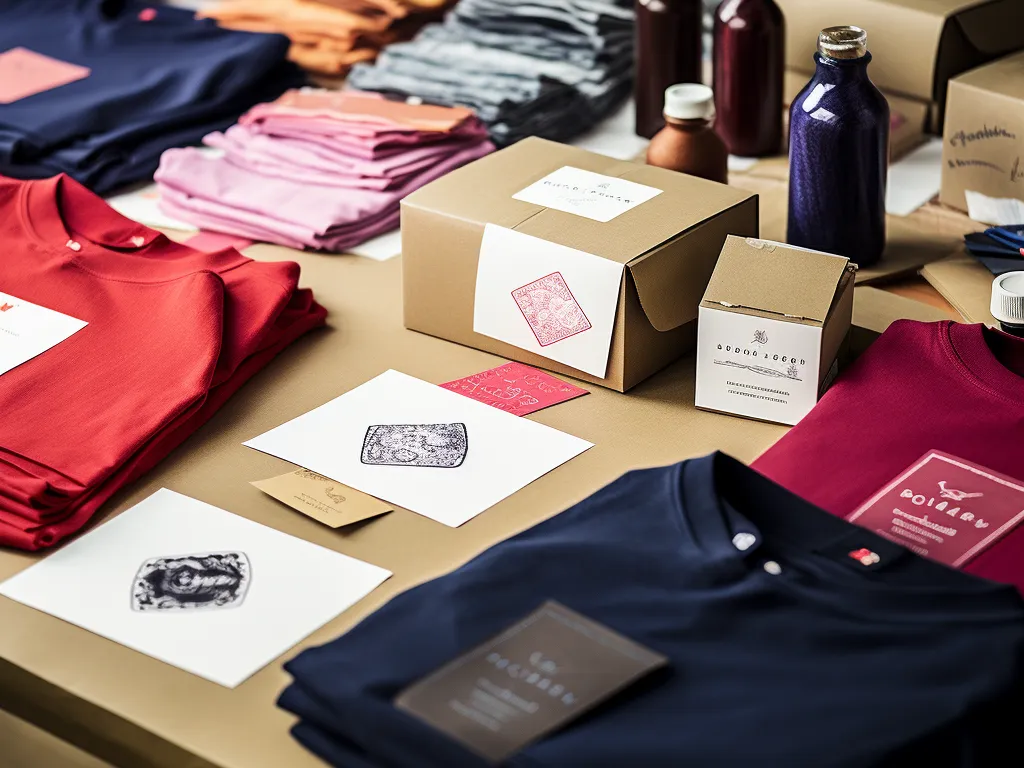
Answer first: Clothing sold to consumers in Japan must be labelled under the Household Goods Quality Labeling Act (家庭用品品質表示法) and the Consumer Affairs Agency’s Textile Products Quality Labelling Rules (繊維製品品質表示規程). For shirts, T-shirts, sweaters, trousers, sleepwear and most underwear, two items are mandatory: fibre composition, using the designated Japanese fibre terms with percentages, and home laundering and care instructions, using the symbols of JIS L 0001:2024 in a fixed order. Both must carry the labeller’s name and address or telephone number. The care label must be sewn on or attached so it does not come off easily; composition may go on a hangtag if it is visible from outside. Buyers still search for JIS L 0217, Japan’s earlier care symbol standard, but the current Rules refer only to JIS L 0001:2024; the CAA keeps separate symbol charts for labels applied until 30 November 2016, from 1 December 2016 to 19 August 2024, and from 20 August 2024. Sizes follow voluntary JIS standards such as JIS L 4004 for men’s clothing, revised in March 2023.
This summary is based on Consumer Affairs Agency (CAA) pages read on 17 November 2026, plus size-table extracts published by the Kaken Test Center. It is general information, not legal advice. Use a Japanese importer, labelling consultant or customs broker to confirm requirements for your products.
What the law requires on a garment
The Textile Products Quality Labelling Rules (CAA Notice No. 4 of 30 March 2017, last amended by Notice No. 13 of 25 December 2024, in force 1 January 2025) set the items to be labelled by product type in an annexed table:
| Product (examples from the Rules’ table) | Items to label |
|---|---|
| Sweaters, shirts, trousers, blouses, skirts, sleepwear | Fibre composition; home laundering and care |
| Underwear (general) | Fibre composition; home laundering and care |
| Underwear made of a single fibre type, not printed | Fibre composition only |
| Socks, gloves, handkerchiefs, towels | Fibre composition |
| Coats (non-kimono) | Fibre composition; care; water repellency (term set in Article 3(3)) |
Country of origin is not among the items in this table. That does not mean origin indications are unregulated; misleading origin statements are a separate legal question, so ask your importer how they handle it.
Who is the labeller
The Rules call the person who labels the product the 表示者 (labeller): the manufacturer, distributor or labelling contractor. Article 3(5) requires the labeller’s name or company name and address or telephone number to be added to the label, displayed where consumers can easily see it. In practice the Japanese importer or brand owner is usually the labeller, because consumers and authorities contact them.
Fibre composition in Japanese
Article 3(1) requires the names of all constituent fibres, each with its percentage by mass. Article 6 requires the designated terms (指定用語) listed in Annex 6. Examples from that table:
| Fibre | Designated term(s) in Annex 6 |
|---|---|
| Cotton | 綿, コットン, COTTON |
| Polyester | ポリエステル, POLYESTER |
| Nylon | ナイロン, NYLON |
| Polyurethane (elastane, spandex) | ポリウレタン |
| Viscose (including modal-type fibres) | レーヨン, RAYON; ポリノジック for high-degree-of-polymerisation viscose |
| Cupro | キュプラ |
| Acetate | アセテート, ACETATE |
So a typical boxer brief label reads, for example, 綿 95% ポリウレタン 5%. Words such as “spandex” or “elastane” are not the designated term in Japan.
Tolerances and special methods
Annex 5 sets the permitted error when percentages are shown:
- “100%”: minus 1% for fibres other than wool (minus 3% for wool).
- A figure that is a multiple of five (other than 100): plus or minus 5%.
- Other figures: plus or minus 4% (5% for wool or down).
Article 5 allows simplified methods, for example stating “以上” (or more) for a fibre above 80% and grouping the rest as “未満” (less than), or grouping two or more fibres under 10% each. Test the bulk fabric before printing labels; our article on fibre content label tolerance explains why the tested figure and the label often differ.
JIS L 0001 care symbols
Mandatory symbols and order
The CAA’s FAQ on textile products states that care symbols must follow JIS L 0001:2024 and be arranged in the order washing, bleaching, drying, ironing, commercial cleaning. Its main points:
- Words such as “do not wash” are not a substitute; symbol number 100 is required.
- If one of the five basic symbols is missing, consumers are entitled to assume all treatments in that group are allowed.
- Symbols run horizontally; a label may break onto a second line if it is too small for one row.
- Imported garments with foreign composition wording or care symbols based on foreign standards may be improperly labelled if sold as they are. The CAA suggests a heat-seal sticker over the original label or a separate sewn label.
- If a plain T-shirt is printed or dyed after purchase, the new processor should relabel, because care and quality may have changed.
The CAA’s summary of JIS L 0001 describes five basic symbols (tub, triangle, square, iron, circle), temperature figures on the tub (30, 40, 50, 60, 70 or 95) and dots for drying and ironing temperature. Washing symbols run from 190 (machine wash, 95 °C limit) to 100 (do not wash); 110 means hand wash at up to 40 °C.
The August 2024 revision
According to the CAA’s notice of 20 August 2024, the revision added and changed symbols:
| Symbol | Change |
|---|---|
| 111 | New: hand wash at up to 30 °C |
| 511 | New: iron at up to 120 °C sole-plate temperature without steam |
| 530 | Limit changed from 200 °C to 210 °C |
| 520 | Limit changed from 150 °C to 160 °C |
| 510 | Now 110 °C without steam (previously 120 °C) |
| 620, 621, 610 | Dry-cleaning solvent descriptions updated |
Garments labelled under the previous rules by 19 August 2025 may still be sold with those labels. New labels should use the 2024 symbols. The CAA also notes that products sold outside Japan with these symbols need to take GINETEX intellectual property into account and refers enquiries to the Kaken Test Center.
Attaching the care label
The FAQ requires the care label to be attached by sewing or another method that does not come off easily, such as a heat-seal label, made of material that withstands the same washing as the garment and remains legible for the product’s life. Printing directly on the garment is an option where a label cannot be attached. Composition may be on a hangtag visible from outside; if composition and care are on separate labels, each needs the labeller details.
For label formats, see our page on custom clothing labels and the comparison of care label requirements in the US and EU, which use different symbol systems and wording.
Japanese size labelling
Size labelling is not one of the mandatory items in the Rules, but Japanese buyers expect JIS-based sizes. The Kaken Test Center reports that the clothing size JIS standards were revised on 20 March 2023. For JIS L 4004 (adult men), changes include a new range designation by chest and waist (SS to 5L) and a new unisex size range (SS to 5L).
From Kaken’s extract of JIS L 4004:2023, range sizes by height and build are based on body measurements, not garment measurements:
| Size | Chest (cm) | Waist (cm) | Height (cm) |
|---|---|---|---|
| S (SA) | 80–88 | 68–76 | 155–165 |
| M (MA) | 88–96 | 76–84 | 165–175 |
| L (LA) | 96–104 | 84–94 | 175–185 |
| LL (LB) | 104–112 | 94–104 | 175–185 |
The JIS note says SA, MA, LA and LB may be shown as S, M, L and LL. A brand moving from US or EU grading should map its garment specification to these body ranges, not simply relabel a US size M as M. Our guide to grading rules for knit tops covers how to rebuild a size set.
Three details Japanese buyers check most
Japanese importers commonly test and inspect labelling closely, so plan for these three points:
- Label accuracy. Designated fibre terms, percentages within tolerance, the full five-symbol care sequence and the labeller’s details. A missing symbol changes the meaning.
- Care symbols backed by testing. Article 3(2) says the care symbols must be chosen on the basis of results from the test methods in JIS L 0001 Annex A, equivalent methods, or technical knowledge that predicts the result. Keep shrinkage, colourfastness and ironing results per style.
- Size and fit consistency. Body-based JIS sizes and tight measurement tolerances; buyers often ask for measurement reports from bulk, which Finetex’s quality control page lists as part of each shipment.
Production checklist for a Japan order
- Confirm who is the labeller and get their exact name and address or phone number in Japanese.
- Translate composition into designated terms from the tested bulk fabric.
- Select JIS L 0001:2024 symbols based on test results, in the correct order.
- Proof the woven or printed label in Japanese, including the labeller line.
- Check label durability after washing, using the garment’s own care instructions.
- Decide size designations against JIS L 4004 body ranges.
- Keep test reports and label proofs in the order file for the importer.
For basic men’s tops and undershirts, our undershirt manufacturing page and apparel fabric selection guide explain the fabric options we work with.
Fact, advice and uncertainty
Fact: under the CAA’s Textile Products Quality Labelling Rules, most apparel needs fibre composition in designated terms and JIS L 0001:2024 care symbols, with the labeller’s name and contact details. The JIS L 0001 revision took effect on 20 August 2024, with old labels allowed on products labelled by 19 August 2025.
Advice: let the Japanese importer act as labeller, base symbols and percentages on bulk tests, and design sizes against JIS body ranges.
Uncertain: we could not access the JISC standards database directly; size figures come from the Kaken Test Center’s extract. Buy the standard from the Japanese Standards Association if you need the full tables.
Related reading
- Importing Men’s Underwear into the US: Duty, Labels and Customs Entry
- Importing Apparel into Canada: Bilingual Labelling, Duty and CBSA Paperwork
- Australia and New Zealand Apparel Labelling: Fibre, Care and Origin Claims
- Selling Underwear in Germany: Textilkennzeichnung, LUCID and Packaging Law
Frequently asked questions
Is JIS L 0217 still used for care labels in Japan?
The current Textile Products Quality Labelling Rules refer to JIS L 0001:2024, not JIS L 0217. The CAA publishes separate charts for older labels, but new labels should use the JIS L 0001:2024 symbols.
Can I sell imported clothing in Japan with EU or US care labels?
The CAA says garments with foreign composition wording or care symbols based on foreign standards may be improperly labelled. Add a Japanese label or heat-seal sticker meeting the Rules.
Does the label need a Japanese company name?
The Rules require the labeller’s name and address or telephone number. In practice this is usually the Japanese importer or brand owner.
How should elastane be written on a Japanese label?
The designated term for polyurethane fibre is ポリウレタン.
Are JIS clothing sizes mandatory?
They are not among the mandatory items in the Rules, but they are the reference Japanese buyers expect. JIS L 4004:2023 covers adult men’s sizes.
Sources
- Consumer Affairs Agency: Textile Products Quality Labelling Rules (繊維製品品質表示規程)
- Consumer Affairs Agency: FAQ on textile products
- Consumer Affairs Agency: Care symbols from 20 August 2024 (JIS L 0001 summary)
- Consumer Affairs Agency: Notice on the 2024 amendment of care labelling (PDF)
- Consumer Affairs Agency: New care symbols
- Kaken Test Center: Clothing size JIS revised 20 March 2023
- Kaken Test Center: Adult men’s sizes, JIS L 4004:2023 extract
Prepare Japan-ready labels with your order
Send us your styles, composition and your importer’s labeller details. We will test the bulk fabric, propose JIS L 0001 care symbols based on the results, and proof the Japanese label before production.
Request a quote or see our undershirt manufacturing service.
More factory-floor notes for brand owners
Apparel Manufacturing Glossary: 120 Terms
120 garment manufacturing terms in English and Chinese with one-line explanations, grouped in 12 topics, for buyers working…
Read more →
Subcontracting: How to Know If Your Order Is Outsourced
Six signs your apparel order has been subcontracted, the contract clauses that control it, and how to check…
Read more →
Tolerance Stack-Up: Right Measurements, Wrong Fit
Why garment measurements can pass tolerance while the fit is still small: how shrinkage, cutting and sewing deviations…
Read more →
Gym, Studio and Team Kit: Low-Volume Custom Orders
How gyms, studios and teams can order custom kit in small runs: one blank body, names and numbers,…
Read more →
Raglan and Baseball Tees: Construction and Decoration
How raglan and baseball T-shirts are built: raglan seams, collar attachment, print placement across seams, two-colour shade control…
Read more →
The Cost of Poor Quality: Rework, Chargebacks and Air Freight
Calculate the full cost of a 2% defect incident in an apparel order: rework, re-inspection, air freight, chargebacks…
Read more →Request a sample & pricing information
Send us your tech pack, target price or a reference sample — we reply with a quotation, a realistic lead time and a fabric recommendation within one working day.
- Free sampling plan & cost breakdown
- MOQ from 300 pcs per style
- Reply within 1 working day