
China vs Portugal and Turkey: Nearshoring for EU Brands
China vs Portugal clothing manufacturing for EU brands: unit price, MOQ, lead time, duty and carbon rules, and which categories justify a nearshore premium.
Answer first: For an EU brand, the choice between China, Portugal and Turkey is a trade-off between speed and flexibility on one side and unit cost and category depth on the other. Portugal is inside the EU, so goods move within the internal market without customs duties. Turkey is in a customs union with the EU for industrial goods, which covers apparel: goods in free circulation move without duties when accompanied by an A.TR movement certificate. China is a non-EU origin, so imports pay the duty in the EU’s Common Customs Tariff for the product’s code; check the exact rate in TARIC for your product. Nearshoring usually pays for itself on fast replenishment, short seasonal drops, test runs and fashion styles where markdown risk is high. China tends to win on core basics with stable demand, where unit cost matters more than a two-week difference in lead time. None of the three removes the need to compare quotes on the same specification.
Trade facts in this article come from European Commission pages read on 16 November 2026. Duty rates and customs treatment depend on the product’s tariff code and origin; confirm them with a licensed customs broker before you price a range.
Nearshoring options for EU brands
Portugal: inside the EU
Portugal is an EU Member State. According to the European Commission’s EU customs reform page, EU Member States apply the same customs tariffs to goods from the rest of the world and no tariffs internally among themselves; once goods have passed customs, they can circulate freely within the EU without additional tariffs or border checks. A garment made in Portugal and shipped to a warehouse in Germany or France therefore has no customs declaration or import duty. VAT and product rules still apply.
Turkey: customs union for industrial goods
The Commission’s EU–Türkiye trade relations page states that the Customs Union agreement entered into force on 31 December 1995, and that its final phase on 1 January 1996 removed tariffs and quantitative restrictions on all industrial goods between the EU and Turkey, with Turkey aligning with EU customs tariffs and technical legislation. Agricultural products and coal and steel are under separate arrangements. The EU’s Access2Markets guide to the customs union adds that goods produced or put into free circulation in either part can circulate within the customs union when accompanied by proof of their customs status, an A.TR movement certificate. The Commission notes that it proposed modernising the customs union in 2016, but the Council has not adopted negotiating directives.
The same page reports EU–Türkiye goods trade of over EUR 217.6 billion in 2025, with Türkiye the EU’s fifth-largest trade partner. The figure covers all goods, not apparel alone.
China: third-country origin
China is outside the EU customs union. Imports pay customs duty under the Common Customs Tariff, which the Commission describes as a system of tariffs applied to goods imported from non-EU countries, with rates depending on the type and origin of goods. The operational database is TARIC. We do not quote a single duty rate here, because the rate depends on the exact code (knitted T-shirts, underwear and woven garments sit in different headings), the fibre and any trade measures in force on the date of import.
| Factor | Portugal | Turkey | China |
|---|---|---|---|
| Customs status for EU buyers | EU internal market | Customs union for industrial goods | Third country |
| Import duty on apparel | None within the EU | None for covered goods with A.TR | Common Customs Tariff rate per code |
| Customs declaration into EU | No | Yes, with A.TR | Yes |
| Typical transport to the EU | Road | Road or sea | Sea or air |
| Source | European Commission | European Commission | European Commission; TARIC |
For the cost side of non-EU sourcing, see our comparisons of China vs Vietnam, China vs Bangladesh and China vs India.
Unit price and MOQ
Compare total cost, not the price per piece
We do not publish Portuguese or Turkish unit prices, and no honest article can give you one number per country: prices depend on fabric, construction, quantity, the factory’s own costs and exchange rates. What you can do is build a like-for-like comparison:
- Same tech pack. Send identical specifications, fabric weight, composition, trims, packaging and size split to every supplier.
- Same Incoterm. Compare on the same basis, for example FOB China against FCA or EXW Portugal plus road freight, all delivered to the same warehouse.
- Add duty and freight. For China, add sea or air freight, customs clearance, duty at the TARIC rate and inland delivery. For Turkey, add freight and clearance; duty is zero for covered goods with A.TR. For Portugal, add road freight.
- Price the risk. Add the cost of carrying stock longer, and of markdowns if you overbuy because of a longer lead time.
Our landed cost sheet and six-input landed cost calculator set this out line by line, and our method for comparing factory quotes like for like explains how to break quotes into components.
Minimums
Minimums vary by factory far more than by country. Ask every supplier for the minimum per style and per colour, and whether sizes can be mixed. As a reference point, Finetex publishes these terms for men’s knitwear on its capabilities page and FAQ:
| Term | Finetex (published) | Ask nearshore suppliers |
|---|---|---|
| MOQ on stock fabric | 300 pieces per style, sizes mixed | Minimum per style and colour |
| MOQ on custom knit or dye lot | About 1,000 per colour | Minimum per dye lot |
| Sampling | 5–7 working days | Sample lead time and cost |
| Bulk production | 15–45 days from deposit and pre-production approval | Bulk lead time from approval |
| Payment | T/T 30% deposit, 70% against B/L copy; L/C at sight | Deposit and balance terms |
Our articles on reading Portuguese manufacturer lists and reading Turkish manufacturer lists explain which claims to verify before a deposit.
Lead time
Lead time has three parts: development, production and transit. Nearshoring mainly shortens transit and makes reorders faster to plan; it does not automatically shorten fabric development or production.
China to Europe
Finetex’s shipping page publishes these transit times from China:
| Route | Sea | Air |
|---|---|---|
| Europe (Rotterdam / Hamburg) | 26–34 days | 10–12 days |
| UK | 28–35 days | 10–13 days |
| Express | — | 3–5 days |
Partial shipments can be split across sailings, so part of an order can fly and the rest go by sea.
Portugal and Turkey
Road transport from Portugal or Turkey to most of the EU is usually measured in days rather than weeks, but the time depends on route, carrier and border formalities (Turkey requires a customs declaration). Ask each supplier for a written door-to-door schedule to your warehouse, from purchase order to delivery, and check it against a carrier quote.
Where the weeks really go
For a programme with approved samples, a sea-freight order from China adds roughly four to five weeks of transit to Europe on the published times above. For a new style, the largest delays usually come from fabric development, fit approval and pre-production sign-off, wherever the factory is. If your calendar allows a reorder to be placed six to eight weeks before you need it, China’s transit time becomes a planning question rather than a barrier.
Tariffs and carbon
Duty
| Origin | Duty position for EU import | What to check |
|---|---|---|
| Portugal | No customs duty within the EU | VAT and product rules |
| Turkey | No duty for covered goods with A.TR | A.TR document, product code |
| China | Common Customs Tariff rate | TARIC rate for your code and date |
Before ordering, ask a licensed customs broker to confirm the code and the rate for each product. Measures can change, and the code for a cotton knitted T-shirt differs from that of a cotton-elastane brief.
Carbon border rules
Some buyers assume the EU’s carbon border tax applies to imported clothing. It does not, at present. The Commission’s CBAM page states that CBAM applies in its definitive regime from 1 January 2026 to imports in carbon-intensive sectors: cement, iron and steel, aluminium, fertilisers, electricity and hydrogen. Apparel is not on the list.
Product rules apply regardless of origin
EU product rules do not depend on where a garment is made. The Commission’s page on implementing the Ecodesign for Sustainable Products Regulation states that ecodesign requirements apply to products whether made inside or outside the EU, and textiles are a priority product group. A Portuguese or Turkish supplier does not exempt you from future textile ecodesign or Digital Product Passport requirements; see our article on Digital Product Passport data fields.
Transport emissions
Shorter road routes generally have lower transport emissions than air freight, and sea freight is generally lower per item than air. We do not publish emissions figures per route. If carbon reporting matters to you, ask your carrier for emissions data per shipment and your supplier for energy and material data, and avoid using air freight to fix late orders.
Suitable categories: when the nearshore premium is worth paying
| Situation | Leans nearshore (Portugal or Turkey) | Leans China |
|---|---|---|
| Demand | Uncertain, trend-driven | Stable, repeat |
| Style life | Short season, drops | Core basics, carry-over |
| Order size | Small test runs and fast reorders | Larger programmes |
| Fabric | Local mills with the fabric you need | Wide fabric and trim choice |
| Markdown risk | High | Low |
| Price position | Premium, where unit cost matters less | Price-sensitive |
| Calendar | Late decisions, little lead time | Planned months ahead |
Practical splits
Many EU brands use a split model rather than a single country:
- Core basics in China. T-shirts, undershirts and underwear in fixed colours, reordered on an approved block, with sea freight planned ahead.
- Fast replenishment nearshore. Best-sellers that sell out mid-season, small test drops and trend styles.
- Air for gaps. Use partial air shipments from China to cover the first weeks, with the rest by sea.
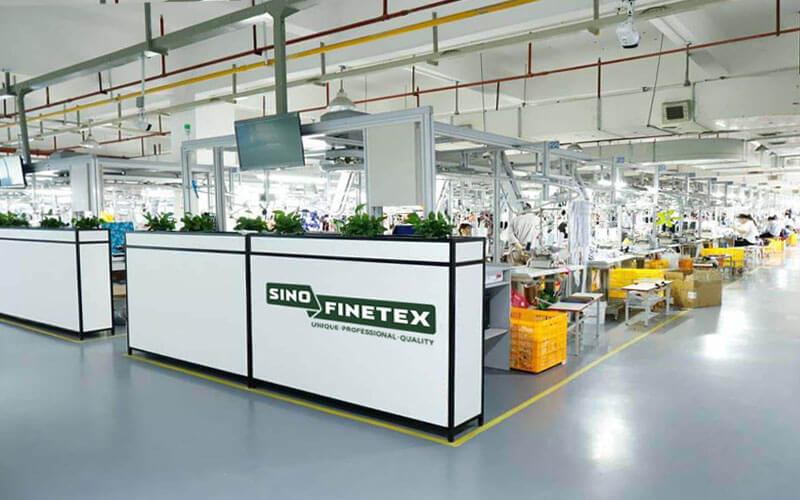
Finetex is a Shenzhen men’s knitwear manufacturer with 12 production lines and a monthly capacity of 600,000 pieces, according to its capabilities page; it is not a Portuguese or Turkish factory and does not offer production there. Repeat orders on an approved block run at the faster end of its bulk window, which narrows the gap with nearshore suppliers for core styles. Our article on whether China is still competitive in 2027 looks at the cost structure in more detail.
How to run the comparison
- Choose two or three styles that represent your range: one core basic, one fashion style, one fast seller.
- Send the same tech pack to one supplier in each country and ask for a component-based quote, MOQ per colour, sample time, bulk time and payment terms.
- Build landed cost to your warehouse for each, using broker-confirmed duty for China.
- Add the cost of the stock you must carry to cover each lead time.
- Order samples and compare fit, fabric and finishing on the same day.
- Decide per style, not per country.
Fact, advice and uncertainty
Fact: Portugal is in the EU internal market, with no internal customs duties; Turkey is in a customs union with the EU covering industrial goods, using A.TR movement certificates; China is a third country subject to the Common Customs Tariff; CBAM does not cover apparel; EU ecodesign rules apply to products made inside or outside the EU. Sources read on 16 November 2026.
Advice: compare landed cost and stock risk per style, use a split model, and get duty rates confirmed by a licensed customs broker.
Uncertain: future duty measures, EU–Turkey modernisation talks, freight rates and exchange rates. Nearshore unit prices vary widely by supplier; get quotes rather than relying on averages.
Related reading
- China vs Vietnam for Apparel Manufacturing: Duty, Lead Time and Minimums
- China vs Bangladesh: When the Lowest FOB Is the Wrong Number
- China vs India for Knitwear: Vertical Integration and Quality Variance
- Is China Still Competitive for Apparel in 2027? A Cost-Structure Breakdown
Frequently asked questions
Do I pay customs duty on clothing made in Portugal?
No. Portugal is in the EU, and the Commission states that Member States apply no tariffs internally. VAT and product rules still apply.
Is clothing from Turkey duty-free in the EU?
Industrial goods, which include apparel, are covered by the EU–Türkiye customs union and circulate without duties when accompanied by an A.TR movement certificate. Confirm treatment for your product with a customs broker.
What duty applies to T-shirts from China?
The Common Customs Tariff rate for the product’s code, shown in TARIC. Rates depend on the code and measures in force, so ask a licensed customs broker.
Does CBAM apply to clothing?
Not at present. CBAM covers cement, iron and steel, aluminium, fertilisers, electricity and hydrogen.
Is nearshoring always faster?
Transit is shorter, but development and production time depend on the factory. Reorders on an approved block can be fast from China too.
Sources
- European Commission: EU–Türkiye trade relations
- Access2Markets: EU–Türkiye customs union
- European Commission: EU customs reform (what the customs union is)
- European Commission: Common Customs Tariff
- European Commission: Carbon Border Adjustment Mechanism
- European Commission: Implementing the Ecodesign for Sustainable Products Regulation
Compare China against your nearshore quote
Send us the tech pack you sent to your Portuguese or Turkish supplier. We will quote by component on the same specification, with MOQ, sample and bulk times and shipping options to your EU warehouse, so you can compare landed cost per style.
Request a quote or read our clothing factory sourcing guide and shipping solutions.
More factory-floor notes for brand owners
Selling Underwear in Germany: Textilkennzeichnung, LUCID and Packaging Law
German textile labelling, LUCID registration and packaging law for underwear brands after the PPWR and VerpackDG took effect…
Read more →
GSM to Ounce Converter and Fabric Weight Chart
Convert fabric weight between gsm and oz/yd² with the exact factor (1 oz/yd² = 33.906 g/m²), a T-shirt…
Read more →
First-Output Check: The In-Line Inspection That Saves Bulk
What to check on the first garments off each line: measurements, seams, labels and print against the approved…
Read more →
A Fit Session Protocol for Knit Tops: 12 Wearers, 5 Measurements
A recommended fit session protocol for knit tops: recruit 12 wearers, take five measurements, run a movement checklist,…
Read more →
Corporate Uniform Programs: Tendering, Sizing and Reorders
How to run a corporate uniform program with a factory: tender documents, sizing a workforce, producing many sizes…
Read more →
Muscle Fit and Athletic Fit T-Shirts: Pattern Changes That Matter
How muscle fit and athletic fit T-shirts differ from a classic block: chest-to-waist drop, sleeve cap and bicep,…
Read more →Request a sample & pricing information
Send us your tech pack, target price or a reference sample — we reply with a quotation, a realistic lead time and a fabric recommendation within one working day.
- Free sampling plan & cost breakdown
- MOQ from 300 pcs per style
- Reply within 1 working day