
Promotional and Event Merch: Deadlines and 300-Piece Runs
Plan event and promotional T-shirts backwards from the event date: sampling, print method, 300-piece minimums, air vs sea freight and the risks of a rush.
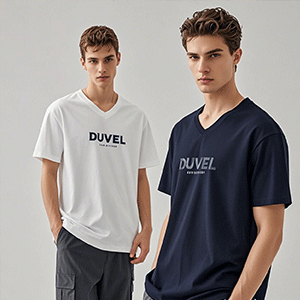
Answer first: Event merchandise has one fixed number, the event date, and every other step has to fit behind it. Work backwards: delivery buffer, freight, bulk production, pre-production approval, print strike-off, development sample, and artwork and fabric confirmation. With our published timings (5–7 working days for a development sample once artwork and fabric are confirmed, 15–45 days for bulk after deposit and pre-production approval, and 9–12 days by air or 18–35 days by sea depending on destination), a custom-made run from Shenzhen to the US West Coast needs roughly 7 to 13 weeks from confirmed artwork if it travels by sea, and 6 to 12 weeks by air, before allowing for a second sample round. For about 300 pieces of one style on stock fabric with a one- to four-colour screen print, the run is viable; what makes it fail is late artwork, a size split decided after cutting, or a print approved on the wrong fabric. Miss the date and the shirts become stock with an old date printed on them.
All timings below are the ones we publish on finetexglobal.com. Your own schedule will depend on the fabric, the print method, holidays and freight capacity; we confirm it in writing before the deposit.
Build the schedule backwards
| Step (counting back from the event) | Typical time from our published figures | Notes |
|---|---|---|
| Buffer before the event | Your choice; at least a week is prudent | Customs queries, venue delivery windows |
| Freight to the US West Coast | Air 9–11 days; sea 18–22 days | US East Coast: air 9–12, sea 22–28 |
| Freight to Europe (Rotterdam/Hamburg) | Air 10–12 days; sea 26–34 days | UK: air 10–13, sea 28–35 |
| Bulk production | 15–45 days after deposit and PP approval | Small repeat runs on an approved block run at the faster end |
| Pre-production (PP) approval | Your turnaround | The step most often late |
| Print strike-off on bulk fabric | Arranged when needed | Approve on the actual shirt fabric |
| Development sample | 5–7 working days after artwork and fabric confirmation | Express courier 3–5 days to you |
| Artwork and fabric confirmed | Day zero of the schedule | Final artwork, colours, placement, size split |
Transit times are from our shipping and logistics page. Add the time your team needs to review each sample. Our FAQs state the point plainly: delays almost always come from late approvals rather than slow production, so put an approval date against every step and agree who signs off.
A worked example
For a 300-piece run to a US West Coast address, adding up the published ranges plus two assumptions of ours (three days for your sample review and a one-week buffer before the event):
| Item | Low | High |
|---|---|---|
| Development sample (5–7 working days, as calendar days) | 7 | 9 |
| Courier to you | 3 | 5 |
| Your review and approval (our assumption) | 3 | 3 |
| Bulk production | 15 | 45 |
| Sea freight / air freight | 18 / 9 | 22 / 11 |
| Buffer before the event (our assumption) | 7 | 7 |
| Total by sea / by air (days) | 53 / 44 | 91 / 80 |
A strike-off, a pre-production sample or a second fit round adds time on top. The low end assumes stock fabric, an existing block and fast decisions.
Two calendar traps:
- Chinese New Year: factories and mills close for an extended period around the holiday. For events in February to April, check our Chinese New Year production calendar.
- Peak freight periods: air capacity can tighten before major retail seasons. Book space against the production completion date, not after the goods are packed.
Choosing the print method for the deadline
The method should follow quantity, colour count and fabric, as our T-shirt printing and decoration guide explains. For event merch, add a fourth input: how much schedule risk each method adds.
| Method | Fits event merch when | Schedule notes |
|---|---|---|
| Screen print | 1–4 colour logo or text, 300+ pieces | Screens and strike-off add a step; colour count drives setup and risk |
| DTG | Full-colour artwork on 100% cotton, small runs | Little setup; check wash durability on the strike-off |
| DTF / heat transfer | Detailed or multi-colour art, polyester or blends | Works on small runs; confirm hand-feel on the sample |
| Sublimation | Polyester performance tees, all-over designs | Needs a suitable white or light polyester base |
| Embroidery | Small logo on a heavier tee or polo | Slower per piece; test the fabric for puckering |
Practical rules for a fixed date:
- Reduce colours. Each extra screen colour adds setup, registration risk and a chance of drift between batches.
- Put the date somewhere you can change it. A sleeve print or a separate back print for the year is easier to manage than a date woven into a complex front design.
- Approve the strike-off on the bulk fabric. Our guide recommends washing the strike-off five times at the label’s care temperature and checking for cracking, edge adhesion and colour shift.
- Freeze the artwork before the sample. A change after the strike-off restarts that step.
Making 300 pieces work
Our standard minimum is 300 pieces per style, mixed sizes, on stock fabric; a fully custom knit or dye lot usually starts at around 1,000 pieces per colour. For event runs that usually means:
- One body, one or two colours of shirt, from stock fabric. Each additional shirt colour may hit its own fabric minimum.
- A size split decided once. Mixed sizes are fine within the 300, but the split must be final before cutting.
- Standard blocks. A classic or boxy block we already produce avoids pattern development; see our T-shirt manufacturing page for the bodies and weights.
- Simple packing. Bulk-packed by size in cartons is fastest; individual polybags, hangtags or size stickers add steps.
Sizing for crowds
Event staff and attendees do not try on before ordering. Use your registration data or past orders if you have them, and ask for a size chart from the actual block rather than a generic chart. If the event has youth sizes, see the compliance notes below. Our earlier article on team shirts and event merch covers ordering and sizing for one-time runs in more detail.
Rush options and what they cost
There is no free rush. The levers, roughly in order of cost:
| Lever | Time saved | Trade-off |
|---|---|---|
| Faster approvals on your side | Often the largest | Needs one decision-maker |
| Stock fabric and an existing block | Avoids fabric and pattern lead time | Less choice |
| Fewer print colours or a single print position | Fewer setup steps | Simpler design |
| Air instead of sea | About one to three weeks, based on our published transit times | Air freight costs several times more per kilogram |
| Split shipment: part by air, the rest by sea | Gets critical stock early | Two sets of documents and handling |
Our shipping page frames air versus sea as a commercial decision: what does an earlier arrival earn you? For an event, the answer is usually everything, because shirts that arrive after the event have little value.
Risks, and how to reduce them
Compliance does not disappear for promotional goods
Event shirts that are sold, and in many cases those given away, are still textile wearing apparel. Plan for the same labelling as any garment: fibre content and country of origin under the US Textile Act rules in 16 CFR Part 303, and a permanent care label under 16 CFR Part 423, which requires a reasonable basis for the care instructions. Whether a specific giveaway is exempt is a legal question for your counsel; we label every order as if it were sold at retail. For other markets, see our GPSR guide for the EU.
Children’s merch adds rules. Children’s upper outerwear in sizes 2T to 16 with drawstrings that do not conform to ASTM F1816-97 is listed as a substantial product hazard in 16 CFR Part 1120, which matters for youth hoodies at events.
Schedule risk register
- Artwork late or changed: set an artwork freeze date.
- Size split changed after cutting: confirm in writing with the PP approval.
- Print fails wash test: test the strike-off early, not at final inspection.
- Customs hold: check that the commercial invoice, packing list and labels match; we send documents for review before the shipment leaves.
- Delivery to a venue: confirm the delivery window and who signs for the goods.
Fact, advice and uncertainty
Fact: our published timings are 5–7 working days for a development sample, 10–12 working days for a full size set, 15–45 days for bulk after deposit and pre-production approval, and the transit times listed on our shipping page. MOQ is 300 pieces per style on stock fabric.
Advice: schedule backwards from the event with an approval date for every step, keep the design and size split simple, approve prints on the bulk fabric and decide on air freight early rather than as a rescue.
Uncertain: freight capacity, customs inspections and holiday closures in any given season; build a buffer for them.
Related reading
- Gym, Studio and Team Kit: Low-Volume Custom Orders
- Corporate Uniform Programs: Tendering, Sizing and Reorders
- Raglan and Baseball Tees: Construction and Decoration
- Chinese New Year Production Calendar: 2027 Cut-Off Dates
Frequently asked questions
How far ahead should I order custom event T-shirts from China?
Count back from the event using the sample, approval, production and freight times. Using our published ranges, a West Coast delivery needs roughly 7 to 13 weeks by sea or 6 to 12 weeks by air from confirmed artwork; air shortens transit but not the approval steps.
Can you make 300 event shirts?
Yes, 300 pieces per style is our standard minimum on stock fabric, in mixed sizes. Additional shirt colours or a custom fabric can raise the minimum.
Which print method is fastest for event merch?
The fastest is usually the one with the fewest setup steps for your artwork: DTG or DTF for small, multi-colour runs; screen print for simple logos at 300 pieces or more. Every method needs a strike-off on the real fabric.
Do promotional T-shirts need care labels?
Plan on it. Textile wearing apparel needs fibre content, origin and care labelling under 16 CFR Parts 303 and 423; ask counsel if you believe a giveaway is exempt.
Sources
- eCFR: 16 CFR Part 303, Rules under the Textile Fiber Products Identification Act
- eCFR: 16 CFR Part 423, Care labeling of textile wearing apparel
- eCFR: 16 CFR Part 1120, Substantial product hazard list (children’s upper outerwear drawstrings)
Get a dated schedule for your event run
Send the event date, delivery address, quantity, artwork and preferred shirt. We will reply with a sample and production plan, the latest approval dates and an air and sea freight option, so you can see what the date allows.
Request a sample or see our T-shirt manufacturing options.
More factory-floor notes for brand owners
Naturally Dyed Underwear: What Should Buyers Test Before Bulk?
Plan naturally dyed underwear testing for wash and rub fastness, shade variation, and reorder approval. Match color and…
Read more →
Hidden Pockets in Boxer Briefs: Where Should They Sit?
Choose hidden pockets in boxer briefs by testing placement, access, load, and movement in comparable samples before approving…
Read more →
Silk Underwear Sourcing: What Can a Buyer Approve from a Sample?
Use a silk underwear sourcing checklist to verify fiber composition, compare stretch and seams, and approve care and…
Read more →
Adaptive Men’s Underwear: How Do You Test Side Openings?
Test side openings in adaptive men's underwear with seated and one-handed dressing checks, closure placement reviews, and a…
Read more →Microfiber Underwear Fabric: What Should Buyers Specify?
Specify microfiber underwear fabric by verified fiber content, knit structure, stretch, and wash performance. Use a sample checklist…
Read more →Skin-Tone Underwear Color Matching: How Do You Approve a Range?
Plan skin-tone underwear color matching with physical swatches, stretch checks, and a repeatable shade approval record for production…
Read more →Request a sample & pricing information
Send us your tech pack, target price or a reference sample — we reply with a quotation, a realistic lead time and a fabric recommendation within one working day.
- Free sampling plan & cost breakdown
- MOQ from 300 pcs per style
- Reply within 1 working day