
EORI, VAT and IOSS for Apparel Sellers Entering the EU
How EORI, import VAT, IOSS, the €3 per-item duty and the €2 handling fee apply to apparel sold into the EU, with one order priced three…
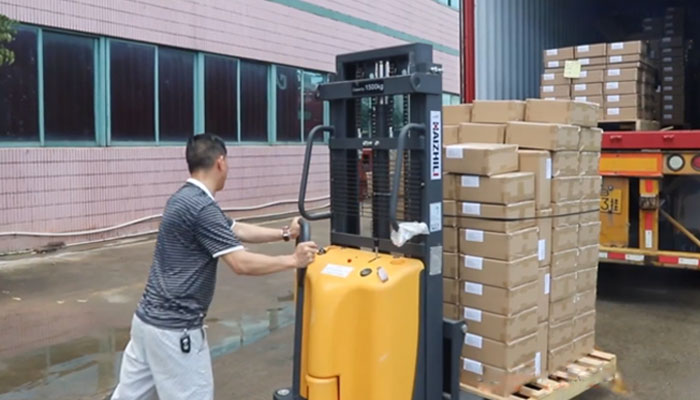
Answer first: To sell clothing into the EU you need three things lined up before the first shipment: an EORI number for whoever lodges the customs declaration, a clear answer on who pays import VAT and when, and a decision between importing in bulk, selling direct under the Import One Stop Shop (IOSS), or buying on DDP terms. Since 1 July 2026, parcels of up to €150 sold at a distance pay a temporary €3 customs duty per item, and since 1 November 2026 a €2 Union handling fee per item applies to distance-sale goods of any value. Import VAT is charged on the customs value plus duty and transport to the first destination, so a quote that ignores those lines can be wiped out at the border.
Every rule below was read on official European Commission and EUR-Lex pages on 21 November 2026. The e-commerce rules changed twice in 2026 and the Commission says its guidance will be updated as needed, so confirm the position with a licensed customs broker or VAT adviser before you price.
EORI: the number customs uses to identify you
The Commission’s EORI page states that an Economic Operators Registration and Identification number is mandatory for all customs operations in the EU customs territory: import, export and transit. Each person can hold only one valid EORI at a time.
| Question | What the Commission says |
|---|---|
| Who needs one | Any economic operator established in the EU; non-EU operators that lodge customs declarations, entry or exit summary declarations, or act as a carrier |
| Who issues it | The customs authority of the country where you are established; for a non-EU operator, the EU country of its first customs operation |
| Format | Two-letter country code plus up to 15 alphanumeric characters |
| Expiry | None; numbers can be invalidated on request or when activity ceases |
Two practical points follow. First, a non-EU brand that wants to be the importer of record needs its own EORI, usually alongside a customs representative. Second, if your forwarder or a DDP supplier acts as importer, the EORI on the declaration is theirs, and so is the legal position. Decide this deliberately; it controls who can reclaim VAT and who answers customs questions.
Import VAT: what it is charged on
Import VAT is not charged on your factory price alone. Under Article 85 of the VAT Directive the taxable amount on importation is the value for customs purposes, and Article 86 adds, where not already included:
- duties, taxes and other charges due by reason of importation (excluding the VAT itself), and
- incidental expenses such as commission, packing, transport and insurance up to the first place of destination in the importing Member State.
The customs value itself is normally the transaction value, the price paid or payable, with the additions and deductions in Articles 70 to 72 of the Union Customs Code. The Commission’s VAT rates page adds that each Member State sets its own standard rate, which must be no less than 15%. Use the actual rate of the country of import for your calculation.
Since the 2021 e-commerce package, the Commission notes that the old €22 import VAT exemption has been removed: every commercial import into the EU is subject to VAT. What changes between routes is who collects it and at what moment.
IOSS: VAT collected at checkout
The Import One Stop Shop lets a seller charge VAT at checkout on distance sales of imported goods in consignments with an intrinsic value not exceeding €150, then declare and pay it in one monthly return. The goods are then released without VAT being collected again at the border.
Key conditions from the Commission’s OSS portal:
- A seller established outside the EU must appoint an EU-established intermediary to use IOSS. The only exception is a seller established in a country with which the EU has a VAT recovery assistance agreement, selling from that country. The portal’s own example: goods departing from China need an intermediary.
- The intermediary receives an IOSS VAT identification number for each seller it represents, in the format IMxxxyyyyyyz, and is liable for the VAT obligations in the seller’s name.
- IOSS does not cover consignments above €150 or goods subject to excise duty.
- Where an online marketplace facilitates the sale, the marketplace may be the deemed supplier and handle the VAT instead of you.
For a DTC apparel brand shipping single orders from China, IOSS is the route that keeps the customer from facing a VAT and fee bill at the door. It is not a bulk import route.
The €3 duty and €2 handling fee
The Commission’s Guidance on the temporary €3 customs duty and the Union handling fee (version of 5 October 2026) sets out how both apply:
- €3 customs duty per item in a consignment of up to €150 intrinsic value sold in a distance sale, from 1 July 2026 until 1 July 2028. After that date, distance-sale goods pay normal duty rates regardless of value.
- It applies whatever VAT scheme is used (IOSS, special arrangements or standard VAT), and all IOSS imports are subject to it.
- An item means goods in a consignment that share the same tariff classification and description (and origin, where declared). The guidance says the charge applies per declaration line, irrespective of quantity in that line. Two T-shirts in one parcel under one code are one item; a T-shirt and a pair of shorts are two.
- The €2 Union handling fee applies per item to goods sold in distance sales from 1 November 2026, irrespective of value, so it also hits distance-sale consignments above €150. Unlike the €3 duty it is not temporary.
One order, three routes
Here is one hypothetical order to show how the lines stack. All figures are invented for the arithmetic. They are not Finetex prices, freight rates or the duty rate for any product. We use a placeholder duty rate of 10% and a placeholder VAT rate of 20%; look up the real duty rate for your code in TARIC and the VAT rate of your importing country.
Inputs: 500 men’s knit T-shirts at €4.00 FOB (€2,000), freight and insurance to the first EU destination €300.
Route A: bulk import, then sell from an EU warehouse
| Line | Basis | Amount (€) |
|---|---|---|
| Customs value | FOB + freight and insurance to EU border (assumed) | 2,300 |
| Customs duty | 10% placeholder × 2,300 | 230 |
| VAT base | Customs value + duty (Art. 85–86) | 2,530 |
| Import VAT | 20% placeholder × 2,530 | 506 |
| Cash out at import | Duty + VAT | 736 |
A VAT-registered importer normally deducts import VAT through its VAT return, so the 506 is a cash-flow cost, not a margin cost, if the brand is set up to recover it. The duty is a real cost. Sales to consumers then carry local VAT as normal domestic or intra-EU distance sales, which is where the separate OSS Union scheme comes in.
Route B: single parcels direct to consumers under IOSS
Take one consumer order: two T-shirts (one tariff line) and one pair of knit shorts (second line), sold for €45 including VAT.
| Line | Basis | Amount (€) |
|---|---|---|
| Customs duty | €3 × 2 items | 6 |
| Union handling fee | €2 × 2 items | 4 |
| VAT | Charged at checkout, declared through the intermediary | Included in price |
Ten euros per parcel on a €45 basket is the number most DTC models built before 2026 do not contain. Fewer tariff lines per parcel means fewer items, but never change classifications to reduce the count; the description and code must match the goods.
Route C: DDP from the supplier
On DDP, the supplier quotes a landed price that includes freight, duty and clearance, and someone in the chain acts as importer. We quote DDP for most major markets, but we need the HS code and the delivery postcode, because duty and VAT depend on both. Ask any DDP supplier three questions:
- Whose EORI and VAT number are on the import declaration?
- Is import VAT included, and can you recover it, or is it a sunk cost in the price?
- Who answers customs or product-safety questions after delivery?
If the supplier’s agent is the importer, you usually cannot deduct the import VAT, so compare DDP prices against Route A including VAT, and against Route A excluding VAT only if you will recover it.
Comparing the routes
| Bulk import (A) | IOSS parcels (B) | DDP (C) | |
|---|---|---|---|
| EORI needed | Yours (or your representative’s) | Declarant’s, usually the carrier | Importer’s, often the supplier’s agent |
| Import VAT | Paid at import, deductible if registered | Collected at checkout, monthly return | Inside the landed price |
| €3 duty | No (normal duty rate applies) | Yes, per item, until 1 July 2028 | Depends on whether sales are distance sales |
| €2 handling fee | No, for bulk B2B imports | Yes, per item | Same as above |
| Best for | Replenishment, wholesale, marketplaces with EU stock | Test markets, low volume DTC | First orders, buyers without an EU entity |
Whichever route you pick, product rules still apply: an EU responsible person under the General Product Safety Regulation, textile fibre labelling and, increasingly, packaging and textile producer registration. Our guide to EU GPSR for apparel covers labels and listings, and EU marketplace compliance covers what Amazon, eBay and Temu ask for.
What we prepare on our side
For EU-bound orders we prepare the commercial invoice, packing list, bill of lading or airway bill and certificate of origin, and send the set for review before the goods leave. An undervalued invoice or a packing list that does not match the cartons is what holds shipments, and in an IOSS model the declared intrinsic value decides whether the parcel even qualifies. Transit times and Incoterms are on our shipping and logistics page, and our landed cost calculator shows how to set up the cost sheet.
Fact, advice and uncertainty
Fact (checked 21 November 2026): the EORI rules are from the Commission’s EORI page; the taxable amount on import is set by Articles 85 and 86 of the VAT Directive; the €22 VAT exemption was removed and IOSS covers distance sales up to €150, with an intermediary required for sellers shipping from China; the €3 per-item duty applies from 1 July 2026 until 1 July 2028 and the €2 Union handling fee from 1 November 2026, per the Commission’s guidance of 5 October 2026.
Advice: pick the route per channel, not per company; price DDP with and without recoverable VAT; keep tariff lines per parcel honest; and get the EORI, VAT registration and intermediary in place before stock moves.
Uncertain: the Commission will update the €3 and handling-fee guidance as needed, national VAT rates change, and the EU Customs Data Hub will reshape e-commerce declarations from 2028. Recheck on the day you price and have a licensed customs broker or VAT adviser confirm.
Related reading
- EU GPSR for Apparel: Label, Listing and Responsible Person Requirements
- De Minimis Reform: What It Means for Small Apparel Importers
- EU Marketplace Compliance: GPSR, EPR and Responsible Person
- Landed Cost Calculator: FOB to Door in Six Inputs
- Selling Underwear in Germany: Textilkennzeichnung, LUCID and Packaging Law
Frequently asked questions
Do I need an EORI number to sell clothing into the EU?
You need one if you lodge customs declarations or act as importer. A non-EU business gets it from the EU country of its first customs operation. If a carrier or DDP agent is the declarant, their EORI is used instead.
What is IOSS and do I need it for apparel?
IOSS lets a seller collect EU VAT at checkout on distance sales of goods in consignments up to €150 and pay it in one monthly return. Sellers outside the EU must appoint an EU intermediary. It does not apply to bulk imports.
Does the €3 EU customs duty apply per parcel or per garment?
Per item, and an item is goods sharing the same tariff classification and description in a consignment. The Commission’s guidance says it is applied per declaration line, whatever the quantity in that line.
Is DDP cheaper than importing myself?
Not necessarily. If the supplier’s agent is the importer, you usually cannot recover the import VAT, so compare the DDP price with your own landed cost including VAT, and ask whose EORI and VAT number will be on the declaration.
Sources
- European Commission: EORI number
- European Commission: VAT One Stop Shop
- European Commission: One Stop Shop schemes, intermediaries and the import scheme
- European Commission: Registering for OSS and IOSS
- European Commission: EU Customs Reform (€150 threshold, €3 duty, handling fee)
- European Commission: Guidance on the temporary EUR 3 customs duty and the Union handling fee (5 October 2026)
- European Commission: VAT rates
- European Commission: Calculation of customs duties
- EUR-Lex: Council Directive 2006/112/EC (VAT Directive), consolidated
Get an EU landed-cost quote on all three routes
Send your styles, quantities, the HS codes you use and the EU delivery postcode. We will quote FOB and DDP side by side and send the export document set for your broker to review before you commit.
Request a quote or read our shipping and logistics options.
More factory-floor notes for brand owners

Naturally Dyed Underwear: What Should Buyers Test Before Bulk?
Plan naturally dyed underwear testing for wash and rub fastness, shade variation, and reorder approval. Match color and…
Read more →
Hidden Pockets in Boxer Briefs: Where Should They Sit?
Choose hidden pockets in boxer briefs by testing placement, access, load, and movement in comparable samples before approving…
Read more →
Silk Underwear Sourcing: What Can a Buyer Approve from a Sample?
Use a silk underwear sourcing checklist to verify fiber composition, compare stretch and seams, and approve care and…
Read more →
Adaptive Men’s Underwear: How Do You Test Side Openings?
Test side openings in adaptive men's underwear with seated and one-handed dressing checks, closure placement reviews, and a…
Read more →Microfiber Underwear Fabric: What Should Buyers Specify?
Specify microfiber underwear fabric by verified fiber content, knit structure, stretch, and wash performance. Use a sample checklist…
Read more →Skin-Tone Underwear Color Matching: How Do You Approve a Range?
Plan skin-tone underwear color matching with physical swatches, stretch checks, and a repeatable shade approval record for production…
Read more →Request a sample & pricing information
Send us your tech pack, target price or a reference sample — we reply with a quotation, a realistic lead time and a fabric recommendation within one working day.
- Free sampling plan & cost breakdown
- MOQ from 300 pcs per style
- Reply within 1 working day