
Why Guangdong Still Owns Men’s Knit Basics
Why Guangdong still leads in men's knit basics: knitting, dyeing, trims and decoration clustered near the sewing floor, the lead-time effect and the limits.
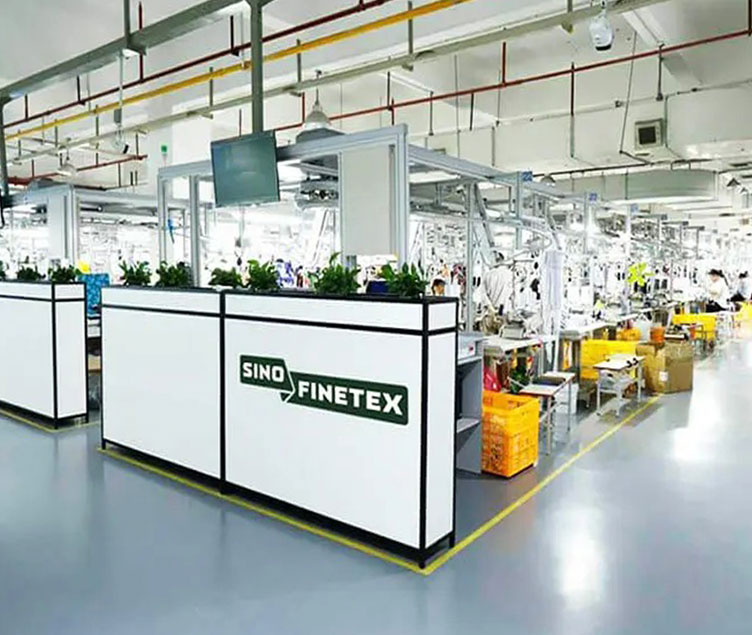
Answer first: Guangdong keeps its lead in men’s knit basics because the inputs a T-shirt, hoodie or brief needs (knitted fabric, dyeing and finishing, elastic and waistbands, labels, printing and embroidery) are made in clusters close to the sewing floor. When a lab dip fails, an elastic is wrong or a print needs a second strike-off, the fix is usually measured in hours or days, not in a new import shipment. That shortens sampling and protects bulk dates. The advantage is real but conditional: it does not cancel US Section 301 duties on products of China, cotton traceability work for US imports, longer sea transit to Europe than nearshore options, or the minimums of custom fabric.
This article is about the province as a production region. For how to find and vet an individual factory in Shenzhen, see our Shenzhen clothing manufacturer guide.
What the official picture says about the clusters
The Guangdong provincial government describes the industry in its own policy documents, which are a better starting point than marketing maps.
- A February 2023 report on the province’s implementation opinions for the textile and apparel industry names six concentrated textile areas: Shantou, Dongguan, Jiangmen Kaiping, Zhongshan, Jieyang Puning and Foshan Gaoming, and three apparel belts: Shantou–Chaozhou–Jieyang, Shenzhen–Dongguan–Huizhou and Guangzhou–Foshan–Zhongshan.
- The same report and the 2024 provincial action plan list named clusters: Dalang (Dongguan) knitwear, Humen (Dongguan) womenswear, Yanbu (Foshan) underwear, Shaxi (Zhongshan) casualwear and Kaiping denim. The 2024 plan also names Shantou as China’s capital of underwear and homewear, and Jiangmen as a chemical-fibre city.
- The 2023 report says Guangzhou’s textile and apparel industry has a complete supply chain able to meet the “small order, quick response” model of modern apparel.
Two cautions when you read these documents. They are policy texts with targets, not audited output statistics. And a cluster name tells you where specialists concentrate, not whether a particular supplier is any good; Dalang’s cluster, for example, is described as 毛织 (knitted woollens and sweaters), which is a different process from the circular-knit jersey and fleece used in T-shirts and hoodies.
The short-radius supply circle
For a buyer, the useful idea is simple: how many of a garment’s inputs can reach the sewing floor within a working day, and how many must be imported? A typical men’s knit basic breaks down like this.
| Input | What it involves | Why distance matters |
|---|---|---|
| Knitted fabric | Yarn, circular knitting of jersey, rib, fleece or terry | A re-knit for a wrong weight or hand-feel restarts the fabric clock |
| Dyeing and finishing | Lab dips, bulk dyeing, compacting, brushing, softening | Shade corrections and shrinkage fixes need repeated trips between dyehouse and factory |
| Trims and narrow fabrics | Elastic, jacquard waistbands, drawcords, webbing, tapes | Small items with their own minimums; a wrong width stops a line |
| Labels and packaging | Woven and printed labels, hangtags, polybags, cartons | Late labels delay packing, not sewing, but still delay the ship date |
| Decoration | Screen print, heat transfer, embroidery | Strike-offs and placement tests run alongside sampling |
When most of these inputs are made in the same region, problems are fixed by sending a sample across town, not across a border. That is the core of the lead-time advantage, and it is why the province’s own documents talk about supply chains rather than individual factories.
Knitting, dyeing and finishing
Fabric is where most delays in knit basics start. Weight, width, shrinkage and colour all need to be right before cutting, and each correction involves the mill and the dyehouse.
What clustering changes:
- Lab dips and shade bands can be iterated quickly because the dyehouse and the factory’s quality team can compare under the same light box within days.
- Shrinkage and torque problems found in a wash test can be sent back for compacting or re-finishing without a new import.
- Greige stock of common constructions (single jersey, 1×1 and 2×2 rib, French terry, brushed fleece) is easier to find locally, which supports lower minimums for stock-fabric programmes.
What it does not change: a custom knit still needs a minimum run from the mill. On our underwear programmes, for example, a custom knit typically puts the floor at 1,500–3,000 pieces per colour, against 500 pieces per colour on available fabrics. Clustering makes the custom route faster, not smaller.
Trims: elastic, waistbands, drawcords and labels
Trims are cheap per unit and expensive when wrong. A brief needs the right waistband width and recovery; a hoodie needs drawcords, eyelets and rib; every style needs care and size labels.
In a dense cluster, trim suppliers stock many standard widths and colours, and custom jacquard waistbands or woven labels can be developed in parallel with the fit sample. On our underwear lines we review waistband artwork and a sample before bulk, and custom jacquard waistbands carry their own tooling minimum. A buyer should still plan trims as their own critical path: ask for the trim minimums in the quotation, not after the PP sample.
Printing and embroidery
Decoration adds two risks: placement and durability. A local printer or embroiderer can run a strike-off on the actual fabric during sampling, so wash tests and placement checks are done before bulk, not discovered after.
For knit basics, ask for:
- a strike-off on bulk fabric, not on a stock substitute;
- a wash test of the print or embroidery after the agreed number of cycles;
- placement measured from a fixed point (centre front, shoulder seam) and written into the specification.
Our T-shirt printing and decoration guide covers methods in detail.
What it does to lead time
The clearest benefit of the cluster is predictable sampling. Our published timings for knit programmes are 5–7 working days for a development or fit sample, 10–12 working days for a full size set, and 15–45 days for bulk after deposit and an approved pre-production sample. On custom underwear the bulk range is around 25–40 days, depending on quantity, fabric availability, waistband production and packaging.
Those figures only hold because fabric, trims and decoration can be corrected nearby. Where an input has to be imported, add its transit and customs time to the plan; our China vs Vietnam comparison shows how fabric imports affect lead time in other countries.
The limits of the Guangdong advantage
A fair view of the province includes its constraints.
- US duty on products of China. Country of origin for a knit garment that is not knit to shape is generally where it was wholly assembled (19 CFR 102.21), so a garment sewn in Guangdong is a product of China. As checked on 21 November 2026, cotton knit T-shirts in HTS 6109.10.00 carry a 16.5% general rate, plus 7.5% under Section 301 List 4A and 12.5% under the 2026 Section 301 forced-labour action. USTR applies 12.5% to products of Vietnam and many other economies too, so the extra gap against those countries is mainly List 4A. See our Section 301 guide.
- Cotton traceability for US imports. CBP enforces the Uyghur Forced Labor Prevention Act; importers need supply chain documents for cotton back to the fibre. That work does not get easier because the factory is in Guangdong.
- Transit to Europe. Sea freight from South China to North European ports takes longer than road freight from Portugal or Türkiye; our nearshoring comparison sets out the trade-off.
- Holiday calendar. The Chinese New Year shutdown affects the whole cluster at once; plan around it with our production calendar.
- Diversification. Many brands split programmes across countries; our China plus one article covers how to do that without splitting quality.
How we fit into the cluster
We have manufactured men’s knitwear for export from Shenzhen since 2004, on 5,652 m² of factory floor with 500+ staff and twelve sewing lines, with an in-house R&D centre for fabric and garment development since 2014. We coordinate fabric, trims, finishing and packaging with our manufacturing team and established material suppliers. Our about page has the history, and our underwear manufacturer page shows the briefs, boxers and trunks programmes where waistbands and elastic matter most.
Fact, advice and uncertainty
Fact (checked 21 November 2026): the Guangdong government’s 2023 report and the 2024 action plan of the provincial Department of Industry and Information Technology name the textile areas, apparel belts and clusters listed above; HTS and Section 301 rates are as stated for 6109.10.00 on that date.
Advice: judge a Guangdong supplier by how many of your inputs it can correct nearby, ask for trim and fabric minimums in the quotation, and confirm the duty stack with your customs broker.
Uncertain: policy targets are not output data, and tariff actions can change. The cluster advantage is about speed and range of inputs; whether it beats another country depends on your duty, freight and volume.
Related reading
- Is China Still Competitive for Apparel in 2027? A Cost-Structure Breakdown
- China vs Vietnam for Apparel Manufacturing: Duty, Lead Time and Minimums
- China Plus One: Splitting a Program Without Splitting Quality
- Mexico and Central America for US Brands: Speed, Duty and Minimums
Frequently asked questions
Why is Guangdong important for apparel manufacturing?
Because knitting, dyeing and finishing, trims, labels and decoration are concentrated in named clusters near the sewing factories, so samples and corrections move quickly. The provincial government lists six textile areas and three apparel belts in its own policy documents.
Which Guangdong cities are known for clothing production?
Official documents name Shantou, Dongguan, Jiangmen Kaiping, Zhongshan, Jieyang Puning and Foshan Gaoming for textiles, and the Shantou–Chaozhou–Jieyang, Shenzhen–Dongguan–Huizhou and Guangzhou–Foshan–Zhongshan belts for apparel, with clusters such as Yanbu underwear and Shaxi casualwear.
Is a garment sewn in Guangdong from imported fabric still made in China?
For US customs, a knit garment that is not knit to shape generally takes the origin of the country where it was wholly assembled (19 CFR 102.21), so it is a product of China. Confirm the classification with your customs broker.
Does sourcing from Guangdong mean lower minimums?
On stock fabric, often yes, because common constructions are available locally. Custom knits and custom waistbands still carry mill and tooling minimums; on our underwear programmes a custom knit typically starts at 1,500–3,000 pieces per colour.
Sources
- Guangdong Provincial Government: report on the textile and apparel implementation opinions (Chinese, February 2023)
- Guangdong Department of Industry and Information Technology: 2024 textile and apparel action plan (Chinese)
- eCFR: 19 CFR 102.21, Textile and apparel products
- USITC HTS: 6109.10.00
- Federal Register, 28 July 2026: Notice of actions in Section 301 investigations of various economies
- CBP: Uyghur Forced Labor Prevention Act
Quote your knit basics from the Guangdong supply chain
Send your tech pack, fabric and trim requirements and target quantities per colour. We will reply with a quotation that shows fabric and trim minimums, sample timings and a bulk date we can hold.
Request a quote or see our underwear manufacturer page.
More factory-floor notes for brand owners
Naturally Dyed Underwear: What Should Buyers Test Before Bulk?
Plan naturally dyed underwear testing for wash and rub fastness, shade variation, and reorder approval. Match color and…
Read more →
Hidden Pockets in Boxer Briefs: Where Should They Sit?
Choose hidden pockets in boxer briefs by testing placement, access, load, and movement in comparable samples before approving…
Read more →
Silk Underwear Sourcing: What Can a Buyer Approve from a Sample?
Use a silk underwear sourcing checklist to verify fiber composition, compare stretch and seams, and approve care and…
Read more →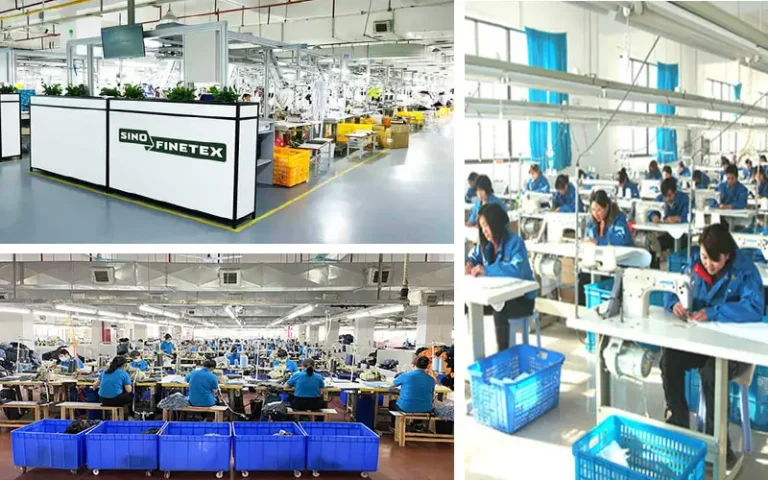
Adaptive Men’s Underwear: How Do You Test Side Openings?
Test side openings in adaptive men's underwear with seated and one-handed dressing checks, closure placement reviews, and a…
Read more →Microfiber Underwear Fabric: What Should Buyers Specify?
Specify microfiber underwear fabric by verified fiber content, knit structure, stretch, and wash performance. Use a sample checklist…
Read more →Skin-Tone Underwear Color Matching: How Do You Approve a Range?
Plan skin-tone underwear color matching with physical swatches, stretch checks, and a repeatable shade approval record for production…
Read more →Request a sample & pricing information
Send us your tech pack, target price or a reference sample — we reply with a quotation, a realistic lead time and a fabric recommendation within one working day.
- Free sampling plan & cost breakdown
- MOQ from 300 pcs per style
- Reply within 1 working day