
How do I keep elastic consistent across reorders?
How to keep waistband and leg elastic consistent across reorders: specification, approved standards, supplier lots, stretch and recovery testing, colour, and change control.
Part of Waistbands, Labels, Printing & Packaging in Finetex Talk — buyer questions answered by the Finetex editorial team.
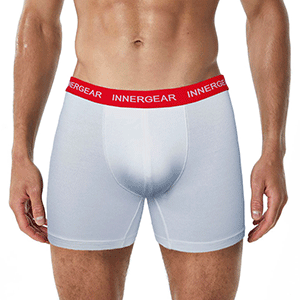
A brand's reorders of boxer briefs feel different from the first order: the waistband seems tighter and the logo colour is slightly off. The factory says it used the "same elastic". The team wants to keep elastic consistent in future.
Short answer: Elastic changes between orders because "the same elastic" often means the same supplier and design, not the same measured properties. Yarn lots, rubber or elastane content, knitting tension, finishing and dye lots all vary. A waistband can become tighter if the elastic has more power or the cut length changes, and logo colour shifts between dye lots. Keep elastic consistent by writing a full specification with measurable properties, keeping approved physical standards, testing each new lot for stretch and recovery against them, approving colour against a standard, and requiring notice before any change in supplier, materials or construction.
What to specify
- Width, thickness and construction, such as knitted or jacquard.
- Fibre content, including elastane or rubber percentage.
- Stretch at a set load and recovery after stretching.
- Cut length per size and tension in sewing.
- Colour and logo standards.
- Wash performance after an agreed procedure.
Why elastic changes
- New yarn or elastane lot.
- Knitting machine or tension changes.
- Different finishing or heat setting.
- Dye lot differences in colour and logo contrast.
- Factory cutting elastic at a different length or tension.
Testing new lots
- Stretch and recovery with ASTM D4964, compared with the approved standard.
- Wash with an ISO 6330 procedure and retest.
- Colour fastness with ISO 105-C06 if colour bleeding is a concern.
Keeping standards
Keep physical lengths of approved elastic, stored away from heat and light, and replace them before they age. Elastane ages, so a standard kept for years may no longer match.
Change control
Require the factory to tell you before changing elastic supplier, materials, construction or finishing. Treat any change as a new approval with samples.
A worked example
For the tighter waistband, measure the new elastic's stretch at a fixed load against the retained standard, then check the cut length used in production. If the elastic is stiffer, ask the supplier to adjust; if the cut length is shorter, correct the cutting instruction. Approve before the next bulk.
Planning reorders
Elastic often has a long lead time. Order early, and ask whether the supplier can hold dyed stock from one lot for several garment orders, which reduces colour variation.
Agreeing tolerances
Write tolerances for each measurable property, such as width and stretch at a set load, as a range around the approved value. Without agreed numbers, the factory and the brand will argue about whether an elastic lot is the same.
Limits
Some lot-to-lot variation is unavoidable. Agree tolerances rather than expecting identical results.
Facts, recommendations and uncertainty
Established: elastic varies by yarn, knitting, finishing and dye lot, and cut length affects tension. Recommendation: specify measurable properties, keep standards, test each lot and require change notice. Uncertain: how much variation customers notice.
Sources and further reading
- ASTM D4964 — Tension and elongation of elastic fabrics
- ISO 6330:2021 — Domestic washing and drying procedures for textile testing
- ISO 105-C06:2010 — Colour fastness to domestic and commercial laundering
Standards and regulations are referenced by their published scope. Test parameters, cycles and pass levels should be agreed with your laboratory for the specific product; legal requirements should be confirmed for each destination market.
Three more perspectives
Ask the factory to name the elastic supplier and article number in the purchase order, and to send a sample of each new elastic lot before bulk sewing. Include stretch, recovery and colour tolerances in the specification. Require written notice of any supplier or material change, and agree who pays if bulk is made with unapproved elastic. Ask how much elastic stock the factory keeps between orders. Share inspection results with the elastic supplier directly where possible, so problems are fixed at the source rather than only at the sewing factory.
In product development, measure the approved elastic's stretch at a set load and record it as the target, together with cut lengths per size. Keep physical standards for each colour and width. Check how the elastic behaves after washing, not just new. When colours change, approve logo contrast again on the new dye lot. Record the approved values in the tech pack with the test method and load used, so future measurements can be compared like for like.
In quality control, test incoming elastic lots against the standard for width, stretch and colour before sewing starts. Measure waistband relaxed and extended lengths on sampled garments. Compare logo colour with the approved standard under consistent light. Keep a log of elastic lot numbers by garment lot, so any later complaint can be traced. Keep retained samples from each production lot as well as the original standard, so you can compare lots with each other when complaints come in.
Related products
Related articles
← More in Waistbands, Labels, Printing & Packaging · All Talk topics · Ask us about your programme
More factory-floor notes for brand owners

What should I check on a novelty hoodie such as an eye-mask hood?
What to check on a novelty hoodie such as an eye-mask hood: hood structure and lining, visibility and…
Read more →How should I size a unisex hoodie?
How to size a unisex hoodie: choosing a base block, body measurement ranges, ease, sleeve and body length,…
Read more →What care instructions should a hoodie carry?
What care instructions a hoodie should carry: the elements of a complete washing instruction, warnings for prints and…
Read more →
How do I match colour across hoodie and jogger sets?
How to match colour across hoodie and jogger sets: same fabric lot, rib and trims, dyeing method, shade…
Read more →How many colourways can I order at hoodie MOQ?
How many colourways a hoodie order can include at MOQ: how factories set minimums per style, colour and…
Read more →Why does a dark hoodie stain other clothes?
Why dark hoodies stain other clothes: dye bleeding in washing, rubbing transfer, perspiration, unfixed dye and pigment, and…
Read more →Request a sample & pricing information
Send us your tech pack, target price or a reference sample — we reply with a quotation, a realistic lead time and a fabric recommendation within one working day.
- Free sampling plan & cost breakdown
- MOQ from 300 pcs per style
- Reply within 1 working day