
Does tumble drying really damage underwear elastic?
Whether tumble drying damages underwear elastic: how heat affects elastane, what tests show, how to set care instructions and how to reduce elastic failure.
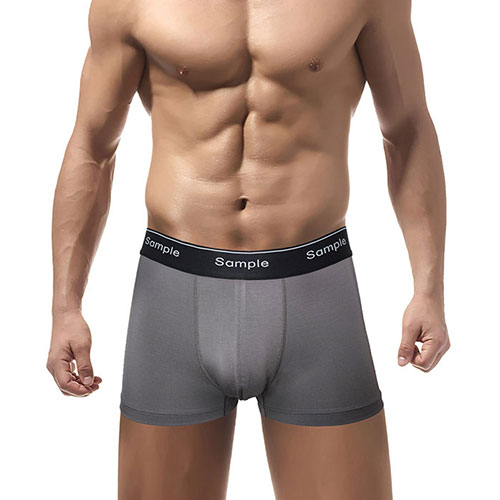
Part of Waistbands, Labels, Printing & Packaging in Finetex Talk — buyer questions answered by the Finetex editorial team.
A brand receives complaints that its boxer brief waistbands lose stretch after a few months. Many customers say they tumble dry on high heat. The team wants to know whether tumble drying really damages elastic and what to put on the care label.
Short answer: Heat can reduce the recovery of elastane and other elastic materials over repeated cycles, which makes waistbands and leg openings loosen and lose grip. Tumble drying combines heat with mechanical action, and high-temperature settings are more likely to cause damage than low settings. The effect depends on the elastic's construction and composition, the temperature and the number of cycles. To understand your garment, wash and dry samples using defined procedures such as those in ISO 6330, then measure stretch and recovery, for example with ASTM D4964. Use the results to set care instructions and choose elastics that hold up in the way your customers actually wash.
How heat affects elastic
- Elastane can lose recovery when exposed to high heat repeatedly.
- Mechanical action in a tumble dryer adds stress.
- Chlorine bleach and some detergents can also damage elastane.
- Damage builds up over many cycles rather than in one wash.
Testing it
- Wash and dry samples using an ISO 6330 procedure, including a tumble dry option.
- Measure elastic stretch and recovery before and after multiple cycles with a method such as ASTM D4964.
- Compare low-heat, high-heat and line-dried samples.
- Check waistband and leg opening measurements after cycles.
Care instructions
- Base the care label on test results.
- If high heat damages elastic, use a low-heat tumble dry or line-dry instruction.
- In the US, the FTC Care Labeling Rule requires care instructions to be reliable and to warn against procedures that would harm the garment.
Reducing elastic failure
- Choose elastics with good heat resistance.
- Use enough elastic tension and width so some loss does not ruin fit.
- Consider covered waistbands, which protect elastic from some abrasion.
Communicating with customers
Put care advice on the product page as well as the label. Explain briefly why lower heat helps elastic last.
Other care factors
Avoid chlorine bleach and fabric softener build-up where tests show they affect elastic. Washing underwear in a laundry bag can reduce abrasion.
A worked example
Customers report that waistbands lose grip after a few months, and many dry their underwear on high heat. A comparison test of the same elastic dried on low and high heat over ten cycles, measuring stretched and relaxed length each time, shows whether heat is the main cause. If so, care labelling for low tumble drying and an elastic with better heat resistance are both options to consider.
Limits
Customers may still tumble dry on high heat. Testing helps you choose durable elastics and set honest care instructions, but cannot control use.
Facts, recommendations and uncertainty
Established: repeated high heat can reduce elastic recovery. Recommendation: test washing and drying, measure recovery, and base care labels on results. Uncertain: how many cycles your elastic will last under customers' habits.
Sources and further reading
- ASTM D4964 — Tension and elongation of elastic fabrics
- ISO 6330:2021 — Domestic washing and drying procedures for textile testing
- U.S. FTC — Care Labeling Rule (16 CFR Part 423)
Standards and regulations are referenced by their published scope. Test parameters, cycles and pass levels should be agreed with your laboratory for the specific product; legal requirements should be confirmed for each destination market.
Three more perspectives
Ask the factory and elastic supplier for any wash and dry test data on the elastic, and request testing under your intended care instructions. Include elastic recovery after washing in the purchase specification. Ask whether more heat-resistant elastics are available and how they affect cost and lead time. Ask the factory to confirm the care label text before printing, so it matches the tested instructions. Keep test reports on file to support the care label.
In product development, test candidate elastics side by side under the same washing and drying procedure. Measure stretch and recovery after several cycles. Choose an elastic and care instruction that work together. If customers commonly tumble dry, test for that condition rather than only line drying. Record the number of cycles at which recovery drops noticeably. This helps compare elastics fairly and set expectations.
In quality control, wash and dry a few pieces per lot under the labelled care instructions and measure waistband recovery. Compare with the approved sample. If complaints rise, check whether the elastic supplier or construction changed. Keep test records linked to lots. Check that the care label on bulk garments matches the approved text and symbols, because a wrong label can lead customers to use more heat than the elastic can take.
Related products
← More in Waistbands, Labels, Printing & Packaging · All Talk topics · Ask us about your programme
More factory-floor notes for brand owners

What should I check on a novelty hoodie such as an eye-mask hood?
What to check on a novelty hoodie such as an eye-mask hood: hood structure and lining, visibility and…
Read more →How should I size a unisex hoodie?
How to size a unisex hoodie: choosing a base block, body measurement ranges, ease, sleeve and body length,…
Read more →What care instructions should a hoodie carry?
What care instructions a hoodie should carry: the elements of a complete washing instruction, warnings for prints and…
Read more →
How do I match colour across hoodie and jogger sets?
How to match colour across hoodie and jogger sets: same fabric lot, rib and trims, dyeing method, shade…
Read more →How many colourways can I order at hoodie MOQ?
How many colourways a hoodie order can include at MOQ: how factories set minimums per style, colour and…
Read more →Why does a dark hoodie stain other clothes?
Why dark hoodies stain other clothes: dye bleeding in washing, rubbing transfer, perspiration, unfixed dye and pigment, and…
Read more →Request a sample & pricing information
Send us your tech pack, target price or a reference sample — we reply with a quotation, a realistic lead time and a fabric recommendation within one working day.
- Free sampling plan & cost breakdown
- MOQ from 300 pcs per style
- Reply within 1 working day