
Why does a waistband feel too tight even when the size is right?
Why an underwear waistband can feel too tight even when the size is right: elastic tension, cut length, width, construction and shrinkage, and how to diagnose…
Part of Waistbands, Labels, Printing & Packaging in Finetex Talk — buyer questions answered by the Finetex editorial team.
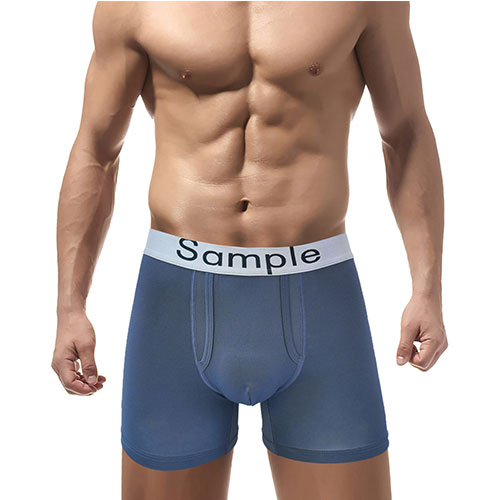
Customers report that a boxer brief waistband feels too tight and leaves marks, but the garment's relaxed waist measurement matches the specification and the size chart. The team wants to know why and how to fix it.
Short answer: A relaxed waist measurement shows how long the waistband is at rest, but not how hard it pulls when stretched on the body. Tightness depends on the elastic's tension (its force at a given stretch), the length of elastic cut for each size, the width and construction of the band, and how the elastic is attached. Two waistbands with the same relaxed measurement can feel very different if one uses a stronger elastic or less elastic length. Shrinkage after washing can also make the band tighter. To diagnose it, measure the stretched waist, test the elastic's force and recovery, and compare with a waistband customers find comfortable.
Causes of a tight waistband
- Elastic tension too high for the intended body sizes.
- Elastic cut too short relative to the body fabric.
- Narrow elastic concentrating pressure.
- Waistband stitching that reduces stretch.
- Shrinkage of elastic or body after washing.
- Size chart not matching actual body measurements.
How to diagnose
- Measure the waist relaxed and stretched, and compare with the specification.
- Test elastic force and recovery with a method such as ASTM D4964.
- Wash and remeasure with ISO 5077.
- Compare with a reference waistband that customers find comfortable.
- Check customer body measurements against your chart, using consistent body points such as those in ISO 8559-1.
How to fix it
- Choose a softer elastic with lower force at the same stretch.
- Increase elastic cut length per size.
- Use a wider elastic to spread pressure.
- Change the stitch type or density so the band stretches freely.
- Adjust the size chart if it is the cause.
Testing the fix
Fit-test the revised waistband on several body sizes for a full day, including sitting. Wash and retest.
Communicating fit
State on the product page whether the waistband is firm or soft, so customers' expectations match.
Leg openings
The same principles apply to leg elastics. A tight leg opening can cause marks and ride-up complaints.
A worked example
Customers say a medium feels tight, yet the relaxed waist matches the specification. Measuring the stretched waist shows it reaches only a few centimetres beyond the upper body measurement of the size range, so the elastic is near its limit when worn. Reducing the elastic tension or lengthening the elastic piece, then retesting stretched measurements after washing, usually solves it without changing the size chart.
Limits
Comfort is personal. Some customers prefer a firm waistband; others prefer soft. Use returns and tests to find the balance.
Facts, recommendations and uncertainty
Established: waistband tightness depends on elastic tension, cut length, width and attachment, not only relaxed measurement. Recommendation: measure stretched waist and elastic force, then adjust elastic or cut length. Uncertain: the ideal tension for your customers.
Sources and further reading
- ASTM D4964 — Tension and elongation of elastic fabrics
- ISO 8559-1:2017 — Size designation of clothes: anthropometric definitions for body measurement
- ISO 5077:2007 — Determination of dimensional change in washing and drying
Standards and regulations are referenced by their published scope. Test parameters, cycles and pass levels should be agreed with your laboratory for the specific product; legal requirements should be confirmed for each destination market.
Three more perspectives
Ask the factory for the elastic's specification, including supplier, width and tension data, and the elastic cut length per size. Include stretched waist measurements in your specification. If the factory changes elastic supplier, ask for samples and test results before bulk, because a different elastic with the same width can feel tighter. Ask the factory to keep elastic cut lengths per size on the production sheet.
In product development, test two or three elastic tensions or cut lengths on the same garment and ask fit models to wear them for a full day. Record the comfort results with stretched waist and elastic force data. Check whether the stitch used to attach the elastic limits stretch, and adjust it if needed. Test the largest and smallest sizes, since tension problems often show most at the ends of the range. Keep the approved settings on file.
In inspection, measure waist relaxed and stretched on several pieces per size. Check elastic cut length and attachment against the specification. Wash a few pieces per lot and remeasure. Compare elastic from each lot with the sealed elastic sample by stretching both side by side. Track tightness complaints by lot and size, so a change in elastic or cutting can be traced. Share the results with the factory.
Related products
Related articles
← More in Waistbands, Labels, Printing & Packaging · All Talk topics · Ask us about your programme
More factory-floor notes for brand owners

What should I check on a novelty hoodie such as an eye-mask hood?
What to check on a novelty hoodie such as an eye-mask hood: hood structure and lining, visibility and…
Read more →How should I size a unisex hoodie?
How to size a unisex hoodie: choosing a base block, body measurement ranges, ease, sleeve and body length,…
Read more →What care instructions should a hoodie carry?
What care instructions a hoodie should carry: the elements of a complete washing instruction, warnings for prints and…
Read more →
How do I match colour across hoodie and jogger sets?
How to match colour across hoodie and jogger sets: same fabric lot, rib and trims, dyeing method, shade…
Read more →How many colourways can I order at hoodie MOQ?
How many colourways a hoodie order can include at MOQ: how factories set minimums per style, colour and…
Read more →Why does a dark hoodie stain other clothes?
Why dark hoodies stain other clothes: dye bleeding in washing, rubbing transfer, perspiration, unfixed dye and pigment, and…
Read more →Request a sample & pricing information
Send us your tech pack, target price or a reference sample — we reply with a quotation, a realistic lead time and a fabric recommendation within one working day.
- Free sampling plan & cost breakdown
- MOQ from 300 pcs per style
- Reply within 1 working day