
Is bamboo underwear really antibacterial, and what can a brand legally claim?
What "antibacterial bamboo" claims really rest on, why bamboo viscose is labelled as viscose or rayon, and what a brand can safely say about bamboo underwear.
Part of Underwear Fabrics & Comfort in Finetex Talk — buyer questions answered by the Finetex editorial team.
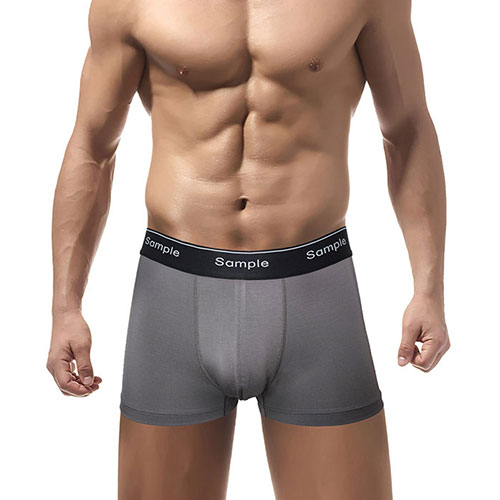
A brand is launching bamboo boxer briefs. The factory's catalogue says "naturally antibacterial", and the marketing team wants to put that on the product page and the box.
Short answer: Be careful. Most "bamboo" underwear is made from bamboo-derived viscose (rayon), a regenerated fibre whose chemical processing means properties attributed to the bamboo plant cannot simply be assumed for the fabric. An antibacterial claim needs test evidence on your actual fabric, and in markets such as the US and EU the fibre itself must be named correctly on the label.
Where the claim comes from
Bamboo as a plant is often described as resistant to pests and microbes. Underwear fabric, however, is rarely raw bamboo fibre. In most cases the bamboo pulp is dissolved and regenerated into viscose filaments or staple, and the finished fibre behaves much like other viscose: soft, absorbent and smooth. Whether any antibacterial effect survives processing is a question for testing, not for the plant's reputation.
What labelling rules require
- In the US, the Textile Fiber Products Identification Act requires the generic fibre name; regulators have treated bamboo-derived viscose as rayon or viscose, with "made from bamboo" only as a qualifier.
- In the EU, Regulation 1007/2011 only allows fibre names listed in its Annex I, so the composition line reads "viscose", not "bamboo".
- Marketing copy must not contradict the label or imply properties you cannot support.
How to approach a performance claim
- Ask the factory whether an antimicrobial finish has been applied, which chemistry it uses and whether it is permitted in your target markets.
- If you want any odour or antibacterial wording, commission a test on your finished fabric with a recognised laboratory and keep the report.
- Test after washing too, because finishes can diminish with laundering.
Risk limits
Safer wording describes what you can verify: softness, the fibre's source and the actual composition. Harmful-substance certification such as OEKO-TEX STANDARD 100 shows that tested limits are met; it is not evidence of antibacterial performance.
What regulators have already said
The US Federal Trade Commission has repeatedly warned sellers that textiles made from bamboo-derived rayon should not be marketed as "bamboo", and it has taken enforcement action against retailers over this kind of labelling and advertising. Its guidance also points out that the viscose process uses harsh chemicals and that the finished fibre does not keep the plant's natural properties. For a brand this matters twice: the composition line must name the generic fibre, and any environmental or antibacterial claim in advertising must be backed by competent and reliable evidence.
What a defensible product page looks like
- Composition stated exactly as on the sewn-in label, for example "95% viscose (from bamboo), 5% elastane", where the market allows the qualifier.
- Feel and comfort described in plain terms: soft, smooth, breathable in everyday wear.
- No "antibacterial", "odour-free" or "kills germs" wording unless a finish is applied and you hold a current report on the finished fabric.
- If a finish is used, the claim describes the treated fabric, not the bamboo.
Facts, recommendations and uncertainty
Established: most bamboo underwear is regenerated viscose and must be labelled by its generic fibre name. Recommendation: describe the fabric accurately and test before any performance claim. Uncertain: whether any antibacterial effect exists for a given fabric until it has been tested.
Sources and further reading
- U.S. FTC — Textile Fiber Products Identification Act
- Regulation (EU) No 1007/2011 — Textile fibre names and labelling
- OEKO-TEX® STANDARD 100
Standards and regulations are referenced by their published scope. Test parameters, cycles and pass levels should be agreed with your laboratory for the specific product; legal requirements should be confirmed for each destination market.
Three more perspectives
Ask the supplier for the fibre producer, the process type (viscose or lyocell-type) and the exact composition in writing, and keep it in the order file. "Bamboo" fabrics from different sources can be regenerated viscose, a lyocell-type fibre or a blend with cotton, and the label must match what you actually buy. If the mill cannot name the fibre producer, treat any bamboo-related claim in its catalogue as unverified.
If odour control is the real product goal, test it as a separate requirement rather than relying on the fibre. Compare a bamboo viscose fabric, with and without a permitted finish, against alternatives such as a modal or synthetic blend before committing. The main answer covers everyday underwear; sports lines that see heavy sweat may need a different fabric altogether, and the softness of bamboo viscose may matter more to your customer than any odour claim.
Keep test reports with the lot number, the lab name and the wash count used, and re-test when the fabric source or finish changes. A claim that was true for the first lot is not automatically true for a reorder from a different mill. Also check the retail packaging and listing copy against the report before launch; most claim problems arise in marketing text written after the fabric was approved.
Related products
Related articles
- Bamboo Underwear Manufacturing: Viscose, Lyocell and the Claim That Gets Challenged
- Bamboo Underwear for E-Commerce: Marketing Claims vs. Reality
- Which Fabric Is Best for Men's Underwear: Cotton, Modal, Bamboo or Nylon: A Manufacturer's Comparison
- Compression Underwear Manufacturing: Support, Compression Levels and Claims You Can Test
- Bamboo T-Shirt Manufacturing: Where the Fibre Works and Where It Disappoints
- Recycled Fabric Underwear: Mechanical, Chemical and the Content Claim You Can Actually Make
- Who are the top bamboo clothing manufacturers: How to Read the Lists (and What They Leave Out)
- Men's Underwear and Fertility: What Doctors Say About Viral Claims — What Brands Should Know
- Who Are the Leading Bamboo Clothing Manufacturers in the USA: Supply Chain and Sourcing Explained for Buyers
- Sustainable Undershirts: Marketing Organic Cotton and Bamboo Honestly
← More in Underwear Fabrics & Comfort · All Talk topics · Ask us about your programme
More factory-floor notes for brand owners

What should I check on a novelty hoodie such as an eye-mask hood?
What to check on a novelty hoodie such as an eye-mask hood: hood structure and lining, visibility and…
Read more →How should I size a unisex hoodie?
How to size a unisex hoodie: choosing a base block, body measurement ranges, ease, sleeve and body length,…
Read more →What care instructions should a hoodie carry?
What care instructions a hoodie should carry: the elements of a complete washing instruction, warnings for prints and…
Read more →
How do I match colour across hoodie and jogger sets?
How to match colour across hoodie and jogger sets: same fabric lot, rib and trims, dyeing method, shade…
Read more →How many colourways can I order at hoodie MOQ?
How many colourways a hoodie order can include at MOQ: how factories set minimums per style, colour and…
Read more →Why does a dark hoodie stain other clothes?
Why dark hoodies stain other clothes: dye bleeding in washing, rubbing transfer, perspiration, unfixed dye and pigment, and…
Read more →Request a sample & pricing information
Send us your tech pack, target price or a reference sample — we reply with a quotation, a realistic lead time and a fabric recommendation within one working day.
- Free sampling plan & cost breakdown
- MOQ from 300 pcs per style
- Reply within 1 working day