
Should performance underwear use nylon or polyester?
Nylon or polyester for performance underwear: hand feel, durability, moisture behaviour, odour, dyeing and cost, and how to specify and test either.
Part of Underwear Fabrics & Comfort in Finetex Talk — buyer questions answered by the Finetex editorial team.
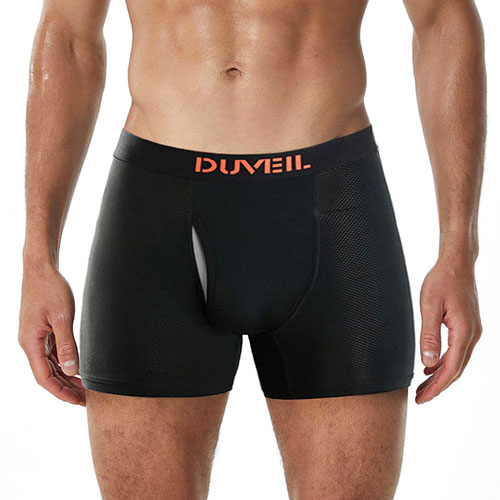
A sports brand is developing performance boxer briefs and has two fabric options: a nylon/elastane and a polyester/elastane. Both are described as quick-drying and breathable.
Short answer: Both can work. Nylon (polyamide) blends usually feel smoother and softer with good abrasion resistance, while polyester blends are often more economical and dry quickly, with strong colourfastness when disperse-dyed. The better choice depends on hand feel, budget, colour needs and how the fabric performs in tests, not on the fibre name alone.
Typical differences
- Hand: nylon blends often feel silkier and cooler; polyester can feel slightly crisper.
- Abrasion: nylon is generally associated with good abrasion resistance, useful in high-friction zones.
- Moisture: both are low-absorbency synthetics; wicking depends heavily on yarn and knit construction or finishes.
- Odour: synthetics can retain odour more than cellulose fibres; finishes or blends may help.
- Colour: dyeing systems differ, which affects shade range and fastness.
- Cost: polyester is often less expensive, but quality fabrics of either can vary widely.
How to choose
- Define the end use: gym, running, all-day wear or cycling.
- Sample both fabrics in the same pattern and test moisture management with a method such as AATCC TM195.
- Test pilling and abrasion in friction zones.
- Wear-test and wash-test with the intended care instructions.
Limits
"Performance" is a marketing term. Avoid specific claims such as drying-time comparisons unless you have test data for your fabric. Recycled versions of both fibres exist; check feel and test results separately.
Where the fibre choice matters less than you think
In performance underwear, the yarn and knit often decide comfort more than the polymer. Microfilament yarns, channelled cross-sections, open knit structures and mesh panels can make either fibre feel cooler and move moisture better. Conversely, a dense, heavy knit in either fibre can feel warm. Comparing two fabrics only by "nylon" or "polyester" therefore misses most of what the customer feels; compare full specifications.
Dyeing and colour behaviour
Nylon is usually dyed with acid dyes and polyester with disperse dyes at high temperature. In practice this means the two fibres need different dyeing routes, and blends or panels combining both may need careful shade matching. Bright colours are achievable in both; deep shades on synthetics should still be checked for colourfastness to washing and rubbing, and dark polyester can show dye migration onto lighter trims if the process is not controlled.
A simple decision table
- Softest touch and smooth stretch: nylon/elastane is a common choice.
- Lowest cost and quickest drying: polyester/elastane is often preferred.
- Odour-prone sports use: test both after washing; polyester is frequently reported as holding odour more, but fabric and finish matter.
- Recycled content: both are available in recycled versions; verify with chain-of-custody documentation.
Facts, recommendations and uncertainty
Established: both fibres are low-absorbency synthetics with different hand and dyeing behaviour. Recommendation: test both in your style. Uncertain: which performs better for your customers until wear and lab tests compare them.
Sources and further reading
- AATCC TM195 — Liquid moisture management properties of textile fabrics
- ISO 12945-2:2020 — Pilling, fuzzing or matting, modified Martindale method
- ISO 6330:2021 — Domestic washing and drying procedures for textile testing
Standards and regulations are referenced by their published scope. Test parameters, cycles and pass levels should be agreed with your laboratory for the specific product; legal requirements should be confirmed for each destination market.
Three more perspectives
Ask for yarn type, denier, filament count, knit construction and finished weight with each quote. A low-cost polyester and a premium nylon can look similar on paper but feel very different in hand. Also ask which dyehouse and dye class will be used and how shade is approved, because synthetic colour consistency between lots is a frequent source of reorder problems.
Ventilation can often be solved with mesh panels or a different gusset fabric instead of changing the entire body fabric. That keeps the main fabric's hand feel and colour programme while improving breathability where it is needed. If you mix nylon and polyester in one garment, plan shade matching early, since the two fibres take colour differently and the panels may not match under all lighting.
Test colourfastness and odour retention after washing as well as wicking. These are frequent complaints in synthetic performance lines, and they rarely show up in a quick touch test. For dark colours, include a check for transfer onto light trims and labels after washing, and keep retained samples from each lot so you can compare any complaint garment with what was approved.
Related products
Related articles
- Which Fabric Is Best for Men's Underwear: Cotton, Modal, Bamboo or Nylon: A Manufacturer's Comparison
- Best nylon spandex seamless t shirts for running — Buyer's Guide
- Cotton Fleece vs Polyester Fleece: Which Fabric Is Best — A Technical and Performance Buyer's Guide
- Is Polyester or Cotton Warmer? The Ultimate Textile Engineering & Performance Guide: What the Evidence Shows
← More in Underwear Fabrics & Comfort · All Talk topics · Ask us about your programme
More factory-floor notes for brand owners

What should I check on a novelty hoodie such as an eye-mask hood?
What to check on a novelty hoodie such as an eye-mask hood: hood structure and lining, visibility and…
Read more →How should I size a unisex hoodie?
How to size a unisex hoodie: choosing a base block, body measurement ranges, ease, sleeve and body length,…
Read more →What care instructions should a hoodie carry?
What care instructions a hoodie should carry: the elements of a complete washing instruction, warnings for prints and…
Read more →
How do I match colour across hoodie and jogger sets?
How to match colour across hoodie and jogger sets: same fabric lot, rib and trims, dyeing method, shade…
Read more →How many colourways can I order at hoodie MOQ?
How many colourways a hoodie order can include at MOQ: how factories set minimums per style, colour and…
Read more →Why does a dark hoodie stain other clothes?
Why dark hoodies stain other clothes: dye bleeding in washing, rubbing transfer, perspiration, unfixed dye and pigment, and…
Read more →Request a sample & pricing information
Send us your tech pack, target price or a reference sample — we reply with a quotation, a realistic lead time and a fabric recommendation within one working day.
- Free sampling plan & cost breakdown
- MOQ from 300 pcs per style
- Reply within 1 working day