
What is the practical difference between modal and micro modal for boxer briefs?
Modal versus micro modal for boxer briefs: fibre fineness, hand feel, weight, durability, price and when each makes sense for a brand.
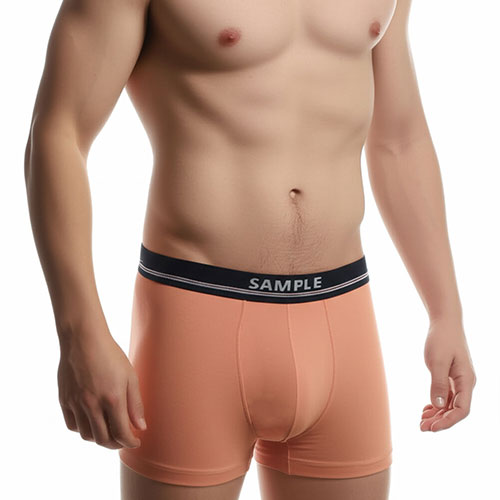
Part of Underwear Fabrics & Comfort in Finetex Talk — buyer questions answered by the Finetex editorial team.
A buyer is choosing between a modal and a micro modal fabric for a new boxer brief line. Both swatches feel soft, but the micro modal costs more and the buyer wants to know what the difference really buys.
Short answer: The main difference is fibre fineness. Micro modal uses finer fibres than standard modal, which allows lighter, smoother and more fluid fabrics with a softer hand. Standard modal is usually slightly more robust and economical. Which one is better depends on the price position, weight and the wear the style will see.
What changes with finer fibres
Lenzing describes its Modal with Micro technology as a finer fibre that produces lighter fabrics with greater softness, aimed at intimate and next-to-skin wear. More, finer fibres in a yarn give a smoother surface and drape. The same fineness can also make the surface more sensitive to abrasion, so pilling and wear behaviour need checking on the specific fabric.
Practical comparison
- Hand feel: micro modal is typically silkier and cooler to the touch; standard modal is soft but a little fuller.
- Weight: micro modal suits lighter jerseys; modal is common in mid-weight underwear fabrics.
- Cost: finer fibres and yarns usually cost more.
- Durability: depends on yarn, knit and blend more than on the label alone.
- Branding: TENCEL-branded Modal or Micro Modal requires the fibre to come from Lenzing and follows their licensing rules.
How to decide
- Set the retail price and the target customer first.
- Sample both qualities in the same pattern and colour, then wash-test them to an agreed procedure.
- Compare pilling and dimensional change, not only the first touch.
Limits
Do not assume micro modal is always "better". For a high-friction long-leg boxer brief, a standard modal or modal/cotton blend may hold up better, while micro modal shines in premium lightweight styles.
What the price difference usually reflects
Finer fibres mean more fibres in each yarn cross-section, which usually requires finer, more carefully spun yarns and often a finer-gauge knitting set-up. That is where most of the extra cost sits, together with branded fibre premiums when the fabric uses TENCEL-branded Modal. The fabric may also be lighter, so compare prices per finished garment rather than per kilogram of fabric: a lighter micro modal can yield more garments per kilo, which narrows the gap.
How the two behave over time
- Shape: both have good softness after washing; recovery mainly depends on elastane content and knit tightness.
- Surface: very fine, smooth jerseys can show fuzz or pills in high-friction zones such as the inner thigh, so check those zones specifically after a wash test.
- Shrinkage: both are regenerated cellulose and should be checked for dimensional change on the finished fabric, not assumed from the fibre name.
- Colour: modal fibres generally take dye well, giving clear, deep shades in either quality.
Facts, recommendations and uncertainty
Established: micro modal is a finer modal fibre giving lighter, softer fabrics. Recommendation: compare both in the same style after washing. Uncertain: relative durability for your style, which depends on yarn and knit.
Sources and further reading
- Lenzing — TENCEL™ Modal with Micro technology
- ISO 12945-2:2020 — Pilling, fuzzing or matting, modified Martindale method
- ISO 5077:2007 — Determination of dimensional change in washing and drying
Standards and regulations are referenced by their published scope. Test parameters, cycles and pass levels should be agreed with your laboratory for the specific product; legal requirements should be confirmed for each destination market.
Three more perspectives
Ask for the fibre source and whether the quality is a running fabric at the mill. A running quality is easier to repeat and usually has more stable pricing than a one-off development. Also request the yarn count and finished weight in writing for both offers, so you know whether the price gap comes from fibre fineness, a lighter fabric or a branded fibre premium. Quotes without those three points are not truly comparable.
If you want a premium feel without the full cost, consider micro modal in the main body with a standard modal or cotton fabric for the waistband lining or gusset, and check comfort in a fit test. Keep the same pattern for a first comparison, then adjust leg opening and ease after wash testing, because a lighter, more fluid micro modal can drape and stretch differently from a fuller modal on the same block.
Wash both fabrics to the same agreed procedure, then compare retained samples side by side for surface change, length and width. Focus on the inner thigh and seat, where friction is highest. Recording these results with photographs gives you evidence to defend the choice if customers later ask why one line costs more, and a baseline for checking reorders.
Related products
Related articles
- Micro Modal Underwear: Building a Softness Story That Converts
- Modal Underwear Manufacturing: Micro Modal, Modal Air and Choosing a Softness Tier
- Which fabric is best for you, micromodal or Tencel: A Manufacturer's Comparison
- Modal T-Shirt Manufacturing: Specifying a Softness Fabric So It Keeps Its Shape
- Which Fabric Is Best for Men's Underwear: Cotton, Modal, Bamboo or Nylon: A Manufacturer's Comparison
- How Can I Wash and Care for Modal Underwear to Extend Its Life: A Manufacturer's Walkthrough
- Why is modal popular for summer pajamas and underwear: The Manufacturing Reality Behind It
- How is sustainable modal fabric made from beechwood: A Manufacturer's Walkthrough
- Undershirt Fabrics for E-Commerce: Cotton, Bamboo, Modal, and TENCEL Compared
← More in Underwear Fabrics & Comfort · All Talk topics · Ask us about your programme
More factory-floor notes for brand owners

What should I check on a novelty hoodie such as an eye-mask hood?
What to check on a novelty hoodie such as an eye-mask hood: hood structure and lining, visibility and…
Read more →How should I size a unisex hoodie?
How to size a unisex hoodie: choosing a base block, body measurement ranges, ease, sleeve and body length,…
Read more →What care instructions should a hoodie carry?
What care instructions a hoodie should carry: the elements of a complete washing instruction, warnings for prints and…
Read more →
How do I match colour across hoodie and jogger sets?
How to match colour across hoodie and jogger sets: same fabric lot, rib and trims, dyeing method, shade…
Read more →How many colourways can I order at hoodie MOQ?
How many colourways a hoodie order can include at MOQ: how factories set minimums per style, colour and…
Read more →Why does a dark hoodie stain other clothes?
Why dark hoodies stain other clothes: dye bleeding in washing, rubbing transfer, perspiration, unfixed dye and pigment, and…
Read more →Request a sample & pricing information
Send us your tech pack, target price or a reference sample — we reply with a quotation, a realistic lead time and a fabric recommendation within one working day.
- Free sampling plan & cost breakdown
- MOQ from 300 pcs per style
- Reply within 1 working day