
How durable is nylon mesh underwear, and how do I avoid snags?
How durable nylon mesh underwear is, why it snags, and how fabric choice, construction and care instructions reduce snags and holes.
Part of Underwear Fabrics & Comfort in Finetex Talk — buyer questions answered by the Finetex editorial team.
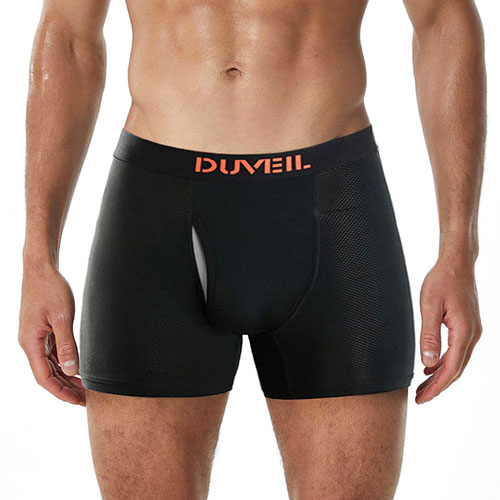
A brand selling nylon mesh boxer briefs receives complaints about snags and small holes after a few weeks of wear.
Short answer: Mesh fabrics are open constructions, so yarn loops can catch on rough surfaces, nails, jewellery or Velcro. Durability depends on yarn type and denier, mesh structure, elastane content and how the garment is washed. Choosing a suitable mesh and setting care instructions reduce snagging, but mesh will always be more delicate than a closed jersey.
Why mesh snags
Open holes and fine yarns create loops that can be pulled out. Light meshes chosen for breathability have less material to resist abrasion. Washing with zips, hooks or rough fabrics increases risk.
Factors to check
- Yarn denier and filament count.
- Mesh structure: hole size and stitch type.
- Elastane content and recovery.
- Seam construction around mesh panels.
Steps
- Compare several mesh qualities in the same style and wear-test them.
- Run pilling and abrasion tests where relevant and inspect for snag resistance.
- Specify care: wash in a laundry bag, avoid washing with zips and hooks, avoid high heat.
Limits
Highly breathable meshes trade some durability for airflow. If complaints continue, use mesh only in panels and a closed fabric in high-friction areas.
Mesh is a family, not one fabric
Underwear meshes range from fine micromesh that looks almost like jersey to open hexagonal or eyelet structures. Finer, denser meshes resist snagging much better than open ones but breathe less. Many durability complaints come from choosing a showy open mesh for an all-day product. Matching the mesh to the use case — fashion, gym, or everyday — is the first decision.
Where snags usually come from
Most snags are caused by contact rather than by the fabric failing on its own: rough fingernails, velcro on sportswear, hooks on other laundry, rough seat surfaces and zips in the same wash. Open structures expose individual yarns over longer distances, so a single hooked loop can pull a run of yarn across the surface. A finer, tighter mesh hides pulled yarns better than an open, decorative mesh with large holes.
Care instructions worth printing
- Wash in a laundry bag or with similar soft items; keep away from zips, hooks and velcro.
- Use a gentle cycle and avoid high-temperature tumble drying, which can stress elastane.
- Avoid fabric softener if wash tests show it affects wicking or elastic recovery.
Base these on your own wash tests so the label is supported, and keep the instructions consistent across the packaging, the sewn-in label and the product page.
Facts, recommendations and uncertainty
Established: open mesh constructions are more prone to snagging. Recommendation: choose mesh by wear test and use panels in friction zones. Uncertain: snag rates in real use, which depend on wearer habits.
Sources and further reading
- ISO 12945-2:2020 — Pilling, fuzzing or matting, modified Martindale method
- ISO 6330:2021 — Domestic washing and drying procedures for textile testing
- ASTM D4964 — Tension and elongation of elastic fabrics
Standards and regulations are referenced by their published scope. Test parameters, cycles and pass levels should be agreed with your laboratory for the specific product; legal requirements should be confirmed for each destination market.
Three more perspectives
Ask the mill for the full mesh specification and keep an approved swatch as the standard. Mesh qualities that look similar can differ in yarn count, filament type, hole size and stitch density, and those details decide snag resistance. Ask whether the mesh is a running quality used by other underwear customers, and request its pilling and stretch results, so you start from a fabric with a known track record.
Use mesh in ventilation zones such as the sides and back while keeping the pouch, seat and inner thigh in a closed fabric. This keeps the cooling benefit while reducing exposure in high-friction areas. If the design calls for a full-mesh style, choose a finer, tighter mesh and test seams carefully, because the junction between mesh and elastic is often where the first hole appears.
Inspect mesh panels for pulled yarns before packing and check seam allowances where mesh meets solid fabric. Small snags or weak seams turn into complaints after a few washes. During pre-production, wash-test complete garments rather than fabric swatches alone, and record where the first defect appears; that location tells you whether to change the mesh, the seam or the care advice.
Related products
Related articles
← More in Underwear Fabrics & Comfort · All Talk topics · Ask us about your programme
More factory-floor notes for brand owners

What should I check on a novelty hoodie such as an eye-mask hood?
What to check on a novelty hoodie such as an eye-mask hood: hood structure and lining, visibility and…
Read more →How should I size a unisex hoodie?
How to size a unisex hoodie: choosing a base block, body measurement ranges, ease, sleeve and body length,…
Read more →What care instructions should a hoodie carry?
What care instructions a hoodie should carry: the elements of a complete washing instruction, warnings for prints and…
Read more →
How do I match colour across hoodie and jogger sets?
How to match colour across hoodie and jogger sets: same fabric lot, rib and trims, dyeing method, shade…
Read more →How many colourways can I order at hoodie MOQ?
How many colourways a hoodie order can include at MOQ: how factories set minimums per style, colour and…
Read more →Why does a dark hoodie stain other clothes?
Why dark hoodies stain other clothes: dye bleeding in washing, rubbing transfer, perspiration, unfixed dye and pigment, and…
Read more →Request a sample & pricing information
Send us your tech pack, target price or a reference sample — we reply with a quotation, a realistic lead time and a fabric recommendation within one working day.
- Free sampling plan & cost breakdown
- MOQ from 300 pcs per style
- Reply within 1 working day