
Market Testing with a 6-Week Pop-Up: Minimum Orders
How to test an apparel line with a 6-week pop-up and a 300-piece minimum order: test goals, style choice, size split, sell-through rules and reorders.
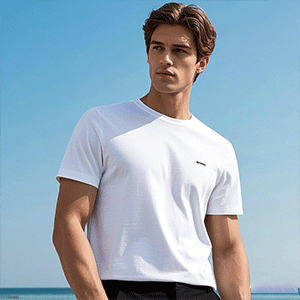
Answer first: A six-week pop-up is a good way to test one city with one factory minimum, if the test is designed before the goods are ordered. Decide what you are trying to learn, choose one style (or two at most), split the sizes from evidence rather than habit, and set the sell-through rate that counts as success before the doors open. With a minimum of 300 pieces per style on stock fabric, the realistic plan is one style in two or three colours with mixed sizes. A reorder inside the six weeks is only possible if the decision point is set early, because bulk production and freight take longer than the pop-up lasts.
The quantities and lead times below are our published terms. Retail examples are hypothetical and are there to show the arithmetic.
Set the test goal first
A pop-up can answer several questions, but not all of them with 300 pieces. Pick the one that matters most and design around it.
| Test goal | What you measure | What it needs |
|---|---|---|
| Does this city buy this product at this price? | Sell-through at full price by week | One style, one price, no early discounting |
| Which colour leads? | Units sold per colour | Two or three colours of the same style |
| Is the fit right? | Try-on to purchase ratio, size requests you could not fill, return reasons | A full size run and a log at the fitting room |
| Will customers come back online? | Email sign-ups, repeat orders after the pop-up | A way to capture contacts at the till |
The SBA’s guidance on market research makes the general point: direct research with customers gives answers specific to your audience, where existing data only covers broad trends. A pop-up is direct research with a till attached, so treat the log of what customers asked for and could not get as data, not noise.
Choose the style
The test style should be the product you expect to sell most of later, not the most interesting one. In practice that means a core item with a proven block: a T-shirt, an undershirt, a boxer brief, a sweatshirt.
Three rules keep the minimum low and the result readable:
- Stock fabric. Our MOQ starts at 300 pieces per style on stock fabric, mixed sizes. A fully custom knit or dye lot usually starts at 1,000 pieces per colour, which is too much for a test.
- Few colours. Size assortments can be arranged within an order, but minimums may apply separately to each colour, especially with custom colours. Two or three stock colours keep each colour deep enough to read.
- Standard trims. Custom woven labels, printed packaging and jacquard waistbands carry their own setup minimums. Use simple branding for the test and upgrade later.
Our article on T-shirt wholesale for small brands explains how minimums are built, and the MOQ calculator shows what a small run costs per style.
Split the sizes
Size split is where small tests most often fail: the middle sizes sell out in week two and the test ends early, while the extremes sit on the rail.
Build the split from the best evidence you have, in this order:
- Your own sales by size in the same category, online or wholesale.
- Customer measurements if you have a fit panel or size-advice data.
- The size chart and block you will use, because a chart that runs large shifts demand down a size. Our article on vanity sizing covers this.
Here is a worked example for one style in three colours. The split is invented to show the arithmetic; it is not a benchmark.
| Size | Share (example) | Colour A | Colour B | Colour C | Total |
|---|---|---|---|---|---|
| S | 15% | 15 | 15 | 15 | 45 |
| M | 30% | 30 | 30 | 30 | 90 |
| L | 30% | 30 | 30 | 30 | 90 |
| XL | 17% | 17 | 17 | 17 | 51 |
| XXL | 8% | 8 | 8 | 8 | 24 |
| Total | 100% | 100 | 100 | 100 | 300 |
Two adjustments help. Hold a small reserve, a few pieces per size, at the back rather than all on the floor, so you can see which sizes run out first. And log every request for a size you no longer have; that is the demand the sales numbers cannot show.
Read the sell-through
Sell-through rate is units sold divided by units received, over a stated period. Track it weekly, per colour and per size.
Set the pass mark before the pop-up opens, from your own margin rather than from a rule of thumb. A simple break-even check:
- Break-even sell-through ≈ total cost of the stock and the pop-up ÷ (units × average selling price).
For example, if 300 units, landed, cost the equivalent of 2,400 and the pop-up costs a further 3,600 for six weeks, total cost is 6,000. At an average selling price of 40, full revenue would be 12,000, so break-even sell-through is 50%. Every figure in this example is hypothetical. Plug in your own landed cost from a landed cost sheet, your rent and staffing, and your real price.
Read the result with the week-by-week curve, not only the final number:
| Pattern | What it usually means | Next step |
|---|---|---|
| Fast start, sizes break early | Demand is there; the split or depth was wrong | Reorder with a corrected split |
| Steady sales across sizes | Product, price and split work | Plan the next order and a second style |
| One colour carries the test | Colour preference, not product rejection | Reorder the winner, drop the others |
| Slow sales from week one | Price, product or location issue | Check feedback before blaming the product |
| Sales only after discounting | Price point is too high for this city | Re-cost, or test another location |
Plan the reorder
A six-week pop-up is shorter than a full production cycle, so the reorder has to be planned from day one.
| Step | Our published timing |
|---|---|
| Development sample (if the style is new) | 5–7 working days after artwork and fabric are confirmed |
| Bulk production | 15–45 days from deposit and approved pre-production sample |
| Air freight | 9–12 days door to door |
| Express courier, samples and small parcels | 3–5 days |
The implication is simple. If you want replenishment during the pop-up, decide by the end of week one or two, on the same stock fabric and approved sample, and budget for air freight. Repeat orders on an approved block usually run at the faster end of the bulk range. If the decision comes later, the reorder serves the next channel (online, wholesale or a second pop-up) rather than this one. Our Shopify launch guide covers that next step, and Channel Architecture: Wholesale, DTC and Marketplace Pricing explains how to keep prices consistent across channels.
Permits and labels still apply
A temporary shop is still a shop. The SBA notes that local governments set registration, licensing and permitting rules, so check the city and state where you trade. As one example, California’s tax authority says a seller at a location for less than 90 days is generally a temporary seller and needs a temporary seller’s permit for each temporary location; it states that the permit is free and can be obtained up to 90 days before the start date. Garments sold in the US still need fibre content, origin and identity labelling under 16 CFR Part 303. Requirements were checked on 22 November 2026; confirm locally before you sign the lease.
Fact, advice and uncertainty
Fact: our MOQ is 300–1,000 pieces per style (300 on stock fabric, mixed sizes); development samples take 5–7 working days; bulk takes 15–45 days; air freight takes 9–12 days. The SBA and California CDTFA statements were read on 22 November 2026.
Advice: test one style on stock fabric, build the size split from your own data, set a break-even sell-through in advance, and set the reorder decision point in week one or two.
Uncertain: one pop-up in one location is a small sample. Weather, footfall and neighbouring events affect results, so treat the outcome as a direction, not proof.
Related reading
- Shopify DTC Apparel Launch: The First 500 Units
- Promotional and Event Merch: Deadlines and 300-Piece Runs
- Channel Architecture: Wholesale, DTC and Marketplace Pricing
- Gym, Studio and Team Kit: Low-Volume Custom Orders
- Volume Tiering: How Price Breaks Work at 500, 3,000 and 10,000 Pieces
Frequently asked questions
How much inventory do I need for a 6-week pop-up shop?
Enough depth in one or two styles to avoid selling out of core sizes in the first fortnight. With a factory minimum of 300 pieces per style on stock fabric, one style in two or three colours is a practical test.
What sell-through rate should a pop-up aim for?
Set it from your own costs. Divide the total cost of stock and the pop-up by the revenue you would make if every unit sold at full price; that gives your break-even sell-through. Anything above it is a pass.
Can I reorder stock during a 6-week pop-up?
Only if you decide early. Bulk production takes 15–45 days from deposit and approval, plus freight, so a reorder must be placed in week one or two on the same fabric and sample, usually with air freight.
Do I need a permit for a temporary clothing pop-up?
Usually. Local governments set the rules. In California, for example, sellers at a location for less than 90 days generally need a temporary seller’s permit for each location.
Sources
- U.S. Small Business Administration: Market research and competitive analysis
- U.S. Small Business Administration: Apply for licenses and permits
- California Department of Tax and Fee Administration: Temporary sellers
- eCFR: 16 CFR Part 303, Rules under the Textile Fiber Products Identification Act
Get a quote for a 300-piece test run
Tell us the style, the colours you are considering and the pop-up dates. We will confirm what can be made on stock fabric, the size breakdown we can run and a timeline that leaves room for a reorder. Request a quote or see how our private label service works.
More factory-floor notes for brand owners
Naturally Dyed Underwear: What Should Buyers Test Before Bulk?
Plan naturally dyed underwear testing for wash and rub fastness, shade variation, and reorder approval. Match color and…
Read more →
Hidden Pockets in Boxer Briefs: Where Should They Sit?
Choose hidden pockets in boxer briefs by testing placement, access, load, and movement in comparable samples before approving…
Read more →
Silk Underwear Sourcing: What Can a Buyer Approve from a Sample?
Use a silk underwear sourcing checklist to verify fiber composition, compare stretch and seams, and approve care and…
Read more →
Adaptive Men’s Underwear: How Do You Test Side Openings?
Test side openings in adaptive men's underwear with seated and one-handed dressing checks, closure placement reviews, and a…
Read more →Microfiber Underwear Fabric: What Should Buyers Specify?
Specify microfiber underwear fabric by verified fiber content, knit structure, stretch, and wash performance. Use a sample checklist…
Read more →Skin-Tone Underwear Color Matching: How Do You Approve a Range?
Plan skin-tone underwear color matching with physical swatches, stretch checks, and a repeatable shade approval record for production…
Read more →Request a sample & pricing information
Send us your tech pack, target price or a reference sample — we reply with a quotation, a realistic lead time and a fabric recommendation within one working day.
- Free sampling plan & cost breakdown
- MOQ from 300 pcs per style
- Reply within 1 working day