
Do boxer briefs need a functional fly?
Should boxer briefs have a functional fly? Pros and cons for comfort, look, cost and customer preference, and how fly construction affects fit and sewing.
Part of Underwear Fit, Styles & Construction in Finetex Talk — buyer questions answered by the Finetex editorial team.
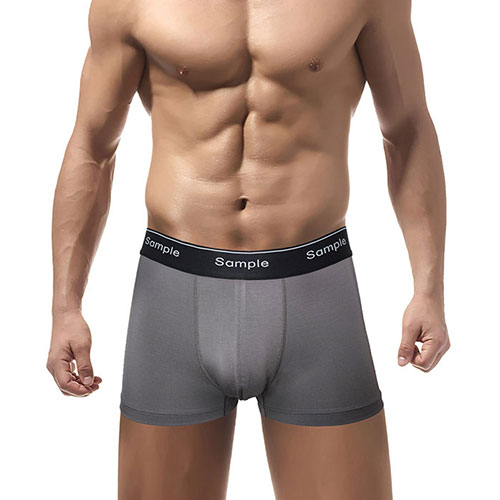
A brand is designing its first boxer briefs and cannot decide whether to include a functional fly or a no-fly pouch front. The team wants to understand the trade-offs in comfort, cost and customer expectations.
Short answer: A functional fly gives an opening for convenience, which some customers expect, especially in more traditional styles. A no-fly pouch front is smoother, often more supportive and simpler to make, and it is common in modern and sports styles. Neither is objectively better: the choice depends on the customer, the style and the fabric. A fly adds layers, seams and sewing steps, so it affects cost, fit and the risk of gaping or bulk. Many brands offer a no-fly pouch in their core line and keep a fly option for customers who ask for it.
Functional fly
- Pros: convenience for customers who use it; familiar look for traditional buyers.
- Cons: more fabric layers and seams at the front; possible gaping or bulk if poorly made; more sewing operations and higher cost.
- Construction: overlapping front panels, sometimes with a button or a double layer, which must line up correctly every time.
No-fly pouch
- Pros: smooth front, fewer seams, often better support with a contoured pouch.
- Cons: some customers find it less convenient or expect a fly.
- Construction: a shaped pouch panel, sometimes with a centre seam or a U-shaped seam.
Faux fly
Some brands add stitching that looks like a fly without an opening. It keeps a traditional look with the simpler construction of a pouch, but customers may find it confusing if the product description is not clear.
Fit and pattern implications
A fly changes the front panel shape and the amount of fabric there. Overlap needs to be enough to prevent gaping when the wearer sits, but too much creates bulk. A pouch needs enough depth and shape to support without feeling tight; pouch depth usually has to grow across sizes, not stay fixed. Fabrics with low recovery are more likely to gape at a fly after washing.
Testing
Wear-test both versions in the same fabric and size, sitting, walking and bending. Check for gaping, bulk and seam comfort. Wash and re-check, since fly overlap can shrink or distort; a method such as ISO 5077 makes the before-and-after measurements comparable.
Product information
Describe the front construction clearly: "functional fly", "no-fly contour pouch" or "faux fly". If garments are sold in the United States, care information still has to follow the FTC Care Labeling Rule whichever front is chosen.
Limits
Preferences vary by market, age and style. Customer research and early sales data are better guides than general trends.
Facts, recommendations and uncertainty
Established: a functional fly adds convenience but also seams, bulk and cost; a no-fly pouch is simpler and smoother. Recommendation: choose based on customer expectations and test both. Uncertain: what share of your customers actually use a fly.
Sources and further reading
- ISO 8559-1:2017 — Size designation of clothes: anthropometric definitions for body measurement
- ISO 5077:2007 — Determination of dimensional change in washing and drying
- U.S. FTC — Care Labeling Rule (16 CFR Part 423)
Standards and regulations are referenced by their published scope. Test parameters, cycles and pass levels should be agreed with your laboratory for the specific product; legal requirements should be confirmed for each destination market.
Three more perspectives
Ask the factory to cost both versions, including fabric consumption and sewing time. A functional fly usually needs more operations and more careful quality control. If the price difference is significant, consider offering the fly in one colour or pack first, then expanding if sales justify it. Keep trims and labels the same, so only the front changes. Ask for a separate sample of each version in production fabric.
For the pattern, test fly overlap and pouch depth across sizes rather than only the sample size. A fly that is fine in M can gape in XL if the overlap is graded too little. A pouch that is comfortable in small sizes can be shallow in large ones. Grading both features properly is part of the decision, not a later detail.
In quality control, check fly alignment, overlap, stitching and any buttons, as these are visible defects customers notice quickly. Measure the front rise and pouch depth with tolerances. After launch, record returns that mention gaping or bulk at the front separately, so you can tell whether the issue is construction or a fly-versus-pouch preference. Keep approved reference samples of both fronts at inspection.
Related products
← More in Underwear Fit, Styles & Construction · All Talk topics · Ask us about your programme
More factory-floor notes for brand owners

What should I check on a novelty hoodie such as an eye-mask hood?
What to check on a novelty hoodie such as an eye-mask hood: hood structure and lining, visibility and…
Read more →How should I size a unisex hoodie?
How to size a unisex hoodie: choosing a base block, body measurement ranges, ease, sleeve and body length,…
Read more →What care instructions should a hoodie carry?
What care instructions a hoodie should carry: the elements of a complete washing instruction, warnings for prints and…
Read more →
How do I match colour across hoodie and jogger sets?
How to match colour across hoodie and jogger sets: same fabric lot, rib and trims, dyeing method, shade…
Read more →How many colourways can I order at hoodie MOQ?
How many colourways a hoodie order can include at MOQ: how factories set minimums per style, colour and…
Read more →Why does a dark hoodie stain other clothes?
Why dark hoodies stain other clothes: dye bleeding in washing, rubbing transfer, perspiration, unfixed dye and pigment, and…
Read more →Request a sample & pricing information
Send us your tech pack, target price or a reference sample — we reply with a quotation, a realistic lead time and a fabric recommendation within one working day.
- Free sampling plan & cost breakdown
- MOQ from 300 pcs per style
- Reply within 1 working day