
How does a trunk fit differently from a boxer brief?
How trunks fit differently from boxer briefs: rise, inseam, leg opening, coverage and support, and why trunks need their own pattern rather than a shortened leg.
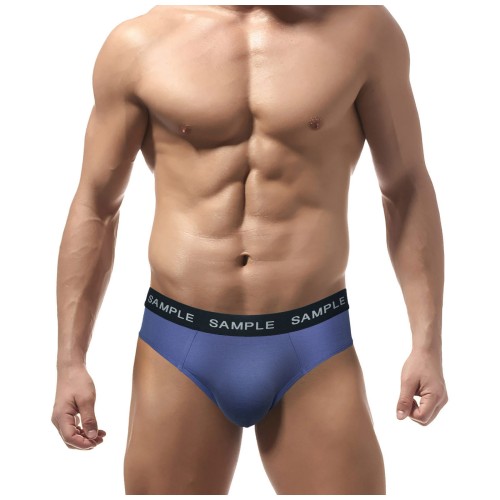
Part of Underwear Fit, Styles & Construction in Finetex Talk — buyer questions answered by the Finetex editorial team.
A brand sells boxer briefs and plans to add trunks. The team wonders whether a trunk is simply a boxer brief with a shorter leg, or a different fit that needs its own pattern and specification.
Short answer: A trunk is not just a boxer brief with the leg cut off. Trunks usually have a much shorter leg and often a lower rise, so the leg opening sits higher on the thigh, where the girth is larger and the leg moves differently. That changes how the leg grips, how the pouch sits and where the waistband falls. The reliable approach is to develop trunks as their own pattern from a shared block, keeping fabric, waistband and size chart consistent so customers can move between the two styles easily.
Typical differences
- Inseam: trunks have a short leg that ends high on the thigh; boxer briefs extend further down.
- Rise: trunks are often lower in the rise, so the waistband sits lower on the hips.
- Leg opening: because the hem sits at a wider point of the thigh, the opening must be larger in proportion and its finish needs enough grip to stay put without marking.
- Coverage and feel: trunks cover less, use less fabric and feel lighter and more compact.
- Support: both styles can use a contoured pouch, but the shorter leg gives the trunk less leg anchoring, so the pouch and waistband do more of the work.
Why a shortened leg causes problems
If a boxer brief pattern is simply shortened, the original leg opening measurement ends up too small for the higher point on the thigh. The result is usually a hem that digs in, or one that rolls up when the wearer walks. Lowering the rise also moves the waistband down, which changes the proportion between the pouch and the front panel. Adjusting rise, inseam, leg curve and opening together avoids these knock-on effects.
Keeping the range consistent
- Use the same fabric and waistband elastic, so the two styles look and feel like one family.
- Use one size chart based on waist and hip, so a customer who wears M in boxer briefs also wears M in trunks.
- Publish key measurements per style, such as inseam length and rise, instead of relying only on the style name.
- Plan colours together, so both styles can be cut from the same fabric lots and match in shade.
Fit and wash testing
Fit both styles on the same people, including at the smallest and largest sizes, and note waistband position, leg grip and pouch comfort while walking and sitting. Wash and re-measure according to a recognised method such as ISO 5077, because a short leg that loses grip after the fabric relaxes will ride up quickly. Body measurement definitions in ISO 8559-1 help keep the thigh and hip points used for the pattern consistent between styles.
Limits
Names are not standardised. Some brands call a short boxer brief a "trunk", and some markets use the words interchangeably. That is why measurements in the product description are more useful to customers than the label.
Facts, recommendations and uncertainty
Established: trunks usually have a shorter leg and often a lower rise, so the leg opening and pouch need their own adjustments. Recommendation: develop trunks from a shared block and fit-test both styles together. Uncertain: how customers in your market interpret the style names, which only sales and return data will show.
Sources and further reading
- ISO 8559-1:2017 — Size designation of clothes: anthropometric definitions for body measurement
- ASTM D4964 — Tension and elongation of elastic fabrics
- ISO 5077:2007 — Determination of dimensional change in washing and drying
Standards and regulations are referenced by their published scope. Test parameters, cycles and pass levels should be agreed with your laboratory for the specific product; legal requirements should be confirmed for each destination market.
Three more perspectives
From a sourcing view, sharing fabric, waistband and trims between trunks and boxer briefs simplifies minimum order quantities and keeps colour consistent. Ask the factory for fabric consumption per style, because a trunk uses less fabric and may justify a different price. If both styles share fabric lots, colour matching between them is easier when customers buy mixed packs or reorder.
Pattern-wise, start from the boxer brief block and move rise, inseam and leg curve together rather than one at a time. Recheck the leg opening against thigh girth at the new hem position, and keep the pouch shape close to the boxer brief so the fit feels familiar. Confirm that a wide waistband still sits flat at the lower rise, since it can fold or tilt.
In quality control, give trunks their own measurement specification, including inseam, rise and relaxed and extended leg opening, with tolerances. Mixed-style orders are where patterns or labels get swapped, so check style codes at inspection. After launch, sort returns by style and reason; ride-up complaints that appear only on trunks usually point to the leg opening or its finish rather than the fabric.
Related products
Related articles
- Men's Trunks Manufacturing in China: Inseam, Rise and the Trunk-vs-Boxer-Brief Line
- Custom Trunks: A Style and Ordering Guide for Underwear Brands
- Boxer Briefs vs Trunks vs Briefs: What to Stock for Your E-Commerce Brand
- Custom Trunks Supply: Choosing a Supplier for a Short-Run, High-Colour Programme
- Boxer Briefs Manufacturing in China: Specs That Decide Fit, Cost and Reorder Rate
- Boxer Shorts Manufacturing in China: Woven Construction, Fit and the Knit-Confusion Trap
← More in Underwear Fit, Styles & Construction · All Talk topics · Ask us about your programme
More factory-floor notes for brand owners

What should I check on a novelty hoodie such as an eye-mask hood?
What to check on a novelty hoodie such as an eye-mask hood: hood structure and lining, visibility and…
Read more →How should I size a unisex hoodie?
How to size a unisex hoodie: choosing a base block, body measurement ranges, ease, sleeve and body length,…
Read more →What care instructions should a hoodie carry?
What care instructions a hoodie should carry: the elements of a complete washing instruction, warnings for prints and…
Read more →
How do I match colour across hoodie and jogger sets?
How to match colour across hoodie and jogger sets: same fabric lot, rib and trims, dyeing method, shade…
Read more →How many colourways can I order at hoodie MOQ?
How many colourways a hoodie order can include at MOQ: how factories set minimums per style, colour and…
Read more →Why does a dark hoodie stain other clothes?
Why dark hoodies stain other clothes: dye bleeding in washing, rubbing transfer, perspiration, unfixed dye and pigment, and…
Read more →Request a sample & pricing information
Send us your tech pack, target price or a reference sample — we reply with a quotation, a realistic lead time and a fabric recommendation within one working day.
- Free sampling plan & cost breakdown
- MOQ from 300 pcs per style
- Reply within 1 working day