
Why do brief leg openings dig in, and how do I fix the pattern?
Why brief leg openings dig in or leave marks, how elastic tension, leg shape, binding and grading cause it, and how to fix the pattern and…
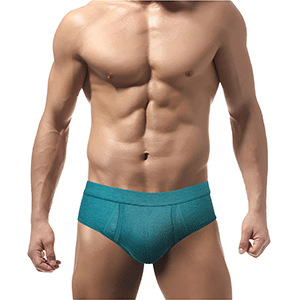
Part of Underwear Fit, Styles & Construction in Finetex Talk — buyer questions answered by the Finetex editorial team.
Customers say a brand's men's briefs leave red marks around the legs and feel tight at the crease of the thigh, even when they size up. The team wants to understand the cause and fix the pattern.
Short answer: Digging at the leg opening is usually caused by a combination of elastic that is too tight or too narrow, a leg opening that is too small or wrongly shaped for the thigh crease, and grading that does not increase the opening enough in larger sizes. Sizing up rarely solves it because the waist then becomes loose. The fix normally involves adjusting the leg opening length and shape, the elastic type and tension, and checking the grading.
Main causes
- Elastic tension: elastic cut too short relative to the opening, or a firm elastic, increases pressure.
- Elastic width and edge: narrow elastic with a hard edge concentrates pressure into a line.
- Leg line shape: a high-cut or straight leg line can sit in the thigh crease where movement is greatest.
- Opening length: too small for the target thigh girth, especially in larger sizes.
- Grading: openings graded with too small increments relative to waist and hip.
- Fabric: low-stretch or shrinking fabric reduces opening size after washing.
How to diagnose
Measure the relaxed and extended leg opening on the garment and compare it with thigh girth data for the size range. Wear-test with people of different thigh sizes, walking and sitting, and note where marks appear. Wash garments and remeasure, since shrinkage can reduce the opening.
Pattern and specification fixes
- Increase the leg opening length or adjust the leg line curve so it sits away from the crease.
- Change the elastic ratio so it is less tightly stretched during sewing.
- Use a wider or softer elastic, such as a plush-back or a covered elastic, or a fabric binding with a gentler grip.
- Review grading so the opening grows proportionally with thigh girth.
- Specify relaxed and extended leg opening measurements with tolerances.
ASTM D4964 measures tension and elongation of elastic fabrics and can help compare elastics objectively.
Construction choices
Exposed elastic, turned elastic and bound edges feel different. A turned elastic with fabric against the skin is often gentler than an exposed edge, and a bonded edge can reduce pressure lines in some fabrics.
Limits
Some customers prefer a firm leg grip to prevent riding. Balance grip and comfort through wear testing rather than only reducing tension.
Facts, recommendations and uncertainty
Established: elastic tension, width, leg line and grading cause digging. Recommendation: measure openings, adjust elastic ratio and leg line, and wear-test. Uncertain: the best balance between grip and comfort for your customers.
Sources and further reading
- ASTM D4964 — Tension and elongation of elastic fabrics
- ISO 8559-1:2017 — Size designation of clothes: anthropometric definitions for body measurement
- ISO 5077:2007 — Determination of dimensional change in washing and drying
Standards and regulations are referenced by their published scope. Test parameters, cycles and pass levels should be agreed with your laboratory for the specific product; legal requirements should be confirmed for each destination market.
Three more perspectives
Ask the elastic supplier for the elastic's composition, width and tension data, and request softer alternatives to sample. Elastic changes are usually quicker and cheaper than fabric changes. Confirm the factory's elastic cutting ratio for each size, since a factory may change the ratio to save elastic or speed sewing, which directly affects tension at the leg.
Adjust the leg line and opening first on the base size, then review grading for the full range with wear tests at the extremes. Consider whether a slightly lower cut at the side or a different curve removes pressure from the crease. Keep the waistband unchanged during this change, so customers who like the current waist fit do not lose it.
Measure relaxed and extended leg openings in inspection for every size and lot, with tolerances. Variation in elastic tension between lots is a common cause of sudden complaints. Wash and remeasure first production pieces, and record complaint sizes, as digging complaints concentrated in larger sizes usually point to grading rather than to elastic.
Related products
← More in Underwear Fit, Styles & Construction · All Talk topics · Ask us about your programme
More factory-floor notes for brand owners

Why did my reorder price go up?
Why an apparel reorder price can go up: fabric and trim costs, smaller quantities, specification changes, labour and…
Read more →
How do I read an underwear quotation line by line?
How to read an underwear quotation line by line: fabric, elastic and trims, labour, packaging, testing, overheads and…
Read more →
How do peak seasons affect apparel factory capacity?
How peak seasons and holidays affect apparel factory capacity and lead times, why fabric and shipping are also…
Read more →
Should I split one style across two factories?
Whether to split one apparel style across two factories: the benefits for capacity and risk, the risks for…
Read more →
What are the biggest risks on a small brand’s first order?
The biggest risks on a small brand's first apparel order, from unclear specifications and sample approval to payment,…
Read more →
What changes should a factory notify before production?
Which changes a factory should notify the buyer about before production, such as fabric, dye, trims, subcontracting or…
Read more →Request a sample & pricing information
Send us your tech pack, target price or a reference sample — we reply with a quotation, a realistic lead time and a fabric recommendation within one working day.
- Free sampling plan & cost breakdown
- MOQ from 300 pcs per style
- Reply within 1 working day