
Flatlock or overlock seams: which is better for underwear?
Flatlock or overlock seams in underwear: how each seam is built, comfort, strength, stretch, appearance and cost, and how to choose where to use each.
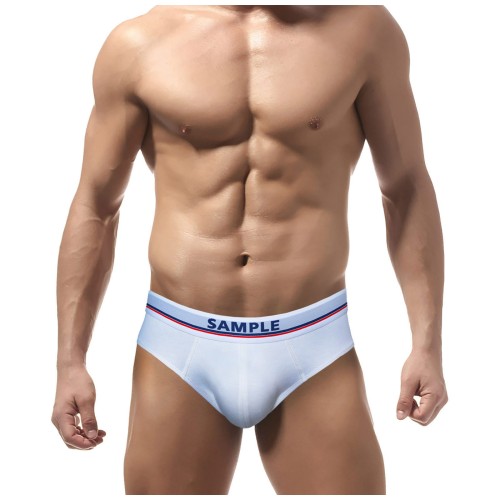
Part of Underwear Fit, Styles & Construction in Finetex Talk — buyer questions answered by the Finetex editorial team.
A brand's boxer briefs use overlock seams, and some customers mention the seams rubbing. The team is considering switching to flatlock seams and wants to understand the trade-offs before changing production.
Short answer: Overlock seams join two layers and finish the cut edge in one operation, leaving a small raised seam allowance inside the garment. They are strong, stretchy and quick to sew. Flatlock seams bring the edges together flat and cover them with stitching on both faces, so there is very little ridge against the skin. Flatlock is usually more comfortable in high-friction areas, but it is more visible, needs suitable machines and careful setting, and often costs more. Many good boxer briefs mix both: flatlock where the skin rubs, overlock where it does not.
How each seam is built
An overlock (serger) seam uses needles and loopers to stitch and wrap the cut edge, producing a narrow seam allowance that sits on the inside. A flatlock seam either butts the two edges or overlaps them slightly, then covers them with a cover stitch so the seam lies flat. The stitches show on the outside as a decorative ladder or band, which gives a sporty look.
Trade-offs
- Comfort: flatlock is flatter and less likely to rub; overlock can leave a ridge that some customers feel.
- Strength and stretch: both can stretch well with suitable thread and stitch settings, but either fails if the settings do not match the fabric's extension.
- Appearance: overlock is hidden; flatlock is visible and becomes a design element.
- Cost and capacity: flatlock usually needs dedicated machines and more setting time, and not every line has them free.
- Fabric: flatlock works well on stable knits; very thin or slippery fabrics can pucker or ladder.
Where to use each
- Flatlock: inner thigh, crotch and side seams of sports, compression and long-leg boxer briefs.
- Overlock: low-friction seams, or styles where a clean exterior matters more.
- Mixed: a common approach is flatlock on leg and crotch seams and overlock on the pouch or waistband join.
Testing before switching
Make the same style with both seam types and wear-test them side by side while walking, sitting and exercising. Stretch the seam to the fabric's working extension and check for popped stitches. Wash several cycles using a recognised domestic procedure such as ISO 6330, then measure garment dimensions with a method such as ISO 5077 to confirm seams do not distort or shrink differently from the fabric.
Details that matter as much as seam type
Thread choice matters: soft textured threads in the loopers reduce roughness. Stitch density and tension affect both comfort and strength, and seam placement, moved away from the point of highest friction, can solve rubbing on its own.
Limits
A badly set flatlock can still rub, and a well-made overlock can be comfortable. Results depend on fabric, thread, fit and placement together.
Facts, recommendations and uncertainty
Established: flatlock seams are flatter and usually more comfortable against the skin; overlock seams are hidden, strong and economical. Recommendation: use flatlock in high-friction areas and confirm by wear and wash testing. Uncertain: whether the cost increase is justified for your price point and customers.
Sources and further reading
- ASTM D4964 — Tension and elongation of elastic fabrics
- ISO 6330:2021 — Domestic washing and drying procedures for textile testing
- ISO 5077:2007 — Determination of dimensional change in washing and drying
Standards and regulations are referenced by their published scope. Test parameters, cycles and pass levels should be agreed with your laboratory for the specific product; legal requirements should be confirmed for each destination market.
Three more perspectives
Before switching, ask the factory whether it has enough flatlock capacity for your volumes, because flatlock lines are often booked by sportswear orders. Request a cost comparison per piece for full flatlock and for a mixed construction. A mixed construction often gives most of the comfort gain for a smaller cost increase, and it keeps lead times closer to the current ones.
From a pattern view, flatlock changes seam allowances, because butted or slightly overlapped edges use less allowance than an overlock seam. The pattern needs adjusting, or the garment will come out slightly larger. Also review seam placement: moving the inner leg seam slightly forward or backward can reduce rubbing whichever seam type is used. Sew a test piece in the production fabric before final grading.
For quality control, add seam checks to the inspection: skipped stitches, uneven cover stitching, raw edges escaping the flatlock and puckering. Stretch a sample of seams by hand to the working extension. After washing, check that the cover stitch has not loosened. Customer comments about rubbing after the switch should be sorted by size, since problems in one size suggest placement or grading.
Related products
Related articles
← More in Underwear Fit, Styles & Construction · All Talk topics · Ask us about your programme
More factory-floor notes for brand owners

What should I check on a novelty hoodie such as an eye-mask hood?
What to check on a novelty hoodie such as an eye-mask hood: hood structure and lining, visibility and…
Read more →How should I size a unisex hoodie?
How to size a unisex hoodie: choosing a base block, body measurement ranges, ease, sleeve and body length,…
Read more →What care instructions should a hoodie carry?
What care instructions a hoodie should carry: the elements of a complete washing instruction, warnings for prints and…
Read more →
How do I match colour across hoodie and jogger sets?
How to match colour across hoodie and jogger sets: same fabric lot, rib and trims, dyeing method, shade…
Read more →How many colourways can I order at hoodie MOQ?
How many colourways a hoodie order can include at MOQ: how factories set minimums per style, colour and…
Read more →Why does a dark hoodie stain other clothes?
Why dark hoodies stain other clothes: dye bleeding in washing, rubbing transfer, perspiration, unfixed dye and pigment, and…
Read more →Request a sample & pricing information
Send us your tech pack, target price or a reference sample — we reply with a quotation, a realistic lead time and a fabric recommendation within one working day.
- Free sampling plan & cost breakdown
- MOQ from 300 pcs per style
- Reply within 1 working day