
Why do custom logo elastics have high MOQs and long lead times?
Why custom logo waistband elastics have high minimums and long lead times: how elastic is produced, setup costs, colour runs, and how brands can plan around…
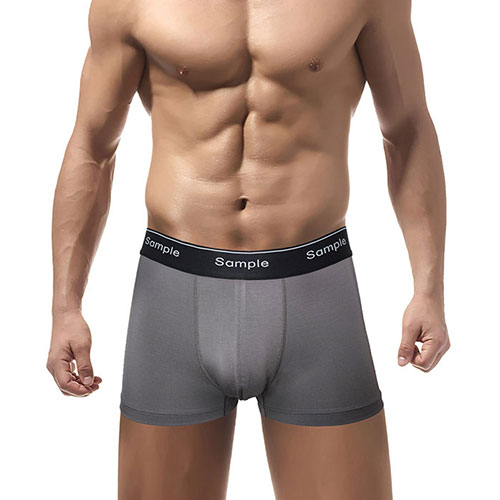
Part of Waistbands, Labels, Printing & Packaging in Finetex Talk — buyer questions answered by the Finetex editorial team.
A start-up underwear brand is surprised that its factory asks for a large minimum order and several weeks of extra lead time for a custom logo waistband. The team wants to understand why and how to plan around it.
Short answer: Custom logo elastic is usually made by a specialist elastic supplier, not by the garment factory. Producing it requires programming or setting up the loom or knitting machine for the design, preparing yarns in the required colours, sampling, and running enough length to make the setup worthwhile. Each design and colourway is a separate run, so small quantities carry the same setup work as large ones. The supplier also needs time for sampling and approval before bulk. This is why minimums are often set in metres per design and colour and why custom elastic is often the longest lead item in an underwear order. Planning early, simplifying colourways and reusing one elastic across styles can reduce the impact.
Why minimums are high
- Setup: each design needs machine programming and test runs.
- Yarn: dyed yarns may need to be bought or dyed in minimum quantities.
- Colourways: each colour combination is a separate run.
- Waste: start-up and changeover produce waste that must be spread over the run.
Why lead times are long
- Design and artwork checks.
- Sample production and approval.
- Yarn dyeing if colours are custom.
- Bulk production and shipping to the garment factory.
How brands can plan
- Order elastic early, sometimes before the garment order is final.
- Use one elastic design across several styles.
- Limit colourways at launch.
- Consider printed elastic or a covered band with a label for small runs.
- Keep some spare elastic for reorders.
Quality checks
Test stretch and recovery, for example with ASTM D4964, and colour fastness with ISO 105-C06 before approving bulk. Check width and logo repeat against the approved sample.
Contracts and ownership
Agree who pays for and owns leftover elastic. If elastic is shipped separately, agree delivery terms, for example with Incoterms.
Alternatives for small brands
Some suppliers offer stock elastics in standard colours, and some factories have their own branded elastic programmes that can be shared. A printed elastic or a heat-transfer logo on a plain band can bridge the gap until volumes justify a custom jacquard.
A worked example
If a jacquard elastic supplier requires a minimum order of several thousand metres per colour and design, and each brief uses about 0.8 m, one minimum covers several thousand units. A brand ordering a few hundred pieces per colour can either share one design across colours, hold elastic stock for future orders, or use a plain elastic with a printed or heat-transfer logo until volumes grow. Ask the supplier for the exact minimum, lead time for the weaving and dyeing, and the cost of keeping stock.
Limits
Exact minimums and lead times vary by supplier and design. Ask for written figures.
Facts, recommendations and uncertainty
Established: custom elastic needs design setup, yarn preparation and sampling, so minimums and lead times are high. Recommendation: plan early, limit colourways and reuse designs. Uncertain: exact figures, which depend on supplier and design.
Sources and further reading
- ASTM D4964 — Tension and elongation of elastic fabrics
- ISO 105-C06:2010 — Colour fastness to domestic and commercial laundering
- ICC — Incoterms® 2020
Standards and regulations are referenced by their published scope. Test parameters, cycles and pass levels should be agreed with your laboratory for the specific product; legal requirements should be confirmed for each destination market.
Three more perspectives
Ask the factory for written minimums per design and colourway, the lead time for sampling and bulk, and the price per metre at different quantities. Ask whether leftover elastic can be held for your next order and for how long. Consider ordering elastic for two production runs if your forecast is reliable, but weigh this against cash flow and the risk of design changes.
In product development, simplify the design to reduce colours and make weaving or knitting easier. Use the same elastic on boxer briefs, briefs and trunks where the width suits all styles. Approve the elastic sample on the garment, not only flat, because stretching changes how the logo looks. Lock the artwork once approved, because any change later means a new setup and a new minimum. Keep the supplier's design reference on file.
In quality control, check incoming elastic for width, colour, logo repeat and stretch before cutting starts, so problems are found before garments are sewn. Keep a sealed elastic sample. Check that leftover elastic is stored labelled with design, colour and lot, since lots can differ slightly in colour. Use older elastic first, and retest stretch if it has been stored for a long time, because elastic can age in storage.
Related products
Related articles
- Clothing Production Lead Time in China: A Realistic Timeline From Order to Loading
- Custom Logo T-Shirts at Production Volume: Matching the Method to the Artwork
- Hoodie Manufacturing Cost and Lead Times Guide — Buyer's Guide
- Team Shirts and Event Merch: Ordering Custom Tees for One-Time Runs
- Custom Logo T-Shirts: Choosing a Printing Method for Small Batches
← More in Waistbands, Labels, Printing & Packaging · All Talk topics · Ask us about your programme
More factory-floor notes for brand owners

What should I check on a novelty hoodie such as an eye-mask hood?
What to check on a novelty hoodie such as an eye-mask hood: hood structure and lining, visibility and…
Read more →How should I size a unisex hoodie?
How to size a unisex hoodie: choosing a base block, body measurement ranges, ease, sleeve and body length,…
Read more →What care instructions should a hoodie carry?
What care instructions a hoodie should carry: the elements of a complete washing instruction, warnings for prints and…
Read more →
How do I match colour across hoodie and jogger sets?
How to match colour across hoodie and jogger sets: same fabric lot, rib and trims, dyeing method, shade…
Read more →How many colourways can I order at hoodie MOQ?
How many colourways a hoodie order can include at MOQ: how factories set minimums per style, colour and…
Read more →Why does a dark hoodie stain other clothes?
Why dark hoodies stain other clothes: dye bleeding in washing, rubbing transfer, perspiration, unfixed dye and pigment, and…
Read more →Request a sample & pricing information
Send us your tech pack, target price or a reference sample — we reply with a quotation, a realistic lead time and a fabric recommendation within one working day.
- Free sampling plan & cost breakdown
- MOQ from 300 pcs per style
- Reply within 1 working day