
Box, sleeve or polybag: how should I package underwear?
Box, sleeve or polybag for underwear: how each packaging type affects protection, retail display, shipping cost, e-commerce and marketplace rules, and how to choose and sample…

Part of Waistbands, Labels, Printing & Packaging in Finetex Talk — buyer questions answered by the Finetex editorial team.
A brand launching a boxer brief line is choosing between a printed rigid box, a paper sleeve around a folded pack and a simple printed polybag. It sells online and through a few boutiques, and wants to know which option suits underwear best.
Short answer: The right packaging depends on where the product is sold, how it ships and what it must communicate. A rigid or folding box gives the strongest shelf presence and protects shape, but it adds cost, weight and volume. A paper sleeve or belly band around folded underwear shows the product, uses less material and works well for multi-packs, yet it gives little protection from dust or moisture, so it is often combined with an inner bag. A polybag is cheap, light and protects against dirt and damp, and it is what many marketplace warehouses expect, but it looks basic on a shelf. For mixed online and boutique sales, many brands use a sleeve over a clear inner bag, or a polybag for e-commerce and a box for gift or retail lines. Decide by channel, then sample with the real folded garment.
Comparing the options
- Rigid box: premium display, best shape protection, highest cost and freight volume.
- Folding carton: good display, flat-packed before use, lower cost than rigid.
- Paper sleeve or band: shows fabric, low material use, little protection alone.
- Polybag: low cost, moisture and dust protection, simple branding by print or sticker.
- Header card or hanger pack: suits peg display in stores.
Channel requirements
Marketplace warehouses can set their own rules. Amazon's FBA prep guide, for example, requires poly bags to be transparent, at least 1.5 mil thick, completely sealed, scannable through the bag or labelled outside, and to carry a suffocation warning when the opening is 5 inches or more. Boutiques may prefer boxes that stack and display well.
Rules on packaging materials
In the EU, Regulation (EU) 2025/40 on packaging and packaging waste applies from 12 August 2026, with harmonised sorting labels phased in later. In the US, recyclability claims on packaging should follow the FTC Green Guides. Check current requirements for each market before printing claims.
Sampling packaging
- Pack real garments in every size, folded as in production.
- Check fit: a box that is too large lets the garment shift; too small creases it.
- Ship a sample carton to test damage and moisture.
- Confirm print colour against an approved standard.
Cost and lead time
Custom boxes usually have higher minimums and longer lead times than polybags. Order packaging early so it arrives before garments are finished.
A practical combination
A common approach for a brand selling both online and in shops is a printed paper sleeve over a clear sealed inner bag. The bag protects against dust and damp in the warehouse and meets marketplace rules, while the sleeve carries branding, size and composition for display. For gift sets or premium lines, a folding carton with a window can replace the sleeve. Keep the same folded footprint across sizes where possible, so one sleeve or carton size fits several sizes and minimums are easier to reach.
Limits
Costs and minimums vary by supplier and print method. Get quotes for your quantities.
Facts, recommendations and uncertainty
Established: boxes protect and display best, polybags protect against dirt and moisture at low cost, and sleeves need an inner bag for protection. Recommendation: choose by sales channel and sample with real garments. Uncertain: costs and channel rules, which change and must be checked.
Sources and further reading
- Amazon — Packaging and Shipping Inventory to Amazon (FBA prep guide)
- Regulation (EU) 2025/40 — Packaging and packaging waste (PPWR)
- eCFR — 16 CFR Part 260, FTC Green Guides (§260.12 recyclable claims)
Standards and regulations are referenced by their published scope. Test parameters, cycles and pass levels should be agreed with your laboratory for the specific product; legal requirements should be confirmed for each destination market.
Three more perspectives
Ask the factory for unit prices for each packaging option at your order quantity, including assembly labour and the effect on carton count and freight. Packaging changes shipping volume, so ask for packed carton dimensions. Confirm who supplies the packaging and who carries the risk if it arrives late. Put packaging specifications, artwork version and folding method in the purchase order. Ask for the packaging supplier's minimum order and lead time, because they often decide the launch date more than garment production does.
In product development, design packaging around the folded garment, not the other way round. Make mock-ups in two or three sizes and test the fold for each size. Check that the window or sleeve shows the fabric and waistband well. Prepare artwork early with barcodes, size and any required warnings, and approve a printed sample before bulk. Check that small and extra-large sizes still fold neatly into the chosen footprint; the largest size often needs a different fold.
In quality control, check packaging against the approved sample: dimensions, print colour, barcode readability and seal strength. Check that each pack contains the right size and quantity. Inspect a few cartons after packing for crushed boxes or damp bags. Keep approved packaging samples as the standard so inspectors can compare quickly during final inspection. Record any packaging faults by supplier lot, so recurring problems can be raised with the packaging supplier rather than the garment line.
Related products
Related articles
- DTC T-Shirt Packaging: From Polybag to Premium Unboxing
- Packaging Underwear for Online Sales: Bags, Inserts, and Retail-Ready
- Custom Packaging for Clothing Brands: Boxes, Bags, and Tags That Sell
- Undershirt Labels and Packaging: Meeting Retail and Online Rules
- Amazon FBA Underwear: Sizing, Packaging, and Prep That Avoid Suspensions
- Custom Apparel Packaging: Protection, Compliance and the Freight Cost Nobody Models
- Sports Underwear Programs: Jockstraps, Compression Briefs, and Athletic Boxers
← More in Waistbands, Labels, Printing & Packaging · All Talk topics · Ask us about your programme
More factory-floor notes for brand owners

Why did my reorder price go up?
Why an apparel reorder price can go up: fabric and trim costs, smaller quantities, specification changes, labour and…
Read more →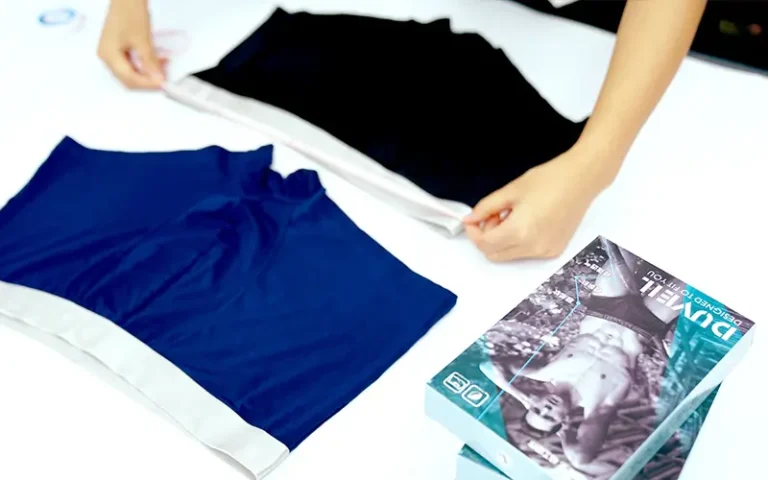
How do I read an underwear quotation line by line?
How to read an underwear quotation line by line: fabric, elastic and trims, labour, packaging, testing, overheads and…
Read more →
How do peak seasons affect apparel factory capacity?
How peak seasons and holidays affect apparel factory capacity and lead times, why fabric and shipping are also…
Read more →
Should I split one style across two factories?
Whether to split one apparel style across two factories: the benefits for capacity and risk, the risks for…
Read more →
What are the biggest risks on a small brand’s first order?
The biggest risks on a small brand's first apparel order, from unclear specifications and sample approval to payment,…
Read more →
What changes should a factory notify before production?
Which changes a factory should notify the buyer about before production, such as fabric, dye, trims, subcontracting or…
Read more →Request a sample & pricing information
Send us your tech pack, target price or a reference sample — we reply with a quotation, a realistic lead time and a fabric recommendation within one working day.
- Free sampling plan & cost breakdown
- MOQ from 300 pcs per style
- Reply within 1 working day