
Combed or carded cotton: does it matter for T-shirts?
Combed vs carded cotton for T-shirts: what combing removes, how it changes softness, pilling, print surface and cost, and how to check what you are buying.
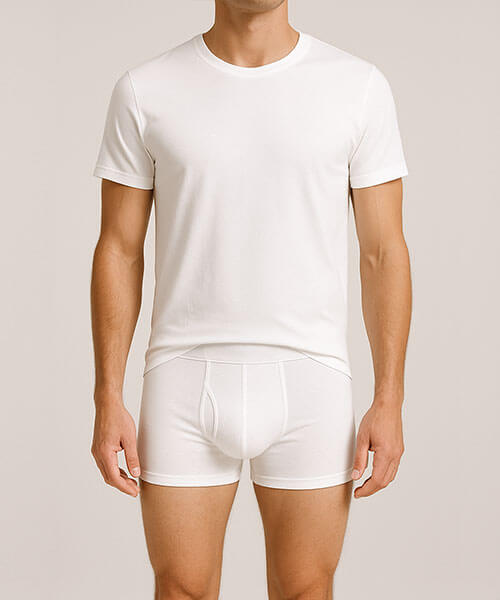
Part of T-Shirts, Undershirts & Tank Tops in Finetex Talk — buyer questions answered by the Finetex editorial team.
A brand's supplier quotes two prices for the same 180 GSM cotton T-shirt: one in carded cotton and one in combed cotton, which costs more. The team wants to know whether customers will notice the difference and whether it is worth paying for.
Short answer: Yes, it usually matters, especially for a basic tee that is judged on feel and surface. Carding opens and aligns cotton fibres but leaves more short fibres and impurities in the sliver. Combing is an extra step that removes a share of the short fibres and neps and aligns the longer fibres further, so the yarn is more even, smoother and stronger at the same count. In a T-shirt this tends to give a softer hand, a cleaner surface, less fuzzing and pilling, and a better base for fine screen prints and DTG. Carded cotton is cheaper and is fine for promotional tees, workwear or heavily washed looks where surface is less important. Ask for the yarn type and count in writing and compare washed samples side by side.
What combing changes
- Fewer short fibres, so fewer loose ends to fuzz and pill.
- More even yarn, so the fabric looks cleaner and less blotchy after dyeing.
- Stronger yarn at the same count, which allows finer counts.
- Higher cost because of the extra process and fibre loss.
Where carded is acceptable
- Promotional and event tees with a short expected life.
- Heavier, rugged tees where a dry, textured hand is part of the look.
- Garments that will be heavily washed or distressed.
How to check
- Ask for the yarn spec, for example 30s combed ring-spun, on the quotation and purchase order.
- Compare fabric faces under good light: carded jersey often shows more neps and a hairier surface.
- Run a pilling test with ISO 12945-2 on both fabrics after washing.
- Compare GSM and width so the comparison is not just a weight difference.
A worked example
A brand tests both options at the same weight. After five washes the carded shirt shows light fuzzing at the sides and a slightly duller colour, while the combed shirt looks close to new. The price difference is small per shirt compared with the retail price, so the brand chooses combed for its core basics and keeps carded for event merchandise.
Limits
Combing improves the yarn but does not guarantee quality; fibre grade, spinning method, knitting and finishing also affect the result. Labels such as "premium cotton" are not proof of combing.
Facts, recommendations and uncertainty
Established: combing removes short fibres and neps, giving smoother, more even yarn. Recommendation: specify yarn type and count in writing and compare washed samples. Uncertain: whether your customers will pay for the difference at your price point.
Sources and further reading
- ISO 12945-2:2020 — Pilling, fuzzing or matting, modified Martindale method
- ISO 3801:1977 — Mass per unit length and mass per unit area (woven fabrics)
Standards and regulations are referenced by their published scope. Test parameters, cycles and pass levels should be agreed with your laboratory for the specific product; legal requirements should be confirmed for each destination market.
Three more perspectives
Put the yarn type, spinning method and count on the purchase order, not only "100% cotton". Ask the mill which spinner supplies the yarn and whether it changes between lots. Request a yarn certificate or spinning record when you start a new quality, and compare cost per finished shirt rather than per kilogram of fabric, since a finer combed yarn can allow a lighter fabric with similar opacity.
Develop the core tee on combed yarn if surface and softness are part of the product story. Make samples in both yarns at the same weight and finish, print your typical graphic and wash them. Compare surface, colour depth and hand. Record the approved yarn and keep washed reference garments so later lots can be compared with the same standard.
Check fabric faces on incoming lots for neps, slubs and hairiness, and compare with the approved swatch. Wash a few garments per lot and look for early fuzzing at the sides and underarms. If pilling complaints appear, test retained fabric with ISO 12945-2 and confirm the yarn spec with the mill before the next order.
Related products
Related articles
- Organic Cotton T-Shirt Manufacturing in China: The Certification and the Cost Premium
- Cotton Undershirt Supply: Combing, Count and What Actually Stops Shrinkage
- How do 20s 30s and 40s yarn counts affect jersey softness and density in t shirts: A Manufacturer's Walkthrough
- Cotton vs Polyester T-Shirts: Choosing for Comfort, Cost, and Care
- Sourcing Organic Cotton T-Shirts: Certification and Claim Writing
- T-Shirt Manufacturing Step by Step: Twelve Stages From Yarn to Packed Carton
← More in T-Shirts, Undershirts & Tank Tops · All Talk topics · Ask us about your programme
More factory-floor notes for brand owners

Why did my reorder price go up?
Why an apparel reorder price can go up: fabric and trim costs, smaller quantities, specification changes, labour and…
Read more →
How do I read an underwear quotation line by line?
How to read an underwear quotation line by line: fabric, elastic and trims, labour, packaging, testing, overheads and…
Read more →
How do peak seasons affect apparel factory capacity?
How peak seasons and holidays affect apparel factory capacity and lead times, why fabric and shipping are also…
Read more →
Should I split one style across two factories?
Whether to split one apparel style across two factories: the benefits for capacity and risk, the risks for…
Read more →
What are the biggest risks on a small brand’s first order?
The biggest risks on a small brand's first apparel order, from unclear specifications and sample approval to payment,…
Read more →
What changes should a factory notify before production?
Which changes a factory should notify the buyer about before production, such as fabric, dye, trims, subcontracting or…
Read more →Request a sample & pricing information
Send us your tech pack, target price or a reference sample — we reply with a quotation, a realistic lead time and a fabric recommendation within one working day.
- Free sampling plan & cost breakdown
- MOQ from 300 pcs per style
- Reply within 1 working day