
Mexico and Central America for US Brands: Speed, Duty and Minimums
USMCA and CAFTA-DR can make apparel duty-free for US brands, but only with regional yarn and fabric. What that does to minimums, fabric choice and categories.
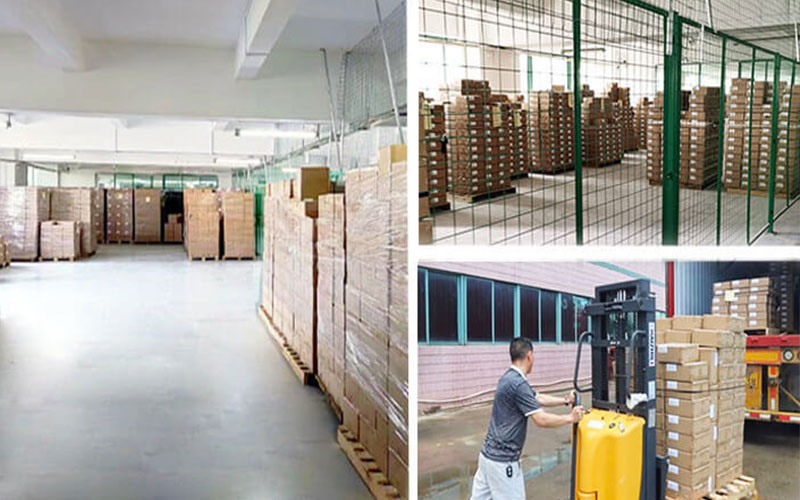
Answer first: Mexico and the six CAFTA-DR countries (Costa Rica, the Dominican Republic, El Salvador, Guatemala, Honduras and Nicaragua) can ship apparel to the United States duty-free, and on 20 November 2026 that preference also keeps qualifying goods out of the 10% Section 301 duty imposed on products of Mexico and several Central American countries from 24 July 2026. The catch is the rule of origin. Both agreements use a yarn-forward rule: the yarn must be spun, the fabric knitted or woven, and the garment cut and sewn inside the region, with narrow exceptions. A basic cotton T-shirt sewn in Mexico from Asian fabric is generally not duty-free. So the real trade-off for a US brand is this: shorter transit and duty savings, in exchange for building the product around fabrics that regional mills can supply, at the mills’ minimums. That suits programmes with stable, high-volume basics. It suits small, fabric-led or fast-changing ranges much less.
The trade and tariff rules below were read from official US government sources on 20 November 2026. Tariff actions changed several times in 2025 and 2026, so confirm the position for your HTS codes with a licensed customs broker before you place an order.
USMCA and CAFTA-DR: what “duty-free” requires
The yarn-forward rule
The US Department of Commerce’s summary of CAFTA-DR textile provisions describes the textile and apparel rule of origin as the “yarn-forward” standard: yarn spinning and all operations forward of it (knitting or weaving, then garment assembly) must take place in the United States and/or the CAFTA-DR region. USMCA uses the same logic through its product-specific rules (Annex 4-B), with the textile-specific provisions in Chapter 6 of the agreement.
Points from the two texts that matter for knitwear:
- De minimis: under USMCA Article 6.1, a knit or woven garment (HS chapters 61–62) can still be originating if non-originating fibres or yarns in the component that determines its classification are no more than 10% of that component’s weight. Elastomeric content within that allowance may not exceed 7% of the total weight of the good.
- Elastomeric yarn under CAFTA-DR: the Commerce summary states that all elastomeric yarn in qualifying goods must come from CAFTA-DR countries. Elastane in a jersey or rib is not covered by the de minimis allowance.
- Thread, narrow elastic and visible linings: under CAFTA-DR, sewing thread must be made in the region, and narrow elastic fabrics must be sourced in the region.
- Sets: under USMCA, a retail set (for example a multipack classified as a set) is only originating if every item is, or if non-originating items are no more than 10% of the set’s value.
Tariff preference levels: why basic tees are excluded
USMCA allows a limited annual quantity of apparel made from non-regional fabric to enter at the preferential rate under tariff preference levels (TPLs). For trade between Mexico and the United States, Annex 6-A excludes several basics from those quantities. Goods of US tariff items 6109.10.00 and 6109.90.10 (T-shirts, singlets and tank tops of cotton and certain other fibres) and 6107.11.00 and 6107.12.00 (men’s and boys’ underpants and briefs of cotton and man-made fibres) are ineligible if they are composed chiefly of circular knit fabric of yarn number 100 metric or less, which describes most standard jersey. In practice, a Mexican cotton T-shirt or brief needs regional yarn and fabric to be duty-free.
CAFTA-DR has its own exceptions, including a short supply list of fibres, yarns and fabrics that are not available in the region and may be sourced elsewhere, and a “cut and assemble” rule for specific products listed by Commerce. Check the current short supply list before assuming a fabric qualifies.
Claiming the preference
CBP’s USMCA page states that USMCA requires a certification of origin, which can be in any format provided it contains the nine minimum data elements in Annex 5-A. The importer makes the claim at entry and must be able to support it. A factory statement that a garment is “Made in Mexico” is a country-of-origin marking, not proof that it is originating under USMCA.
The 2026 tariff position
| Measure (checked 20 Nov 2026) | Products of Mexico | Products of CAFTA-DR countries | Products of China |
|---|---|---|---|
| Normal (MFN) duty on apparel | Free if originating under USMCA; MFN rate otherwise | Free if originating under CAFTA-DR; MFN rate otherwise | MFN rate |
| Section 301 forced-labour duty from 24 July 2026 | 10%, not applied to goods entered free under USMCA | 10% or 12.5% by country, not applied to textile and apparel goods entered free under CAFTA-DR | Covered by the same action; see note |
| Other China-specific duties | Not applicable | Not applicable | Section 301 lists, see our Section 301 guide |
Sources: USTR’s July 2026 press release names Mexico, El Salvador, Guatemala and Honduras among the economies at the 10% rate; other investigated economies are at 12.5%. The Federal Register notice (91 FR 47318) states that the duty under heading 9903.05.55 does not apply to products of Mexico entered free of duty under USMCA, and that the duties on Costa Rica, the Dominican Republic, El Salvador, Guatemala, Honduras and Nicaragua do not apply to textile and apparel goods entered free of duty under CAFTA-DR. For China, the combined rate depends on the HTS code and which actions stack; that is a broker question, not a table cell.
The agreement itself is also under review. USTR’s statement of 1 July 2026 says the United States did not agree to renew USMCA in its current form and that the agreement remains in force pending resolution of the issues or until its termination. Under Article 34.7, the agreement runs 16 years from entry into force (1 July 2020) and, without a confirmed extension, is reviewed every year. For sourcing, that means the duty advantage is real today but should not be modelled as permanent.
Transit time: the real advantage, and its limits
Nearshoring’s clearest benefit is time on the water. For comparison, our shipping page lists typical transit from Shenzhen of 18–22 days by sea and 9–11 days by air to the US West Coast, and 22–28 days by sea and 9–12 days by air to the East Coast. Ground transit from Mexico or Central America is generally shorter, but we do not publish lane times for those routes, and actual times depend on the factory’s location, border crossing and carrier. Ask your forwarder for a quoted lane time, not a brochure figure.
What shorter transit buys you:
- Replenishment: smaller, more frequent reorders of a proven style, with less safety stock.
- Late decisions: colour or quantity commitments can move a few weeks closer to the selling season.
- Lower air freight exposure: fewer emergency air shipments when a launch date is fixed.
What it does not change: garment lead time still starts with fabric. If the regional mill needs to knit and dye your colour, the production clock is set by the mill’s schedule, not by the truck.
Minimums: where the rule of origin bites
Factory MOQs in Mexico and Central America vary by plant and we do not quote them; ask each supplier. The structural point is that the yarn-forward rule moves the binding minimum from the sewing line to the fabric. To qualify, the jersey or fleece must be knitted from regional yarn, so your minimum is usually the regional mill’s minimum per fabric and colour, plus the minimums for regional thread and elastic.
The same logic applies in China, and our own numbers show it: on finetexglobal.com we state an MOQ of 300 pieces per style on stock fabric, while a fully custom knit or dye lot usually starts at around 1,000 pieces per colour because that is the mill’s minimum. Our MOQ calculator article shows how those component minimums add up.
| Question to ask a regional supplier | Why it matters |
|---|---|
| Which mill supplies the fabric, and where is the yarn spun? | Determines whether the garment can be originating |
| What is the fabric minimum per colour? | Usually the real MOQ for a qualifying order |
| Is the elastane, thread and narrow elastic from the region? | CAFTA-DR requires regional elastomeric yarn and thread |
| Who issues the certification of origin, with what records? | The importer needs support for the claim |
| What happens if the fabric is substituted? | A non-regional fabric can remove the duty preference |
Fabric availability
The availability question is narrower than “can they make jersey?” Regional mills produce large volumes of basic knit fabric for US programmes; the constraint for many brands is range. Specialist fibres and constructions, such as micro modal, lyocell blends, high-gauge rib, jacquard waistbands or very heavy brushed fleece, may not be available from a regional mill at your volume. If you import that yarn or fabric from outside the region, the garment may no longer qualify, unless the material is on the CAFTA-DR short supply list or within the de minimis allowance.
A practical test: write the tech pack’s fabric line as a regional sourcing requirement (“fabric knitted in [country] from yarn spun in the region”), and ask the supplier to confirm it in writing with the mill name. If they cannot, the duty-free assumption in your costing is not yet supported.
Which categories fit nearshoring
| Category | Fit for Mexico / CAFTA-DR | Reason |
|---|---|---|
| Core cotton or cotton-poly T-shirts in a few colours | Good, at volume | Regional jersey widely available; repeat volume covers fabric minimums |
| Basic fleece sweatshirts and hoodies | Good, at volume | Similar logic; confirm fleece weight and finish |
| Multi-colour fashion tees in short runs | Weak | Each colour hits a fabric minimum |
| Modal or lyocell underwear with jacquard waistbands | Check carefully | Specialist yarns and elastic may need to be regional |
| Heavily decorated or washed streetwear | Depends | Decoration and wash capacity vary by plant |
| Small first collections under 1,000 pieces per style | Usually weak | Regional fabric minimums and set-up costs dominate |
None of this makes China or Vietnam automatically cheaper either. Our comparisons of China and Vietnam and of China-plus-one programme splits show the same pattern: the right answer depends on the landed cost per style, not the headline duty rate. Use our landed cost calculator with the duty rate your broker confirms.
A simple decision sequence
- Classify the product with your broker and note the MFN rate and any Chapter 99 duties for each origin.
- Test the origin rule on the actual bill of materials: fibre, yarn, fabric, thread, elastic, labels.
- Get the regional fabric minimum per colour and compare it with your forecast per style.
- Model landed cost per unit for each origin, including freight, duty, the cost of holding stock and the cost of a late delivery.
- Decide by programme, not by company: many brands keep core replenishment basics near the market and develop fabric-led or small-run styles in Asia.
For the broader comparison of countries, see our clothing factory sourcing guide; EU brands weighing the European equivalent should read China vs Portugal and Turkey.
Fact, advice and uncertainty
Fact: USMCA and CAFTA-DR provide duty-free entry for originating apparel, using a yarn-forward rule with limited exceptions. On 20 November 2026, the 10% Section 301 duty on products of Mexico does not apply to goods entered free under USMCA, and the Central American duties do not apply to textile and apparel goods entered free under CAFTA-DR. Basic cotton T-shirts from non-regional circular knit fabric are excluded from the US–Mexico TPLs.
Advice: treat regional fabric as the design constraint, ask for the mill and yarn origin in writing, and let a licensed customs broker confirm classification, origin and the current Chapter 99 position before you commit volume.
Uncertain: the outcome of the annual USMCA reviews, further Section 301 actions, and whether regional mills can supply your specific fabrics at your volume.
Related reading
- China vs Portugal and Turkey: Nearshoring for EU Brands
- China Plus One: Splitting a Program Without Splitting Quality
- China vs Vietnam for Apparel Manufacturing: Duty, Lead Time and Minimums
- Section 301 Tariffs on Chinese Apparel: HS Codes, Rates and Mitigation
Frequently asked questions
Is clothing made in Mexico duty-free in the US?
Only if it is originating under USMCA, which for most knit apparel means regional yarn and fabric, and the importer claims the preference with a valid certification of origin. Sewing alone in Mexico is usually not enough.
Does the 2026 Section 301 duty apply to Mexican apparel?
The 10% duty applies to products of Mexico from 24 July 2026, but the Federal Register notice states it does not apply to goods entered free of duty under USMCA. Confirm with your broker for each entry.
Can a Central American factory use fabric from China?
Generally not for duty-free CAFTA-DR treatment, unless the fabric is on the short supply list or the product falls under a specific cut-and-assemble rule. The garment can still be imported, but at the normal rate plus any applicable duties.
Are minimums lower in Mexico than in China?
It depends on the plant and the fabric. Under the yarn-forward rule the regional fabric minimum per colour is often the binding constraint, so ask for it directly.
Sources
- USTR: USMCA Chapter 6, Textile and Apparel Goods
- USTR: USMCA Chapter 34, Final Provisions (Article 34.7 review and term)
- USTR: Ambassador Greer statement on the USMCA joint review, 1 July 2026
- USTR: Action in forced labor Section 301 investigations, July 2026
- Federal Register: Notice of actions in Section 301 investigations, 91 FR 47318 (28 July 2026)
- International Trade Administration: Summary of CAFTA-DR textiles provisions
- International Trade Administration: FTA commercial availability (short supply)
- CBP: United States-Mexico-Canada Agreement
Compare a nearshore quote with a landed China quote
Send us the style, fabric, quantity per colour and delivery address. We will quote FOB and DDP options from Shenzhen with the transit times we publish, so you can compare them line by line with a regional supplier’s offer. Your broker confirms the duty for each origin.
Request a quote or read our shipping and logistics options.
More factory-floor notes for brand owners

Naturally Dyed Underwear: What Should Buyers Test Before Bulk?
Plan naturally dyed underwear testing for wash and rub fastness, shade variation, and reorder approval. Match color and…
Read more →
Hidden Pockets in Boxer Briefs: Where Should They Sit?
Choose hidden pockets in boxer briefs by testing placement, access, load, and movement in comparable samples before approving…
Read more →
Silk Underwear Sourcing: What Can a Buyer Approve from a Sample?
Use a silk underwear sourcing checklist to verify fiber composition, compare stretch and seams, and approve care and…
Read more →
Adaptive Men’s Underwear: How Do You Test Side Openings?
Test side openings in adaptive men's underwear with seated and one-handed dressing checks, closure placement reviews, and a…
Read more →Microfiber Underwear Fabric: What Should Buyers Specify?
Specify microfiber underwear fabric by verified fiber content, knit structure, stretch, and wash performance. Use a sample checklist…
Read more →Skin-Tone Underwear Color Matching: How Do You Approve a Range?
Plan skin-tone underwear color matching with physical swatches, stretch checks, and a repeatable shade approval record for production…
Read more →Request a sample & pricing information
Send us your tech pack, target price or a reference sample — we reply with a quotation, a realistic lead time and a fabric recommendation within one working day.
- Free sampling plan & cost breakdown
- MOQ from 300 pcs per style
- Reply within 1 working day