
What fabric weight (GSM) should I choose for everyday boxer briefs?
How to choose fabric weight (GSM) for everyday boxer briefs: what weight changes in feel, durability, opacity and cost, and how to specify it.
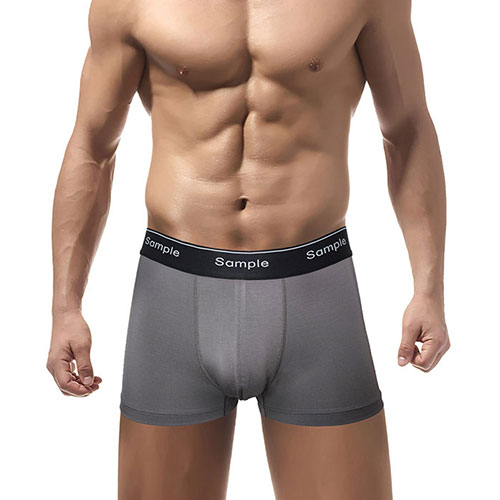
Part of Underwear Fabrics & Comfort in Finetex Talk — buyer questions answered by the Finetex editorial team.
A new brand is comparing boxer brief fabrics from 160 to 240 GSM and does not know which weight suits an everyday product.
Short answer: There is no ideal number for every fabric. Lighter fabrics feel cooler and softer but can be less opaque and less durable; heavier fabrics feel more substantial and can hold shape better but feel warmer. Choose weight together with fibre, knit and elastane content, then confirm by wear and wash testing.
What weight affects
- Comfort and temperature: lighter weights feel airier; heavier weights warmer.
- Opacity: very light fabrics, especially in pale colours, can look sheer when stretched.
- Durability: weight often correlates with abrasion resistance, but yarn and knit matter as much.
- Shape: heavier fabrics may bag less but can feel bulky in fitted styles.
- Cost: more fabric per garment increases cost.
How to specify
- State GSM with a tolerance agreed with the mill, and state whether it is measured on finished fabric.
- Specify construction (jersey, rib, interlock) and composition alongside weight.
- Keep an approved swatch as the physical standard.
Steps
- Sample two or three weights in the same pattern.
- Stretch-test for opacity in light colours.
- Wash-test for shrinkage and pilling, and wear-test for comfort.
Limits
Customers compare feel, not GSM. Use weight as a specification tool, not as a marketing promise.
Why the same GSM can feel different
Two 200 GSM fabrics can feel completely different. A modal/elastane jersey at that weight drapes and feels cool; a cotton interlock at the same weight feels dense and structured. Elastane also raises GSM because the fabric relaxes and compacts after finishing, so a stretchier fabric often weighs more per square metre without being thicker. That is why weight is a useful control number once a fabric is approved, but a poor way to compare fabrics of different composition or construction.
How weight is measured and stated
GSM means grams per square metre of finished fabric. It should be measured on conditioned fabric after finishing, using a cut sample of known area, following a method agreed with the mill; ISO 3801 is the reference for woven fabrics, and knit mills usually apply a similar cut-and-weigh approach. Weight measured on greige fabric before dyeing and finishing can differ noticeably from the finished value, so a specification should always state "finished weight".
Weight in context
- Lighter jerseys feel cooler and drape more, but can be less opaque in light colours.
- Mid weights are a common choice for everyday boxer briefs because they balance comfort, opacity and durability.
- Heavier fabrics feel more substantial but can feel warm and need pattern checks for bulk at seams.
Weight should always be read together with fibre, yarn and knit structure.
Facts, recommendations and uncertainty
Established: fabric weight influences comfort, opacity and cost. Recommendation: specify weight with construction and tolerance, and test. Uncertain: the best weight for your market, which depends on climate and customer preference.
Sources and further reading
- ISO 3801:1977 — Mass per unit length and mass per unit area (woven fabrics)
- ISO 5077:2007 — Determination of dimensional change in washing and drying
- ISO 12945-2:2020 — Pilling, fuzzing or matting, modified Martindale method
Standards and regulations are referenced by their published scope. Test parameters, cycles and pass levels should be agreed with your laboratory for the specific product; legal requirements should be confirmed for each destination market.
Three more perspectives
Compare quotes only at the same weight, construction and composition, and ask each mill to state its weight tolerance. A low price for a lighter fabric is not a saving if it changes the product. Ask also whether the quoted weight is finished or greige and how it is measured, because two mills quoting the same number can be describing quite different fabrics on the cutting table.
Consider a lighter fabric for summer or warm-market collections and a mid-weight for core styles, using the same pattern only after checking fit and shrinkage in both. A heavier or lighter fabric can change stretch, width and recovery, so a quick fit sample saves surprises. For light colours, check opacity on a body form or fit model, since a weight that works in black may be too sheer in white.
Cut and weigh a sample from each fabric lot, compare it with the specification and record the result against the lot number. Weight drift is a common reason for changes in feel and opacity between orders. Note the conditioning used before weighing, since fabric weighed straight off a humid cutting floor can read differently from a conditioned sample, and inconsistent methods create disputes that are really measurement errors.
Related products
Related articles
- Heavyweight T-Shirt Manufacturing: What 220, 240 and 280 GSM Actually Change
- Heavyweight T-Shirts for Streetwear: Sourcing the 200+ GSM Story
- T-Shirt GSM for E-Commerce: Choosing Fabric Weight by Season and Price Point
- Thermal Underwear Manufacturing in China: Basis Weight, Brushed Knits and the Claims You Can Make
- How much do jeans weigh: a denim GSM guide for retail logistics — A Factory Cost Breakdown
- Sports Underwear Programs: Jockstraps, Compression Briefs, and Athletic Boxers
← More in Underwear Fabrics & Comfort · All Talk topics · Ask us about your programme
More factory-floor notes for brand owners

What should I check on a novelty hoodie such as an eye-mask hood?
What to check on a novelty hoodie such as an eye-mask hood: hood structure and lining, visibility and…
Read more →How should I size a unisex hoodie?
How to size a unisex hoodie: choosing a base block, body measurement ranges, ease, sleeve and body length,…
Read more →What care instructions should a hoodie carry?
What care instructions a hoodie should carry: the elements of a complete washing instruction, warnings for prints and…
Read more →
How do I match colour across hoodie and jogger sets?
How to match colour across hoodie and jogger sets: same fabric lot, rib and trims, dyeing method, shade…
Read more →How many colourways can I order at hoodie MOQ?
How many colourways a hoodie order can include at MOQ: how factories set minimums per style, colour and…
Read more →Why does a dark hoodie stain other clothes?
Why dark hoodies stain other clothes: dye bleeding in washing, rubbing transfer, perspiration, unfixed dye and pigment, and…
Read more →Request a sample & pricing information
Send us your tech pack, target price or a reference sample — we reply with a quotation, a realistic lead time and a fabric recommendation within one working day.
- Free sampling plan & cost breakdown
- MOQ from 300 pcs per style
- Reply within 1 working day