
When does a bamboo/cotton blend make sense for boxer briefs?
When a bamboo viscose/cotton blend makes sense for boxer briefs: feel, structure, cost, shrinkage, labelling and how to compare it with 100% bamboo viscose.
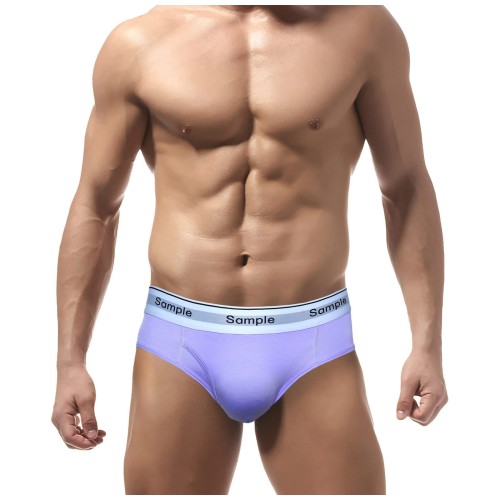
Part of Underwear Fabrics & Comfort in Finetex Talk — buyer questions answered by the Finetex editorial team.
A brand likes the softness of bamboo viscose boxer briefs but finds them expensive and a little too fluid for its fit. The mill suggests a bamboo viscose/cotton blend, and the team wants to know when that is a good choice.
Short answer: A bamboo viscose/cotton blend can give much of the softness and drape of bamboo viscose with more structure and a more familiar cotton handle, often at a lower cost. It suits everyday boxer briefs where a slightly firmer fit and easier care matter. The trade-off is a less silky feel than 100% viscose. The label must still name the fibres correctly, such as viscose or rayon and cotton, with the percentages.
What the blend changes
- Feel: softer and smoother than plain cotton, less fluid than pure viscose.
- Structure: cotton adds body, which can help the fit hold its shape.
- Moisture: both fibres absorb moisture well.
- Dimensional change: depends on finishing; check after washing.
- Cost: usually lower than 100% viscose from bamboo, depending on fibre prices.
Labelling
The composition must use generic fibre names. In the US, the FTC treats fibre made from bamboo through the viscose process as rayon or viscose; "rayon made from bamboo" can be used as a qualifier where accurate. In the EU, the fibre name must be viscose. A label might read "70% viscose (from bamboo), 30% cotton" where the qualifier is acceptable, with marketing wording consistent with the label.
How to compare
- Sample the blend and 100% bamboo viscose in the same weight and pattern.
- Wash both and compare softness, shape, shrinkage and pilling.
- Fit-test both to see how structure changes the look.
- Compare prices per garment rather than per kilo of fabric.
When pure bamboo viscose may be better
For premium lines sold on softness or drape, 100% viscose from bamboo may still be the better choice. For loungewear or warm-market lines, the extra fluidity can be an advantage.
A sampling plan
Ask for the blend and a pure cotton or pure viscose reference in the same knit structure and weight, so the comparison isolates the fibre rather than the construction. Make a few garments of each, wash them five times following the care label, then compare softness, pilling, shrinkage and how the waistband area holds its shape. Request the composition test report for the blend so the label percentages can be supported.
Questions to ask the mill
Confirm whether the bamboo component is viscose, lyocell or another regenerated fibre, since this affects the label wording, and ask which certifications, such as OEKO-TEX, apply to the finished fabric rather than only to the yarn.
Limits
Ratios vary between mills, and the feel depends on yarn and knit as much as on the blend. Test the actual fabric rather than relying on ratio alone.
Facts, recommendations and uncertainty
Established: blending adds cotton's structure and lowers cost; labels must use generic fibre names. Recommendation: sample both in the same pattern and compare after washing. Uncertain: which balance your customers prefer, which a fit and wear test shows.
Sources and further reading
- U.S. FTC — Textile Fiber Products Identification Act
- Regulation (EU) No 1007/2011 — Textile fibre names and labelling
- ISO 5077:2007 — Determination of dimensional change in washing and drying
Standards and regulations are referenced by their published scope. Test parameters, cycles and pass levels should be agreed with your laboratory for the specific product; legal requirements should be confirmed for each destination market.
Three more perspectives
Ask for the blend ratio, the viscose producer and whether the yarn is an intimate blend, and lock them in the specification. Blends are where a mill can change one fibre's source without changing the quality name. Confirm the composition tolerance against lab reports, because blend percentages are commonly checked in retailer compliance tests.
Use the blend to tune the fit rather than only to save cost. Cotton's structure can reduce the "clingy" look of pure viscose in a fitted boxer brief. If you run both a blend and a 100% line, keep the size chart and pattern consistent so customers can move between them, and test whether the blend needs a slightly different elastic tension.
Check dimensional change and shape after washing on both blends and pure viscose, as they can behave differently in drying. Keep retained samples and complaint records by fabric. Make sure the label, hang tag and listing all describe the same composition, since blend percentages are easy to mistype on marketing materials.
Related products
Related articles
- Bamboo Underwear Manufacturing: Viscose, Lyocell and the Claim That Gets Challenged
- Which Fabric Is Best for Men's Underwear: Cotton, Modal, Bamboo or Nylon: A Manufacturer's Comparison
- Sustainable Undershirts: Marketing Organic Cotton and Bamboo Honestly
- Undershirt Fabrics for E-Commerce: Cotton, Bamboo, Modal, and TENCEL Compared
- Bamboo T-Shirt Manufacturing: Where the Fibre Works and Where It Disappoints
- Who are the top bamboo clothing manufacturers: How to Read the Lists (and What They Leave Out)
- Who Are the Leading Bamboo Clothing Manufacturers in the USA: Supply Chain and Sourcing Explained for Buyers
- Bamboo Underwear for E-Commerce: Marketing Claims vs. Reality
← More in Underwear Fabrics & Comfort · All Talk topics · Ask us about your programme
More factory-floor notes for brand owners
Why did my reorder price go up?
Why an apparel reorder price can go up: fabric and trim costs, smaller quantities, specification changes, labour and…
Read more →
How do I read an underwear quotation line by line?
How to read an underwear quotation line by line: fabric, elastic and trims, labour, packaging, testing, overheads and…
Read more →
How do peak seasons affect apparel factory capacity?
How peak seasons and holidays affect apparel factory capacity and lead times, why fabric and shipping are also…
Read more →
Should I split one style across two factories?
Whether to split one apparel style across two factories: the benefits for capacity and risk, the risks for…
Read more →
What are the biggest risks on a small brand’s first order?
The biggest risks on a small brand's first apparel order, from unclear specifications and sample approval to payment,…
Read more →
What changes should a factory notify before production?
Which changes a factory should notify the buyer about before production, such as fabric, dye, trims, subcontracting or…
Read more →Request a sample & pricing information
Send us your tech pack, target price or a reference sample — we reply with a quotation, a realistic lead time and a fabric recommendation within one working day.
- Free sampling plan & cost breakdown
- MOQ from 300 pcs per style
- Reply within 1 working day