
Why do underwear seams chafe the inner thigh?
Why underwear seams chafe the inner thigh: seam type and placement, leg length, ride-up, fabric, moisture and fit, and what a brand can change to reduce…
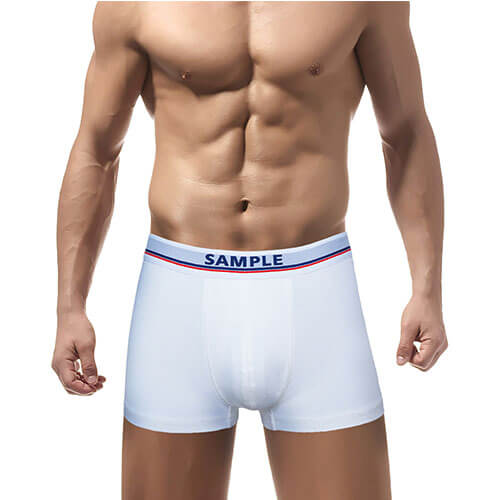
Part of Underwear Fit, Styles & Construction in Finetex Talk — buyer questions answered by the Finetex editorial team.
Customers report that a brand's boxer briefs rub and chafe on the inner thigh, especially when walking a lot or in warm weather. The team wants to know which parts of the design cause it and what to change.
Short answer: Inner-thigh chafing usually comes from friction in one area repeated thousands of times. The seam itself is only part of the cause. The main factors are a raised seam sitting where the thighs meet, a leg that rides up so bare skin rubs, fabric that becomes rough or clings when damp, and a fit that leaves loose fabric to bunch. Brands usually reduce chafing by moving or flattening the inner leg seam, using a leg long enough to stay between the thighs, keeping the leg from riding up and choosing a smooth fabric that handles moisture well.
Main causes
- Seam type: a bulky overlock ridge on the inner leg rubs more than a flat seam.
- Seam placement: an inseam directly on the inner thigh sits on the point of contact.
- Leg length: a short leg ends where the thighs touch, so the hem and bare skin rub.
- Ride-up: if the leg climbs, the fabric bunches and stops protecting the skin.
- Fabric and moisture: some fabrics become rough or cling when damp with sweat.
- Fit: too loose leaves fabric that folds; too tight increases pressure at the seam.
What to change
- Use a flatlock or other flat seam on the inner leg, or a construction with no inseam, such as a gusset panel that moves seams away from the contact point.
- Choose a leg length that covers the area where the customer's thighs touch, which is why longer-leg boxer briefs are popular for walking and sport.
- Give the leg opening a finish with enough grip to stop ride-up, without digging in.
- Choose smooth fabrics and finishes with good moisture handling; compare options in wear tests rather than relying on fibre name alone.
- Check that soft threads are used in the seam loopers.
How to test
Wear-test with people who walk a lot or exercise, in warm conditions where possible, and ask them to note where rubbing starts and after how long. Compare two or three versions at once, changing one variable each time. Wash using a recognised domestic procedure such as ISO 6330 and repeat, because seams and fabrics can get rougher after washing, and measure dimensional change with ISO 5077 to see whether the leg shortens.
Using body measurements
Thigh girth and the distance between thighs vary widely. Grading the leg opening and length from consistent body measurement points, such as those defined in ISO 8559-1, helps larger sizes stay comfortable rather than only scaling the base size.
Limits
Chafing depends on the wearer's body, activity and climate. A design can reduce it, but no underwear removes it for everyone.
Facts, recommendations and uncertainty
Established: seam type and placement, leg length, ride-up and fabric all affect inner-thigh chafing. Recommendation: change one factor at a time and wear-test in real conditions. Uncertain: which factor dominates for your customers until returns and tests show it.
Sources and further reading
- ISO 6330:2021 — Domestic washing and drying procedures for textile testing
- ISO 5077:2007 — Determination of dimensional change in washing and drying
- ISO 8559-1:2017 — Size designation of clothes: anthropometric definitions for body measurement
Standards and regulations are referenced by their published scope. Test parameters, cycles and pass levels should be agreed with your laboratory for the specific product; legal requirements should be confirmed for each destination market.
Three more perspectives
Ask the factory and fabric supplier for options rather than a single fix: a flatlock inner seam, a longer leg version and one or two smoother fabric alternatives. Get costs and minimums for each, because a seam change is often cheaper than a fabric change. Make sure the trial versions are sewn on the same line, so differences come from the design and not from different operators.
In the pattern, review where the inseam falls relative to the inner thigh, and consider a wider gusset that moves seams away from the contact zone. Check leg length in larger sizes, since a leg graded by small increments can end exactly where thighs touch. If customers report ride-up, rework the leg opening and its finish together with the length.
In inspection, check inner leg seams for bulk, loose threads and hard thread ends, which can turn a minor rub into chafing. Measure leg length after washing, because shrinkage can shorten it. After launch, record complaints by size, activity and season, as chafing complaints concentrated in summer or in larger sizes point to different fixes. Keep a reference sample of the approved inner seam for comparison.
Related products
Related articles
← More in Underwear Fit, Styles & Construction · All Talk topics · Ask us about your programme
More factory-floor notes for brand owners

What should I check on a novelty hoodie such as an eye-mask hood?
What to check on a novelty hoodie such as an eye-mask hood: hood structure and lining, visibility and…
Read more →How should I size a unisex hoodie?
How to size a unisex hoodie: choosing a base block, body measurement ranges, ease, sleeve and body length,…
Read more →What care instructions should a hoodie carry?
What care instructions a hoodie should carry: the elements of a complete washing instruction, warnings for prints and…
Read more →
How do I match colour across hoodie and jogger sets?
How to match colour across hoodie and jogger sets: same fabric lot, rib and trims, dyeing method, shade…
Read more →How many colourways can I order at hoodie MOQ?
How many colourways a hoodie order can include at MOQ: how factories set minimums per style, colour and…
Read more →Why does a dark hoodie stain other clothes?
Why dark hoodies stain other clothes: dye bleeding in washing, rubbing transfer, perspiration, unfixed dye and pigment, and…
Read more →Request a sample & pricing information
Send us your tech pack, target price or a reference sample — we reply with a quotation, a realistic lead time and a fabric recommendation within one working day.
- Free sampling plan & cost breakdown
- MOQ from 300 pcs per style
- Reply within 1 working day