
Bonded or hemmed leg edges: which lasts longer?
Bonded or hemmed leg edges on underwear: how each finish is made, how they wear and wash, where each fails, and how to test durability before…
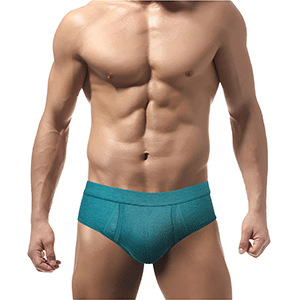
Part of Underwear Fit, Styles & Construction in Finetex Talk — buyer questions answered by the Finetex editorial team.
A brand wants a clean, invisible leg finish on its boxer briefs and is comparing bonded (laser-cut and taped) edges with traditional hemmed or elastic legs. The team wants to know which lasts longer in real wear.
Short answer: Neither finish lasts longer in every case. A well-made hemmed or elastic leg is a proven construction: stitches hold the edge mechanically, and it tolerates hot washing and tumble drying well. A bonded edge uses a heat-activated adhesive tape instead of stitches, giving a flat, almost invisible line with no seam pressure, but its durability depends on the adhesive, the fabric and the bonding settings, and it is more sensitive to heat, harsh detergents and repeated stretching. Bonded edges can perform well, especially on stable synthetic and modal blends, but they should be validated by wash and stretch testing on the actual fabric before production.
How each finish is made
- Hemmed leg: the edge is turned and cover-stitched, sometimes with an elastic inside.
- Elastic leg: an elastic is sewn to the edge, either exposed or turned under.
- Bonded edge: the fabric is cut cleanly, often with a laser or ultrasonic cutter, and a thin adhesive film or elastic tape is heat-pressed to the edge.
How they wear
Stitched finishes can break threads or lose elastic recovery over time, but failures are usually gradual and visible. Bonded edges can delaminate, with the tape lifting from the fabric, curling or bubbling. When this happens it often starts at a seam crossing or at the point of greatest stretch, and it can appear suddenly after a number of washes.
Factors that affect bonded durability
- Adhesive type and thickness, and whether it suits the fibre.
- Bonding temperature, pressure and time, which must stay consistent in production.
- Fabric surface: finishes, softeners or silicone can stop the adhesive from gripping.
- Care: hot washing and high tumble-dry temperatures soften many adhesives.
- Stretch: edges stretched beyond the tape's working range lift faster.
How to test
Wash samples repeatedly using a recognised domestic procedure such as ISO 6330, at the temperature and drying setting that will appear on the care label, and inspect for lifting, bubbling and curling after set numbers of cycles. Measure dimensional change with ISO 5077, because a tape and fabric that shrink differently will make the edge wave. Stretch the edge repeatedly and check recovery; tension and elongation testing such as ASTM D4964 helps compare edge tapes objectively.
Choosing
- Bonded edges suit premium smooth styles where an invisible line under clothing is the main selling point.
- Hemmed or elastic legs suit everyday and value lines, hot washing and customers who expect long life.
- Some brands combine them: bonded leg, sewn waistband and seams.
Limits
Results vary widely between adhesive systems and factories. A good result on one fabric does not transfer automatically to another.
Facts, recommendations and uncertainty
Established: stitched legs are robust; bonded edges are smoother but more sensitive to adhesive, heat and process control. Recommendation: validate bonded edges with repeated wash and stretch tests on the production fabric. Uncertain: how your chosen adhesive and fabric will perform after many washes until tested.
Sources and further reading
- ISO 6330:2021 — Domestic washing and drying procedures for textile testing
- ISO 5077:2007 — Determination of dimensional change in washing and drying
- ASTM D4964 — Tension and elongation of elastic fabrics
Standards and regulations are referenced by their published scope. Test parameters, cycles and pass levels should be agreed with your laboratory for the specific product; legal requirements should be confirmed for each destination market.
Three more perspectives
Ask the factory which adhesive tape supplier it uses, the recommended bonding settings and whether it has run the tape on your fabric type before. Bonding needs specific equipment and trained operators, so confirm capacity. Request wash-tested samples, not only fresh samples, and agree in writing on how many cycles a sample must pass without lifting before you approve production.
From a product view, a bonded edge changes the fit: without elastic, the edge grips less, so the leg can ride up on some customers. Check the leg opening measurement again with the bonded finish rather than reusing the elastic-leg specification. Decide which seams stay sewn, since mixed constructions often give the clean look while keeping strength where it is needed.
In quality control, inspect bonded edges for uneven width, bubbles, glue marks and lifting at seam crossings, using a reference sample. Run a quick wash test on pieces from each production lot, because a small change in bonding temperature can cause problems that only appear later. Record any returns mentioning curling or peeling with the lot number, so you can trace the cause.
Related products
Related articles
← More in Underwear Fit, Styles & Construction · All Talk topics · Ask us about your programme
More factory-floor notes for brand owners

What should I check on a novelty hoodie such as an eye-mask hood?
What to check on a novelty hoodie such as an eye-mask hood: hood structure and lining, visibility and…
Read more →How should I size a unisex hoodie?
How to size a unisex hoodie: choosing a base block, body measurement ranges, ease, sleeve and body length,…
Read more →What care instructions should a hoodie carry?
What care instructions a hoodie should carry: the elements of a complete washing instruction, warnings for prints and…
Read more →
How do I match colour across hoodie and jogger sets?
How to match colour across hoodie and jogger sets: same fabric lot, rib and trims, dyeing method, shade…
Read more →How many colourways can I order at hoodie MOQ?
How many colourways a hoodie order can include at MOQ: how factories set minimums per style, colour and…
Read more →Why does a dark hoodie stain other clothes?
Why dark hoodies stain other clothes: dye bleeding in washing, rubbing transfer, perspiration, unfixed dye and pigment, and…
Read more →Request a sample & pricing information
Send us your tech pack, target price or a reference sample — we reply with a quotation, a realistic lead time and a fabric recommendation within one working day.
- Free sampling plan & cost breakdown
- MOQ from 300 pcs per style
- Reply within 1 working day