
Should briefs use rib or jersey fabric?
Rib or jersey for men's briefs: how each knit stretches, recovers, looks and wears, and how to choose for comfort and durability.
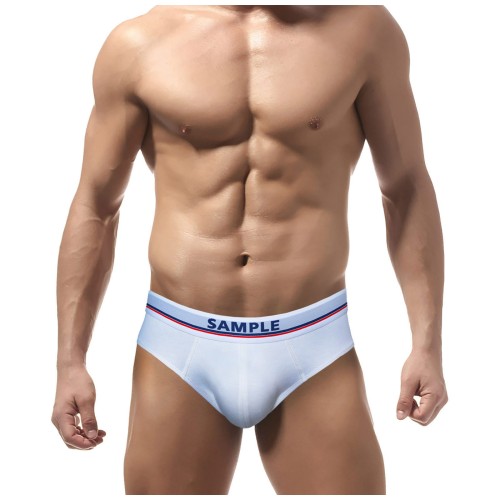
Part of Underwear Fabrics & Comfort in Finetex Talk — buyer questions answered by the Finetex editorial team.
A brand's briefs are currently made in jersey, but a classic rib brief is trending. The buyer wants to know what changes if they switch.
Short answer: Rib knits have vertical ribs that give more width-wise stretch and a classic textured look; jersey is smoother and flatter. Rib often feels supportive and retains shape well in width, while jersey prints and dyes evenly and feels smooth. Choose based on look, fit and how the fabric performs after washing.
Differences
- Stretch: rib stretches more in width.
- Look: rib has a textured, vintage look; jersey is flat.
- Weight: rib fabrics are often heavier at the same yarn count.
- Printing: jersey is easier to print evenly.
- Shrinkage: rib may shrink differently; test both.
Steps
- Re-check the pattern when switching knit, as stretch changes.
- Wash-test for dimensional change and recovery.
- Compare comfort in a fit test.
Limits
Rib is not automatically more durable; yarn and construction still matter.
Common rib types
Underwear ribs include 1×1 rib, which is fine and stretchy; 2×2 rib, with more pronounced texture; and variants such as fine "micro rib" or rib with elastane for better recovery. A 1×1 cotton/elastane rib is a common choice for classic briefs and undershirts. Each behaves differently in width stretch and in how it holds its shape after washing, so specify the rib type, not just "rib".
Pattern and size chart effects
Because rib stretches more across the body, a brief pattern made for jersey can feel loose in rib, especially at the waist and leg openings. Many factories reduce the pattern width slightly for rib, or adjust the elastic tension, to keep the same feel. When switching, update the size chart measurements in both relaxed and extended states, and check that grading still works for the largest and smallest sizes, where differences are most visible.
How each knit is built
Single jersey has knit stitches on the face and purl loops on the back, which gives a smooth face, moderate stretch and a tendency for cut edges to curl. Rib alternates knit and purl columns on both sides, forming visible vertical wales; it has much more widthwise stretch and recovery and its edges lie flat. Interlock, a related double knit, is smooth on both faces and more stable. These structural differences explain why the same yarn feels and fits differently in each.
Choosing for a specific brief style
- Classic briefs and heritage styles: rib suits the look and gives a snug, stretchy fit.
- Printed or minimal styles: jersey gives a smoother surface for prints and logos.
- Fitted, low-rise or contour styles: jersey or interlock with elastane gives a clean, close fit without visible texture.
- Undershirts in the same range: rib is a natural pairing if you want a matching set.
Facts, recommendations and uncertainty
Established: rib and jersey stretch and look differently. Recommendation: adjust patterns and test after washing. Uncertain: customer preference by market.
Sources and further reading
- ISO 5077:2007 — Determination of dimensional change in washing and drying
- ISO 12945-2:2020 — Pilling, fuzzing or matting, modified Martindale method
- ASTM D4964 — Tension and elongation of elastic fabrics
Standards and regulations are referenced by their published scope. Test parameters, cycles and pass levels should be agreed with your laboratory for the specific product; legal requirements should be confirmed for each destination market.
Three more perspectives
Rib fabrics may have different minimums and lead times at the mill than jersey, especially in custom colours. Check MOQ by colour before finalising the colour range. Ask also for the rib type, such as 1×1 or 2×2, and its finished width, because rib widths are often narrower and affect marker efficiency and fabric consumption, which shows up in the garment price.
Consider rib for classic briefs and undershirts, where its texture and stretch suit the style, and keep jersey for printed or smooth-looking styles. Because rib stretches more widthwise, the same pattern can fit larger in rib, so adjust the pattern or grade rather than reusing a jersey block. A small elastane content in rib improves width recovery and reduces bagging during the day.
Measure width recovery after washing, as rib can grow in width if elastane content is low or the fabric is under-finished. Include relaxed and extended width in inspection measurements. Check the waistband and leg seams too, because rib's high stretch can make seams pop if stitch type and thread are not chosen for that stretch, and seam failures are easy to miss in a relaxed measurement.
Related products
Related articles
← More in Underwear Fabrics & Comfort · All Talk topics · Ask us about your programme
More factory-floor notes for brand owners

What should I check on a novelty hoodie such as an eye-mask hood?
What to check on a novelty hoodie such as an eye-mask hood: hood structure and lining, visibility and…
Read more →How should I size a unisex hoodie?
How to size a unisex hoodie: choosing a base block, body measurement ranges, ease, sleeve and body length,…
Read more →What care instructions should a hoodie carry?
What care instructions a hoodie should carry: the elements of a complete washing instruction, warnings for prints and…
Read more →
How do I match colour across hoodie and jogger sets?
How to match colour across hoodie and jogger sets: same fabric lot, rib and trims, dyeing method, shade…
Read more →How many colourways can I order at hoodie MOQ?
How many colourways a hoodie order can include at MOQ: how factories set minimums per style, colour and…
Read more →Why does a dark hoodie stain other clothes?
Why dark hoodies stain other clothes: dye bleeding in washing, rubbing transfer, perspiration, unfixed dye and pigment, and…
Read more →Request a sample & pricing information
Send us your tech pack, target price or a reference sample — we reply with a quotation, a realistic lead time and a fabric recommendation within one working day.
- Free sampling plan & cost breakdown
- MOQ from 300 pcs per style
- Reply within 1 working day