
When should underwear use silicone gripper leg bands?
When underwear should use silicone gripper leg bands: how they stop ride-up, comfort and skin issues, wash durability, and how to specify and test silicone on…
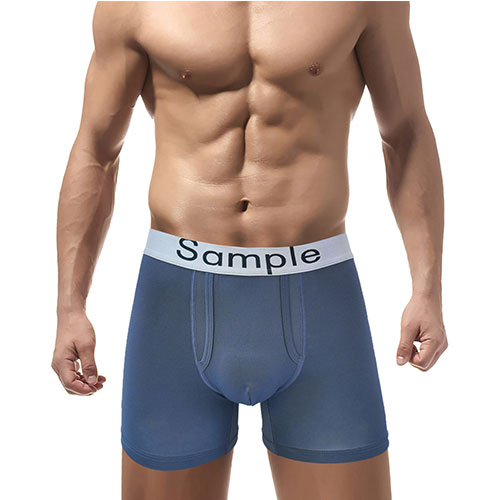
Part of Waistbands, Labels, Printing & Packaging in Finetex Talk — buyer questions answered by the Finetex editorial team.
A brand's long-leg boxer briefs ride up during sport. A competitor uses a silicone strip inside the leg opening, and the team wonders whether adding silicone will fix the problem.
Short answer: A silicone gripper adds friction against the skin so the leg stays in place. It works best on longer legs, compression and sports underwear, where movement pulls the fabric upward. It is not a cure for a poor pattern: if the leg opening is too loose, the inseam too short or the fabric recovery too low, ride-up returns once the silicone loses grip. Silicone can also feel warm, cause irritation on sensitive skin, and lose grip as it collects lint and detergent. Fix fit first, then add silicone dots, stripes or bonded tape where needed, and test grip and comfort after washing.
When silicone helps
- Long-leg boxer briefs and compression shorts.
- Sports and active underwear with high movement.
- Smooth fabrics with low natural grip.
When it is not enough
- Leg opening too wide or elastic too weak.
- Fabric with low recovery.
- Inseam too short for the intended use.
Types of gripper
- Silicone printed on the inside of the leg hem.
- Silicone elastic tape sewn or bonded at the opening.
- Dots, lines or wave patterns, with different grip and breathability.
Comfort and skin
- Narrow or broken patterns breathe better than solid strips.
- Smooth, rounded silicone is gentler on skin.
- Ask the supplier for chemical compliance data. If you use OEKO-TEX STANDARD 100, confirm that the silicone tape or print is included.
Testing
- Check the stretch and recovery of the leg band with ASTM D4964, with and without silicone.
- Wash and dry with an ISO 6330 procedure for several cycles and check whether silicone peels or loses grip.
- Run wear tests in the target activity, measuring how far the leg rides up.
A worked example
For the brand in the question, first measure leg opening, elastic tension and fabric recovery against a competitor that stays in place. If the opening is looser, tighten it slightly and retest. Then sample a narrow silicone stripe pattern on the inside hem, run a wear test in the target sport and compare ride-up with and without silicone.
Lint, detergent and grip loss
Silicone grip falls when the surface collects lint, fabric softener or detergent residue. A care label that advises against fabric softener can help, and some brands tell customers to wash grippers inside out. Test grip after several washes, not only when new.
Limits
Grip depends on skin, sweat and movement. Wear tests guide decisions but vary between people.
Facts, recommendations and uncertainty
Established: silicone adds grip and reduces ride-up in high-movement styles but cannot fix poor fit. Recommendation: correct the pattern first, then add a breathable gripper pattern and test after washing. Uncertain: individual comfort and skin sensitivity.
Sources and further reading
- ASTM D4964 — Tension and elongation of elastic fabrics
- ISO 6330:2021 — Domestic washing and drying procedures for textile testing
- OEKO-TEX® STANDARD 100
Standards and regulations are referenced by their published scope. Test parameters, cycles and pass levels should be agreed with your laboratory for the specific product; legal requirements should be confirmed for each destination market.
Three more perspectives
Ask the elastic or print supplier for wash durability data and chemical compliance documents for the silicone. Include grip retention and adhesion after a set number of washes in the specification. Ask the factory how it applies silicone, because printed and taped methods differ in cost and lead time. Request samples of two gripper patterns. Ask the supplier whether the silicone is applied by screen printing or supplied as ready-made gripper tape, and get minimum quantities for each, since tape often has higher minimums.
In product development, compare the leg pattern and elastic with a style that stays in place before adding silicone. Choose a narrow or broken silicone pattern for breathability. Place the gripper where it contacts skin but does not press on the seam. Fit test in movement, and wash samples before approving. Compare dots and wave patterns in a short wear test, because the pattern changes both grip and breathability.
In quality control, check silicone placement, coverage and adhesion on sampled pieces. Stretch the leg band and check for peeling or cracking. Wash a few pieces per lot and check that silicone stays bonded. Record faults by application machine or batch, since poor curing often comes from one source. Peel test a corner of the silicone on a few washed pieces per lot, and keep washed reference pieces for comparison.
Related products
Related articles
← More in Waistbands, Labels, Printing & Packaging · All Talk topics · Ask us about your programme
More factory-floor notes for brand owners

Why did my reorder price go up?
Why an apparel reorder price can go up: fabric and trim costs, smaller quantities, specification changes, labour and…
Read more →
How do I read an underwear quotation line by line?
How to read an underwear quotation line by line: fabric, elastic and trims, labour, packaging, testing, overheads and…
Read more →
How do peak seasons affect apparel factory capacity?
How peak seasons and holidays affect apparel factory capacity and lead times, why fabric and shipping are also…
Read more →
Should I split one style across two factories?
Whether to split one apparel style across two factories: the benefits for capacity and risk, the risks for…
Read more →
What are the biggest risks on a small brand’s first order?
The biggest risks on a small brand's first apparel order, from unclear specifications and sample approval to payment,…
Read more →
What changes should a factory notify before production?
Which changes a factory should notify the buyer about before production, such as fabric, dye, trims, subcontracting or…
Read more →Request a sample & pricing information
Send us your tech pack, target price or a reference sample — we reply with a quotation, a realistic lead time and a fabric recommendation within one working day.
- Free sampling plan & cost breakdown
- MOQ from 300 pcs per style
- Reply within 1 working day