
What should I check on an underwear fit sample?
What to check on an underwear fit sample: measurements against spec, fit on a body, waistband, legs, pouch, seams, stretch, washing and documentation before approval.
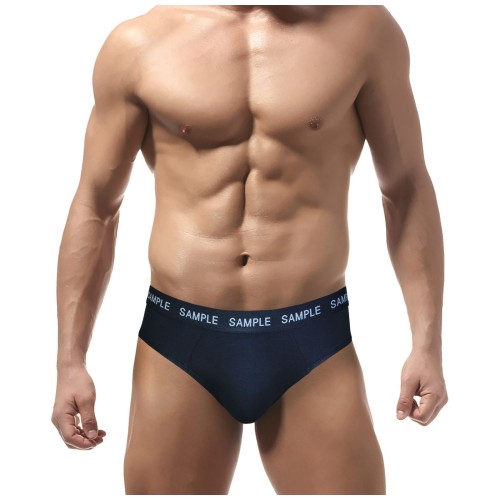
Part of Underwear Fit, Styles & Construction in Finetex Talk — buyer questions answered by the Finetex editorial team.
A brand has received its first fit sample of boxer briefs from a factory and wants a structured way to review it, so that it gives clear comments and does not approve a sample with hidden problems.
Short answer: A useful fit sample review covers three things: whether the sample matches the specification, whether it fits and moves well on a real body, and whether it keeps its fit after washing. Check measurements first against the specification with tolerances, then fit the sample on a fit model in the target size while walking, sitting and bending, and then wash and re-measure. Record every comment with a measurement or a clear location, take photos and send consolidated feedback. Approve only when changes from the previous round have been confirmed, not just promised.
Before the fitting
- Confirm the sample is in the correct fabric, or note if it is a substitute.
- Check the size label and style code.
- Measure every point on the specification, with the garment laid flat and relaxed.
Measurements to check
- Waist relaxed and stretched.
- Front and back rise.
- Leg opening relaxed and stretched.
- Inseam or leg length for boxer briefs.
- Pouch depth and width, gusset width and length.
- Waistband width.
Compare each with the tolerance agreed, and highlight anything outside it.
Fit on the body
Fit on a model who matches the size chart. Check:
- Waistband: sits level, does not roll or dig, stays up when bending.
- Legs: no digging, no ride-up after walking, no gaping.
- Pouch: support without pressure, no wrinkles or excess fabric.
- Seat: covers well, no pulling at seams.
- Seams: no rubbing, especially inner thigh and crotch.
Base model measurements on consistent body points such as those defined in ISO 8559-1.
Stretch and recovery
Stretch the waistband and leg openings by hand to the working extension and check for popped stitches and recovery. For objective comparison of elastics, a tension and elongation method such as ASTM D4964 can be used.
After washing
Wash the sample and measure again using a method such as ISO 5077. Note any shrinkage, twisting or seam distortion and refit if changes are significant.
Documentation
Record measurements, comments and photos in one sheet per sample round. Give clear instructions such as "increase leg opening by 1 cm", not "leg feels tight". Keep the approved sample as a sealed reference.
Limits
One fit model does not represent every customer. Check extreme sizes before production.
Facts, recommendations and uncertainty
Established: a fit review should check measurements, fit on a body and behaviour after washing. Recommendation: use one structured sheet and clear measurable comments. Uncertain: how the fit will suit the full customer range until size sets are tested.
Sources and further reading
- ISO 8559-1:2017 — Size designation of clothes: anthropometric definitions for body measurement
- ISO 5077:2007 — Determination of dimensional change in washing and drying
- ASTM D4964 — Tension and elongation of elastic fabrics
Standards and regulations are referenced by their published scope. Test parameters, cycles and pass levels should be agreed with your laboratory for the specific product; legal requirements should be confirmed for each destination market.
Three more perspectives
Ask the factory to send its own measurement sheet with the sample, so you can compare its measurements with yours. Differences reveal measurement method issues early. Agree on how many sample rounds are included in the price and the expected time per round. Put comments in one consolidated file, because scattered emails are a common cause of missed changes. Ask for photos on a form as well.
Prioritise comments. Fit issues affecting comfort and function, such as digging or ride-up, matter more than small cosmetic differences. Change a few things at a time, so you know what fixed what. Fit the next round on the same model, and check size sets on at least the smallest and largest sizes before approving grading for production. Note which comments are mandatory and which are optional.
Keep the approved fit sample as a sealed reference and make sure the factory has an identical one. Use it in pre-production and in-line inspections. Add the measurement points and tolerances from the fit sample to the inspection checklist. Problems found at final inspection are much more expensive than problems found at the fit sample stage. Note the approval date and round number on the sealed sample label.
Related products
Related articles
- What Is a Curved Hem Men's T-Shirt and Its Benefits? Curved vs Straight Hem for Brands
- Boxer Briefs Manufacturing in China: Specs That Decide Fit, Cost and Reorder Rate
- T-Shirt Sampling: From Development Sample to Pre-Production Approval
- Seamless T-Shirts: A Cost-Benefit Check for Online Sellers
- Oversized vs Classic Fit T-Shirts: What Online Shoppers Are Buying
- Approving Underwear Samples Before Bulk: A Checklist That Prevents Regret
- Underwear Fit Notes for E-Commerce Listings: Charts That Set the Right Expectation
- Underwear Inspection Checklist: Sample Size, Sequence and AQL Level
← More in Underwear Fit, Styles & Construction · All Talk topics · Ask us about your programme
More factory-floor notes for brand owners

Why did my reorder price go up?
Why an apparel reorder price can go up: fabric and trim costs, smaller quantities, specification changes, labour and…
Read more →
How do I read an underwear quotation line by line?
How to read an underwear quotation line by line: fabric, elastic and trims, labour, packaging, testing, overheads and…
Read more →
How do peak seasons affect apparel factory capacity?
How peak seasons and holidays affect apparel factory capacity and lead times, why fabric and shipping are also…
Read more →
Should I split one style across two factories?
Whether to split one apparel style across two factories: the benefits for capacity and risk, the risks for…
Read more →
What are the biggest risks on a small brand’s first order?
The biggest risks on a small brand's first apparel order, from unclear specifications and sample approval to payment,…
Read more →
What changes should a factory notify before production?
Which changes a factory should notify the buyer about before production, such as fabric, dye, trims, subcontracting or…
Read more →Request a sample & pricing information
Send us your tech pack, target price or a reference sample — we reply with a quotation, a realistic lead time and a fabric recommendation within one working day.
- Free sampling plan & cost breakdown
- MOQ from 300 pcs per style
- Reply within 1 working day