
Contour pouch or flat front: which suits my customers?
Contour pouch versus flat front in men's underwear: how each is constructed, how they differ in support, comfort and look, and how to choose and test…
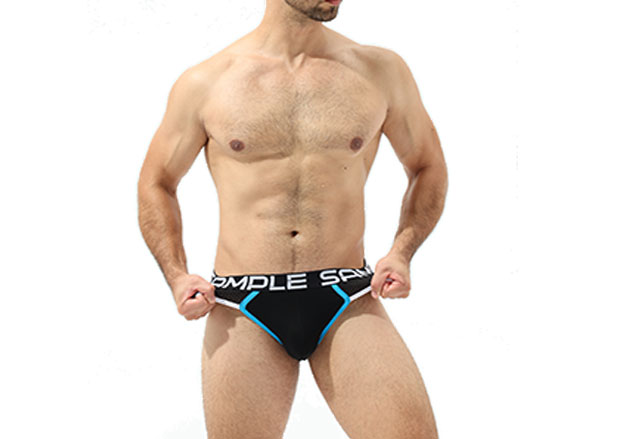
Part of Underwear Fit, Styles & Construction in Finetex Talk — buyer questions answered by the Finetex editorial team.
A brand has a flat-front boxer brief and is considering a contour pouch version after reviews asked for more support and comfort. The team wants to understand the trade-offs before developing it.
Short answer: A contour pouch uses shaped panels and seams to create a three-dimensional front, giving more room and support and reducing compression. A flat front is simpler, smoother under clothing and easier to produce. Many customers prefer a pouch for comfort and support, while some prefer the cleaner look and less emphasis of a flat front. The choice depends on your customers' priorities and the style's positioning.
How they are built
A flat front is cut with little or no shaping, relying on fabric stretch. A contour pouch is shaped with curved seams, darts or separate panels, sometimes with a centre seam or a U-shaped pouch panel, so that it follows the body's shape. Some designs add an internal pouch or lining for more support or separation.
Differences to weigh
- Comfort: pouches reduce compression and pressure; flat fronts can feel tight in some fabrics.
- Support: pouches hold the body in place; flat fronts rely on fabric tension.
- Look: flat fronts look smoother under fitted trousers; pouches are more visible.
- Production: pouches add pattern pieces, seams and sewing time, increasing cost.
- Sizing: pouch volume must be graded carefully across sizes.
How to choose and test
- Ask current customers what they value: support, comfort or discreet look.
- Develop a pouch version from the same block, keeping waist and leg fit unchanged.
- Fit-test on several people per size, standing, sitting and walking.
- Check seam comfort at the pouch, since added seams can rub if not finished well.
Production checks
Pouch seams should be flat, with soft thread, and placed to avoid pressure points. Grading must keep the pouch in proportion; too much volume in small sizes, or too little in large, are common faults. Measure pouch depth and seam positions in inspection.
Fit sample questions
When reviewing samples, ask testers to compare support, movement during walking, comfort when sitting and how the front looks under fitted trousers. Measure the pouch depth and front rise on each size after washing, because a pouch that loses shape or a seam that twists usually shows up only after several washes. Note where the front seam sits relative to the leg opening, since this affects chafing.
Limits
Preferences differ widely, and marketing and fit expectations vary between markets. Offering both, clearly described, can be better than replacing one with the other.
Facts, recommendations and uncertainty
Established: pouches add shaped volume and support at the cost of more seams and sewing. Recommendation: develop the pouch from the same block and wear-test across sizes. Uncertain: which option your customers prefer, which a test launch shows.
Sources and further reading
- ISO 8559-1:2017 — Size designation of clothes: anthropometric definitions for body measurement
- ISO 5077:2007 — Determination of dimensional change in washing and drying
- ASTM D4964 — Tension and elongation of elastic fabrics
Standards and regulations are referenced by their published scope. Test parameters, cycles and pass levels should be agreed with your laboratory for the specific product; legal requirements should be confirmed for each destination market.
Three more perspectives
Ask the factory for the extra sewing minutes and cost of the pouch version, and whether it needs special machines or attachments. Pouch styles can also affect fabric consumption. If you plan both versions, use the same fabric and trims so you can share minimums and keep the colour range aligned.
Start from the existing block and change only the front panel, keeping the waist, rise and legs identical, so customers can compare like for like. Prototype at least two pouch shapes, such as a centre-seam and a U-panel pouch, and pick the one that works across the size range, not only in the sample size.
Add pouch-specific measurements to the specification and inspection, such as pouch depth and seam positions, with tolerances. Check seam flatness and thread softness in the pouch area. In complaint analysis, separate comfort and fit complaints between pouch and flat-front styles, so the comparison guides future development.
Related products
Related articles
← More in Underwear Fit, Styles & Construction · All Talk topics · Ask us about your programme
More factory-floor notes for brand owners
Why did my reorder price go up?
Why an apparel reorder price can go up: fabric and trim costs, smaller quantities, specification changes, labour and…
Read more →
How do I read an underwear quotation line by line?
How to read an underwear quotation line by line: fabric, elastic and trims, labour, packaging, testing, overheads and…
Read more →
How do peak seasons affect apparel factory capacity?
How peak seasons and holidays affect apparel factory capacity and lead times, why fabric and shipping are also…
Read more →
Should I split one style across two factories?
Whether to split one apparel style across two factories: the benefits for capacity and risk, the risks for…
Read more →
What are the biggest risks on a small brand’s first order?
The biggest risks on a small brand's first apparel order, from unclear specifications and sample approval to payment,…
Read more →
What changes should a factory notify before production?
Which changes a factory should notify the buyer about before production, such as fabric, dye, trims, subcontracting or…
Read more →Request a sample & pricing information
Send us your tech pack, target price or a reference sample — we reply with a quotation, a realistic lead time and a fabric recommendation within one working day.
- Free sampling plan & cost breakdown
- MOQ from 300 pcs per style
- Reply within 1 working day