
Australia and New Zealand Apparel Labelling: Fibre, Care and Origin Claims
Care, fibre content and country of origin labelling rules for clothing sold in Australia and New Zealand, checked against official sources in November 2026.
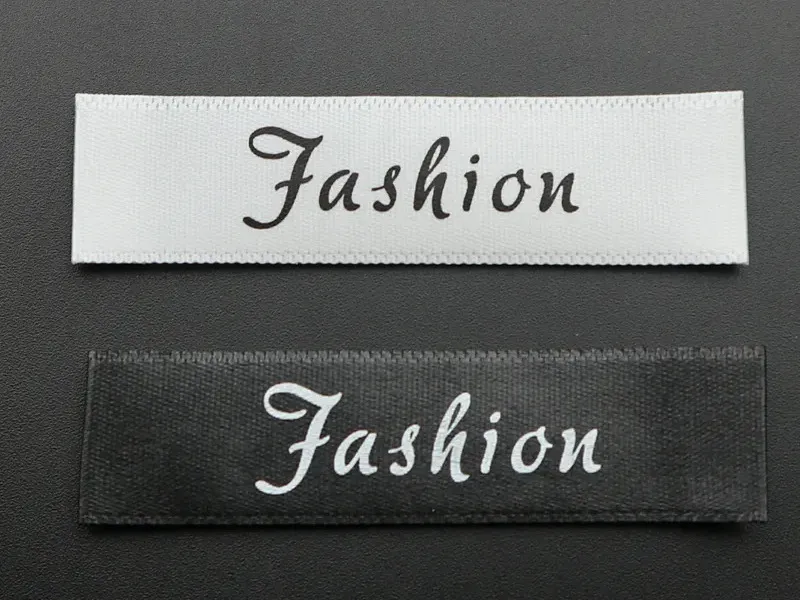
Answer first: Australia and New Zealand share some labelling standards but not the same rules. In Australia, clothing must carry care instructions under the Consumer Goods (Care Labelling) Information Standard 2023, given in English words, the international care symbols, or both; imported apparel must carry a trade description in English naming the country where the goods were made, applied as a prominent, permanent-as-practicable label under the Commerce (Trade Descriptions) Regulation 2016; and fibre-content statements, while not set by a mandatory information standard in the sources we checked, must not be false or misleading under the Australian Consumer Law. In New Zealand, three consumer information standards apply to new clothing: care labelling, fibre content labelling, and country of origin labelling, each in English with permanent labels and, for fibre and origin, lettering at least 1.5 mm high. A single label set can usually satisfy both countries if it is designed for the stricter requirement on each point.
This article summarises official Australian and New Zealand government pages and legislation read on 15 November 2026. It is general information, not legal advice. Labelling rules and their interpretation can change; confirm your final labels with a compliance adviser in the destination market, and use a licensed customs broker for the import entry. For other markets, see our guides to Canadian bilingual labelling and UK textile labelling.
The legal framework in each country
Australia
Three sets of rules matter for a clothing label:
- Care labelling — the Consumer Goods (Care Labelling) Information Standard 2023, made under section 134(1) of the Australian Consumer Law. It commenced on 5 September 2023 and replaced the 2010 care labelling standard. After two transitional periods (six months, then twelve months), regulated goods must comply with either section 11, which applies the Australian/New Zealand Standard AS/NZS 1957:1998 with variations, or section 12, which applies clause 4 of ISO 3758.
- Trade descriptions on imports — the Commerce (Trade Descriptions) Regulation 2016, made under the Commerce (Trade Descriptions) Act 1905. Its table of goods that must not be imported without a trade description includes textile products and articles of apparel. The Federal Register of Legislation showed the latest compilation as F2019C00187 of 11 March 2019 when we checked.
- The Australian Consumer Law — false or misleading representations, including about fibre and origin, are prohibited. The ACCC’s false or misleading claims guidance states that “it is illegal to make false or misleading claims about country or place of origin.”
New Zealand
The Commerce Commission explains that consumer information standards are set by regulation under the Fair Trading Act, and lists care labelling, clothing and footwear country of origin labelling, and fibre content labelling among them. The Commission’s pages name the regulations:
- Consumer Information Standards (Care Labelling) Regulations 2000, which adopt sections of AS/NZS 1957:1998 with amendments.
- Consumer Information Standards (Fibre Content Labelling) Regulations 2000, which adopt sections of AS/NZS 2622:1996 with amendments.
- Consumer Information Standards (Country or Territory of Origin (Clothing and Footwear) Labelling) Regulations 1992.
The Commission states that supplying covered goods without the required label breaches the Fair Trading Act, and that a retailer cannot assume goods comply because a manufacturer or wholesaler offered them.
Fibre content and care
Care labelling
| Point | Australia (Information Standard 2023, ACCC) | New Zealand (Commerce Commission) |
|---|---|---|
| Covered goods | Clothing, household textiles, apparel, furnishings, bedding and more, with listed exclusions | Clothing, household fabrics, furnishings, bedding and more, with listed exclusions |
| Language | English wording, the international care symbols, or both | Legible and in English; symbols may accompany written instructions |
| Symbols | ACCC: the 5 international care symbols are allowed as an alternative to written instructions | Where dry cleaning is specified, the dry-cleaning symbol must be included |
| Permanence | Permanent label, with listed items allowed a removable ticket, pamphlet or packaging | Permanent label able to withstand the care treatment; listed items exempt |
| Sets | Pieces sold as sets need instructions | Label on each item of a set |
The safest single design for both countries is written English care instructions plus the international care symbols on a permanent label, with the dry-cleaning symbol wherever dry cleaning is specified. The Australian standard also requires care instructions to be appropriate and adequate, taking into account dyes, finishes, fibres, construction and trims, so that following them does not damage the article. That means the care label must be decided from tests on the finished garment, not copied from a fabric swatch. Our Talk answer on care label requirements covers the US and EU for comparison.
Fibre content
New Zealand has a mandatory fibre content standard. The Commission says the label must be in English, clearly readable, with lettering not less than 1.5 mm high, easily accessible, and list fibres from the highest amount to the lowest, with percentages optional — for example “80% cotton, 20% elastane” or “cotton, elastane”. It must be a permanent label on the item, or also on a removable label or the packaging if packaging or folding hides it.
Australia: we did not find a mandatory fibre-content information standard among the official pages checked for this article. An ACCC enforcement release on fibre-content labelling described AS/NZS 2622:1996 as “not a Mandatory Standard”, while still taking action over inaccurate fibre labels on garments. Fibre statements on Australian labels are therefore governed by the general prohibition on false or misleading representations, and by the trade-description requirement for a true description of imported goods. In practice, brands selling in both countries use the New Zealand format on one label.
Accuracy is the real risk. A label must match the tested composition of the finished garment, including elastane and blends. Our Talk answer on fibre content label tolerance and our article on bamboo viscose labelling explain how to avoid composition claims you cannot support. Finetex’s apparel fabric selection guide helps decide the fabric before the label is written.
Country of origin
Australia: trade description at the border
For imported apparel, the Commerce (Trade Descriptions) Regulation 2016 requires a trade description that includes, in prominent and legible characters, the name of the country in which the goods were made or produced (section 16), a true description of the goods (section 17), in English (section 18). For goods not imported as prepacked articles, the trade description must be a principal label or brand attached in a prominent position, and as permanently as practicable, to the goods (section 19). For prepacked articles it goes on the package or a label attached to it, and other matter must not contradict or obscure it.
Origin claims are a separate question. The ACCC’s country of origin guidance explains that “made in” generally means the last substantial step in making the product happened in that country, producing a product fundamentally different in identity, nature or essential character from its imported components. A phrase such as “Designed in Australia” does not state where the garment was made, so it cannot replace the country of manufacture in the import trade description, and it should not be used in a way that misleads customers about origin.
New Zealand: origin label on clothing
The Commission’s country of origin page says all new clothing must have a label stating where it was made, in English, with no letter less than 1.5 mm high, as a permanent label visible when examining the garment — or also on a removable label or packaging if the label cannot be seen as displayed. Listed exclusions include second-hand clothing and component parts such as fabric.
A garment cut and sewn in China and sold in either country would normally carry “Made in China”. Finetex prepares origin declarations with export documents, as described on our About page.
Reverse-season orders: using the time difference
Australia and New Zealand are in the southern hemisphere, so their winter falls during the northern summer. For a factory serving both hemispheres, that creates a planning opportunity rather than a compliance issue:
- Winter ranges for ANZ — fleece, brushed fabrics, long sleeves — can be produced while northern-hemisphere orders are lighter in those categories.
- Labels must be locked before cutting. The care label depends on testing the finished fabric, so book tests early.
- Allow transit time. Finetex’s shipping page quotes sea freight at 18–35 days and air at 9–13 days, depending on destination. Add bulk production of 15–45 days from deposit and approved pre-production sample.
- Avoid the Chinese New Year shutdown for ANZ winter deliveries; our CNY production calendar gives the cut-off dates.
Finetex’s private packaging page states that care and fibre composition labels are prepared to Australian requirements, among others, and applied in the correct position; label proofs are approved before bulk.
What is fact, what is advice and what is uncertain
Fact: the Australian care labelling standard of 2023 and the Commerce (Trade Descriptions) Regulation 2016 apply as summarised, from the official texts. New Zealand’s care, fibre content and clothing origin standards apply as described by the Commerce Commission. These sources were read on 15 November 2026.
Advice: design one permanent label set with English care wording plus symbols, fibres in descending order with percentages, and “Made in” with letters at least 1.5 mm high; base care instructions on tests of the finished garment.
Uncertain: we did not read the full AS/NZS standards, which are sold by Standards bodies, or the New Zealand regulations directly, because the legislation site did not serve them to our fetch. Confirm details with an adviser, and ask a licensed customs broker about the import entry.
Related reading
- Importing Men’s Underwear into the US: Duty, Labels and Customs Entry
- Importing T-Shirts into the UK: Post-Brexit Rules, UKCA and Textile Labelling
- EU GPSR for Apparel: Label, Listing and Responsible Person Requirements
- Importing Apparel into Canada: Bilingual Labelling, Duty and CBSA Paperwork
Frequently asked questions
Is fibre content labelling mandatory in Australia?
We did not find a mandatory fibre-content information standard in the official sources checked on 15 November 2026. Fibre statements must still be accurate under the Australian Consumer Law, and imported goods need a true description. New Zealand does have a mandatory fibre content standard.
Can I use only care symbols in Australia?
The ACCC says the mandatory standard allows written English instructions, the international care symbols, or both. For New Zealand, labels must be legible and in English, with symbols accompanying the instructions, so English wording plus symbols suits both.
What origin label does an imported T-shirt need in Australia?
A trade description in English naming the country where it was made or produced, with a true description of the goods, attached prominently and as permanently as practicable.
How big must the New Zealand origin and fibre text be?
The Commerce Commission says no letter may be less than 1.5 mm high for origin labels, and fibre labels must be at least 1.5 mm high.
Can “Designed in Australia” replace “Made in China”?
No. It is not a statement of where the garment was made, and the import trade description must still name the country of manufacture.
Sources
- Federal Register of Legislation: Consumer Goods (Care Labelling) Information Standard 2023
- ACCC Product Safety: Care labelling for clothing and textiles mandatory standard
- Federal Register of Legislation: Commerce (Trade Descriptions) Regulation 2016
- ACCC: Country of origin claims
- ACCC: False or misleading claims
- ACCC: Sherpa Outdoor Equipment corrects garments fibre content labelling
- NZ Commerce Commission: Fibre content labelling
- NZ Commerce Commission: Care labelling
- NZ Commerce Commission: Country of origin labelling
Proof one label set for Australia and New Zealand
Tell us the garment, the fibre composition and whether you sell in one or both countries. We will test the finished fabric, propose care wording with symbols, and send label proofs with fibre and origin text for approval before bulk.
Request a quote or start from our private packaging and apparel fabric selection pages.
More factory-floor notes for brand owners
Importing Apparel into Japan: JIS Care Symbols and Quality Labelling
Japan's Household Goods Quality Labeling Act for apparel: fibre composition terms, JIS L 0001:2024 care symbols, labeller details…
Read more →
Apparel Manufacturing Glossary: 120 Terms
120 garment manufacturing terms in English and Chinese with one-line explanations, grouped in 12 topics, for buyers working…
Read more →
Subcontracting: How to Know If Your Order Is Outsourced
Six signs your apparel order has been subcontracted, the contract clauses that control it, and how to check…
Read more →
Tolerance Stack-Up: Right Measurements, Wrong Fit
Why garment measurements can pass tolerance while the fit is still small: how shrinkage, cutting and sewing deviations…
Read more →
Gym, Studio and Team Kit: Low-Volume Custom Orders
How gyms, studios and teams can order custom kit in small runs: one blank body, names and numbers,…
Read more →
Raglan and Baseball Tees: Construction and Decoration
How raglan and baseball T-shirts are built: raglan seams, collar attachment, print placement across seams, two-colour shade control…
Read more →Request a sample & pricing information
Send us your tech pack, target price or a reference sample — we reply with a quotation, a realistic lead time and a fabric recommendation within one working day.
- Free sampling plan & cost breakdown
- MOQ from 300 pcs per style
- Reply within 1 working day