
Trims and Tooling Inventory: Who Holds Risk on Reorders
Elastic, rib, labels and hangtags come in supplier minimums. Who pays for surplus, who owns tooling, how to avoid dead trim stock and what to agree.
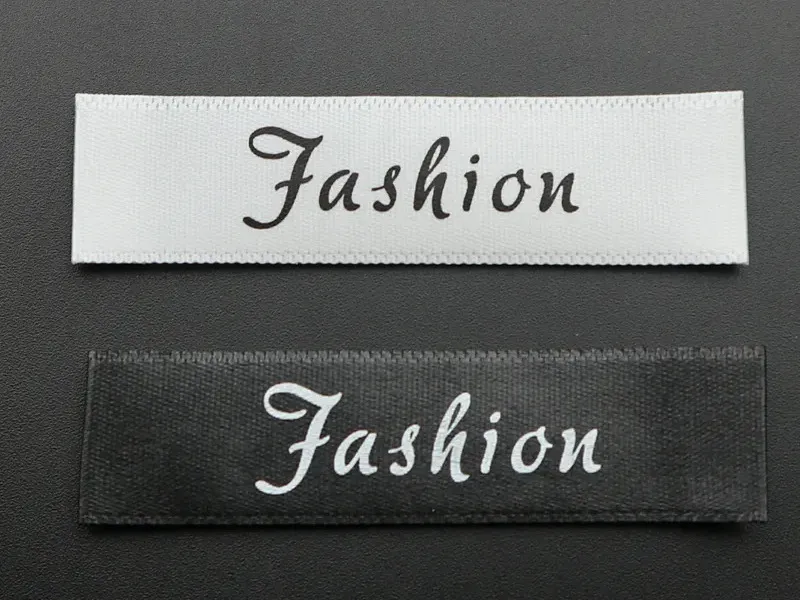
Answer first: Trims are bought in the supplier’s minimums, not in your garment quantity. A custom jacquard waistband, a dyed-to-match rib, a woven main label, a printed hangtag or a printed box each has its own set-up and minimum, so a 300-piece order often leaves surplus trims behind, and that surplus is either the foundation of your reorder or dead stock. Who carries it depends on who authorised the purchase. The fair rule most buyers and factories settle on is simple: brand-specific trims bought on the buyer’s written authorisation belong to the buyer’s account, held by the factory for an agreed period and either used on the reorder, bought out or written off on agreed terms; generic trims the factory can use for other customers stay with the factory. Put that rule, the holding period and the version control of artwork in writing before the first order, because changes to labels, logos or legal text are what turn usable stock into waste.
The customs and labelling rules cited were read on 20 November 2026. We do not quote trim minimums here because they depend on each trim and supplier; we list them in the quotation for your order.
Where trim minimums come from
Our FAQs make the point that minimum order quantity is really the sum of component minimums: the mill’s fabric minimum, the elastic supplier’s minimum, the packaging printer’s set-up quantity. Custom jacquard waistbands and printed packaging carry their own set-up minimums, which we list in the quotation. A 300-piece style is possible when those components are stock items.
| Trim | Brand-specific? | What sets the minimum | Reorder note |
|---|---|---|---|
| Plain elastic, stock colours | No | Supplier’s standard stock | Easy to re-buy; check consistency, see elastic across reorders |
| Jacquard or printed waistband with logo | Yes | Loom or print set-up per design and colour | Surplus is only useful for the same design |
| Dyed-to-match rib or binding | Often | Dye lot | Shade must match the new fabric lot |
| Woven main label | Yes | Weaving set-up per design | Stable unless the logo changes |
| Care and content label | Yes | Print run | Obsolete if fibre content, care or origin changes |
| Hangtag, size sticker, barcode | Yes | Print run | Obsolete if price, barcode or branding changes |
| Printed polybag, box or sleeve | Yes | Printing plate and run | Obsolete if artwork or legal text changes |
For what each trim is and does, see what trims are and why they matter.
Stocking materials for reorders
Holding surplus trims can shorten a reorder, because a trim with a long lead time is already on the shelf. Repeat orders on an approved block usually run at the faster end of our 15–45 day bulk lead time. But stock only helps if it is the right stock.
Questions to settle before you rely on it:
- Quantity on hand by item and version, counted after the first order, not estimated.
- Condition and storage: elastic and printed packaging age; damp storage damages packaging (see packaging moisture and mould).
- Match to the new fabric: dyed-to-match rib from the first lot may not match the second fabric lot.
- Version: is the label or hangtag artwork still current?
- Ownership: who paid for it, and is it recorded as the buyer’s stock?
Our article on planning reorders for core colours covers how to forecast so surplus trims are used rather than stranded.
Where dead stock comes from
Trims become dead stock for predictable reasons:
- Label content changes. In the US, fibre content and country of origin labelling follow 16 CFR Part 303 and care labelling follows 16 CFR Part 423, which requires a reasonable basis for the care instructions. In the EU, fibre names and labelling follow Regulation (EU) No 1007/2011. If a reorder changes the fabric blend, the care method, the production country or the importer details, the old labels cannot be used.
- Branding changes: a new logo, a new hangtag design or a new barcode system.
- Style discontinued: the waistband or label made for one style has no other use.
- Colourway dropped: dyed-to-match trims for a colour you no longer sell.
- Overbuying to meet a minimum: the surplus was never likely to be used.
Tooling: who owns it
“Tooling” in apparel is smaller than in hard goods, but it exists and it costs money:
| Tooling | Used for | Ownership question |
|---|---|---|
| Print screens and films | Screen-printed garments and labels | Kept for reorders? For how long? |
| Embroidery files (digitising) | Embroidered logos | Who owns the file; can it be used elsewhere? |
| Jacquard set-up and designs | Logo waistbands, woven labels | Held by the trim supplier; re-set-up cost if lost |
| Printing plates and dies | Boxes, sleeves, printed bags | Plate life and storage |
| Patterns and markers | Garment production | On our side, patterns developed for your programme are yours and are not sold to another customer |
Customs adds a twist. Under US valuation rules, 19 CFR 152.102 treats materials, components, tools, dies and moulds supplied by the buyer free of charge or at reduced cost as assists, and 19 CFR 152.103 adds their apportioned value to the customs value. If you supply labels, waistbands or tooling to the factory yourself, tell your customs broker; if the factory buys them and includes them in the garment price, they are already in the invoice value.
Sharing the risk: a workable agreement
The authorisation rule
The cleanest system is a trim authorisation: the buyer approves, in writing, the quantity of each brand-specific trim the factory may buy, including the supplier minimum and any surplus. What the buyer authorises, the buyer is responsible for. What the factory buys beyond that, or buys generically, is the factory’s.
What the agreement should say
| Clause | Content |
|---|---|
| Authorised quantities | Per trim and version, including the supplier minimum and surplus |
| Ownership | Authorised brand-specific trims are the buyer’s stock once paid or invoiced |
| Holding period | How long the factory stores surplus free of charge |
| Use on reorder | Surplus is consumed first, at no new set-up cost |
| Buy-out or write-off | What happens at the end of the holding period or if the style is discontinued |
| Version control | Artwork, legal text and version number for every label and pack |
| Count and report | Stock report after each order and on request |
| Condition | Storage conditions; who bears damage in storage |
An authorisation record, illustrated
A trim authorisation can be a single table attached to the purchase order. The quantities below are placeholders to show the structure, not real minimums:
| Item and version | Needed for order | Supplier minimum | Authorised to buy | Surplus | Owner of surplus |
|---|---|---|---|---|---|
| Jacquard waistband, logo v2, black | Order quantity plus allowance | From supplier quote | Minimum | Minimum less use | Buyer |
| Woven main label v1 | Order quantity plus allowance | From supplier quote | Minimum | Minimum less use | Buyer |
| Stock elastic, white | Order quantity plus allowance | Stock item | As needed | None expected | Factory |
| Hangtag v3 with barcode | Order quantity plus allowance | From printer quote | Minimum | Minimum less use | Buyer |
After the order ships, the factory reports actual use and surplus against each line. That report is what the reorder starts from.
Before every reorder
- Ask for the current stock report by item and version.
- Confirm that label content, barcodes and artwork are unchanged.
- Check dyed-to-match trims against the new fabric lot.
- Authorise only the top-up quantity, not a full new minimum, where the supplier allows.
- Record any write-off so it is not counted as stock again.
Reducing the risk at source
- Separate legal text from branding: keep care and content details on a separate printed care label rather than on an expensive woven main label, so a fibre change only scraps the cheap item.
- Use stock components where the customer won’t notice: a stock elastic in a core colour instead of a custom one for a first order.
- Share trims across styles: one woven main label and one hangtag for the whole range.
- Delay customisation: hangtags and stickers can be printed nearer packing; woven items need longer.
- Ask which components set the minimum in each quote, as our MOQ calculator suggests.
Our volume tiering article explains how trim set-ups are spread over larger orders.
How we handle trims
Labels, hangtags, polybags, multipacks and retail boxes sit inside our own supply chain, so they are bought under the same order as the garment; see private packaging and private label. We list trim and packaging set-up minimums in the quotation, so you can see which components set the order minimum. Fabric development and custom trims are covered on our custom fabric page.
Fact, advice and uncertainty
Fact: brand-specific trims are bought in supplier minimums that often exceed a small order’s needs; under US valuation rules, buyer-supplied materials and tools are assists added to the customs value; label content is governed by fibre, origin and care rules in each market, so changes in those details make old labels unusable.
Advice: use a written trim authorisation, agree ownership, holding period and buy-out terms, separate legal text from branding, and count surplus after every order.
Uncertain: how much surplus you will use, which depends on your reorder volumes and on whether your range, branding or labelling changes before the next order.
Related reading
- Subcontracting: How to Know If Your Order Is Outsourced
- Volume Tiering: How Price Breaks Work at 500, 3,000 and 10,000 Pieces
- MOQ Calculator: What 500 Pieces Really Costs per Style
- Subscription Underwear: Packaging, Replenishment and Unit Cost
Frequently asked questions
Who pays for leftover custom labels and waistbands?
Usually the buyer, if the factory bought them on the buyer’s written authorisation and they cannot be used for anyone else. Agree this in writing before the first order.
How long will a factory store my surplus trims?
It varies; agree a holding period and what happens after it (use, buy-out or write-off) in your supply terms.
Can I reuse old care labels on a reorder?
Only if the fibre content, care instructions, country of origin and other required details are unchanged. If any of them changes, new labels are needed.
Do I have to declare trims I send to the factory to US Customs?
Buyer-supplied materials and tools are assists under 19 CFR 152.102, and their apportioned value is added to the customs value. Ask your broker how to declare them.
Sources
- eCFR: 19 CFR 152.102, Definitions (assist: materials, tools, dies, moulds)
- eCFR: 19 CFR 152.103, Transaction value
- eCFR: 16 CFR Part 303, Rules under the Textile Fiber Products Identification Act
- eCFR: 16 CFR Part 423, Care labeling of textile wearing apparel
- EUR-Lex: Regulation (EU) No 1007/2011 on textile fibre names and labelling
See which trims set your minimum
Send us your tech pack and trim list. Our quotation lists each brand-specific trim and packaging set-up minimum, so you can decide which to customise now and which to keep standard for the first order.
Request a quote or see our custom fabric and trim options.
More factory-floor notes for brand owners
Naturally Dyed Underwear: What Should Buyers Test Before Bulk?
Plan naturally dyed underwear testing for wash and rub fastness, shade variation, and reorder approval. Match color and…
Read more →
Hidden Pockets in Boxer Briefs: Where Should They Sit?
Choose hidden pockets in boxer briefs by testing placement, access, load, and movement in comparable samples before approving…
Read more →
Silk Underwear Sourcing: What Can a Buyer Approve from a Sample?
Use a silk underwear sourcing checklist to verify fiber composition, compare stretch and seams, and approve care and…
Read more →
Adaptive Men’s Underwear: How Do You Test Side Openings?
Test side openings in adaptive men's underwear with seated and one-handed dressing checks, closure placement reviews, and a…
Read more →Microfiber Underwear Fabric: What Should Buyers Specify?
Specify microfiber underwear fabric by verified fiber content, knit structure, stretch, and wash performance. Use a sample checklist…
Read more →Skin-Tone Underwear Color Matching: How Do You Approve a Range?
Plan skin-tone underwear color matching with physical swatches, stretch checks, and a repeatable shade approval record for production…
Read more →Request a sample & pricing information
Send us your tech pack, target price or a reference sample — we reply with a quotation, a realistic lead time and a fabric recommendation within one working day.
- Free sampling plan & cost breakdown
- MOQ from 300 pcs per style
- Reply within 1 working day