
Should I add an antimicrobial finish to underwear?
Whether to add a silver or other antimicrobial finish to underwear: what it can do, regulatory limits on treated articles and claims, durability and testing.
Part of Underwear Fabrics & Comfort in Finetex Talk — buyer questions answered by the Finetex editorial team.
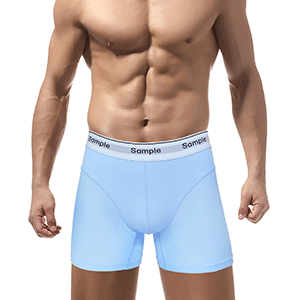
A sportswear brand is considering a silver-based antimicrobial finish on its performance boxer briefs to reduce odour complaints. The team wants to know if it is worth it and what it is allowed to claim.
Short answer: An antimicrobial finish can reduce odour build-up in some synthetic fabrics, but it is a regulated chemical treatment, it may wash out over time, and what you may say about it is restricted in markets such as the EU and US. Before adding one, confirm the active substance is permitted, ask for performance data after washing and agree claims that describe the treated article accurately. In many cases, a better fabric or care advice reduces odour without a biocidal finish.
What the finish does
Silver-based and other antimicrobial finishes are designed to reduce the growth of microbes on the fabric, which can reduce odour formation, particularly in synthetic fabrics where odour tends to build up. They are applied at the fibre, yarn or fabric stage. Effectiveness depends on the substance, its concentration and how well it is fixed, and some finishes lose effect after repeated laundering.
Regulatory points
In the EU, textiles treated with or intentionally incorporating a biocidal product are "treated articles" under Regulation (EU) No 528/2012. The active substances used must be approved for the relevant use, and when a biocidal claim is made, the label must give specific information, such as the name of the active substance. In the US, products with antimicrobial treatments are generally limited to claims about protecting the treated article itself, such as resisting odour-causing bacteria on the fabric, unless the product is registered for broader claims. Public health claims, such as protecting the wearer from germs, are a different and much stricter category.
Questions to ask the finish supplier
- Which active substance is used, and what is its regulatory status in each target market?
- How many home launderings does the effect last in tests?
- Does the finish affect softness, wicking or skin comfort?
- Is it compatible with OEKO-TEX or retailer chemical requirements?
Alternatives to consider
- Fabrics or blends that hold less odour, such as cellulose blends.
- Better ventilation through mesh zones or lighter weights.
- Clear care advice: wash after each wear, avoid leaving damp garments in a bag.
Limits
Effectiveness differs between finishes, fabrics and wash habits. Claims should be agreed with compliance experts for each market.
Facts, recommendations and uncertainty
Established: antimicrobial finishes are regulated treated-article chemistry with claim restrictions. Recommendation: verify active substance status, wash durability and claim wording before use. Uncertain: real-world odour benefit for your fabric, which needs testing after washing.
Sources and further reading
- Regulation (EU) No 528/2012 — Biocidal Products Regulation (treated articles)
- OEKO-TEX® STANDARD 100
- ISO 6330:2021 — Domestic washing and drying procedures for textile testing
Standards and regulations are referenced by their published scope. Test parameters, cycles and pass levels should be agreed with your laboratory for the specific product; legal requirements should be confirmed for each destination market.
Three more perspectives
Ask the finish supplier for the active substance, its regulatory status for textiles in each market, the recommended application level and test data after a defined number of washes. Ask whether the finish carries a brand name with licensing or labelling rules. Factor the extra cost and processing time into the fabric quote, and confirm the mill has experience applying it consistently.
Decide whether the product needs the finish or a better fabric. For sports lines, compare a treated synthetic with an untreated fabric that has better ventilation or a cellulose blend in a wear trial. If the finish stays, design packaging and product copy around odour control on the fabric itself, avoiding any wording that implies protection of the wearer.
Keep the regulatory documents, test reports after washing and approved claim wording in the product file. Check treated-article labelling on every lot if required by the market. When odour complaints arrive, test retained samples washed to the label's instructions, so you can see whether the finish still performs or has washed out.
Related products
Related articles
← More in Underwear Fabrics & Comfort · All Talk topics · Ask us about your programme
More factory-floor notes for brand owners

What should I check on a novelty hoodie such as an eye-mask hood?
What to check on a novelty hoodie such as an eye-mask hood: hood structure and lining, visibility and…
Read more →How should I size a unisex hoodie?
How to size a unisex hoodie: choosing a base block, body measurement ranges, ease, sleeve and body length,…
Read more →What care instructions should a hoodie carry?
What care instructions a hoodie should carry: the elements of a complete washing instruction, warnings for prints and…
Read more →
How do I match colour across hoodie and jogger sets?
How to match colour across hoodie and jogger sets: same fabric lot, rib and trims, dyeing method, shade…
Read more →How many colourways can I order at hoodie MOQ?
How many colourways a hoodie order can include at MOQ: how factories set minimums per style, colour and…
Read more →Why does a dark hoodie stain other clothes?
Why dark hoodies stain other clothes: dye bleeding in washing, rubbing transfer, perspiration, unfixed dye and pigment, and…
Read more →Request a sample & pricing information
Send us your tech pack, target price or a reference sample — we reply with a quotation, a realistic lead time and a fabric recommendation within one working day.
- Free sampling plan & cost breakdown
- MOQ from 300 pcs per style
- Reply within 1 working day