
Why do compression shorts roll up at the leg?
Why compression shorts roll up or ride up at the leg: leg length, hem finish, fabric power, pattern reduction and sizing, and the design fixes that…
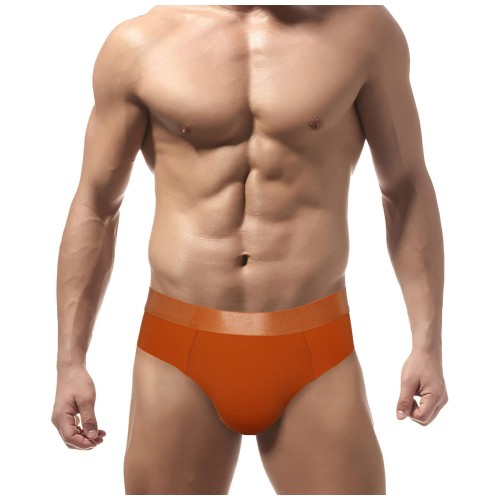
Part of Underwear Fit, Styles & Construction in Finetex Talk — buyer questions answered by the Finetex editorial team.
Customers say a brand's compression shorts roll up at the hem during running and training, ending up bunched high on the thigh. The team wants to know what causes it and which design changes keep the leg in place.
Short answer: Compression shorts ride up when the forces pulling the hem upward during movement are greater than the grip holding it on the thigh. Each stride stretches the fabric over the hip and thigh and then lets it recover; if the hem has little friction and the leg tapers so that the fabric is pulled towards the narrower part above it, the hem climbs a little each time. The usual causes are a hem without enough grip, a leg opening that is too large or too tight for the thigh, fabric that has too little power or loses it after washing, and a leg length that ends at a point where the thigh changes shape quickly. Fixes normally combine a better hem finish, corrected leg opening and reduction, and testing during real movement.
Main causes
- Hem finish: a plain turned hem has little grip on skin, especially when sweaty.
- Leg opening: too loose and it slides; too tight and it rolls because the fabric bunches above it.
- Fabric power: low-power or relaxed fabric does not hold the hem against the leg.
- Leg length: a hem at the widest part of the thigh can be pushed up by muscle movement.
- Size: customers between sizes or in the wrong size often see ride-up first.
Design fixes
- Add grip: a silicone gripper tape or a printed silicone line on the inside of the hem, or a wider bonded hem band.
- Correct the leg opening and reduction for the hem position, based on thigh girth at that height.
- Choose a fabric with enough power and recovery, measured for example with a tension and elongation method such as ASTM D4964.
- Adjust leg length so the hem sits where the thigh is relatively even.
- Use a gusset and seam layout that reduces bunching at the crotch, which can pull the legs up.
Testing
Wear-test during running, squats and lunges, not only walking. Mark the hem position on the thigh before and after a session. Wash with a recognised domestic procedure such as ISO 6330 and measure with ISO 5077, then retest, because grip and power often drop after washing.
Gripper considerations
Silicone grip can irritate some skin and is affected by washing and fabric softeners. Check durability after repeated washes and state care instructions clearly.
Limits
Body shape, sweat and activity all affect ride-up. A design can reduce it for most customers but not every body.
Facts, recommendations and uncertainty
Established: hem grip, leg opening, fabric power and leg length decide whether compression shorts ride up. Recommendation: fix the hem and leg opening together and test during real training. Uncertain: which change has the biggest effect for your customers until tested.
Sources and further reading
- ASTM D4964 — Tension and elongation of elastic fabrics
- ISO 5077:2007 — Determination of dimensional change in washing and drying
- ISO 6330:2021 — Domestic washing and drying procedures for textile testing
Standards and regulations are referenced by their published scope. Test parameters, cycles and pass levels should be agreed with your laboratory for the specific product; legal requirements should be confirmed for each destination market.
Three more perspectives
Ask the factory and trim suppliers for hem options, such as silicone gripper tape, printed silicone and bonded bands, with samples on your fabric. Compare cost per piece and minimums. Check that the gripper material is compatible with the fabric's care instructions. Confirm the factory can apply the chosen option consistently, because uneven gripper application creates fit differences between pieces in the same order.
In the pattern, measure thigh girth at the hem position for each size and set the leg opening and reduction from that, rather than from the hip measurement. Test two leg lengths if ride-up persists. Look at the crotch: a gusset that is too narrow can pull the legs inward and up during movement, so correcting it sometimes fixes ride-up without touching the hem.
In inspection, measure leg opening relaxed and stretched, check gripper width, position and adhesion, and test fabric power on each lot. Wash a few pieces from each lot and check that the gripper stays intact. Track returns mentioning ride-up by size and activity, because complaints from runners versus gym users often point to different causes and fixes. Record which hem option each lot used.
Related products
Related articles
- Compression Underwear Manufacturing: Support, Compression Levels and Claims You Can Test
- A comprehensive guide to compression clothing manufacturing and customization — Buyer's Guide
- How Does Mesh Panel Breathable Compression Fix Overheating: A Manufacturer's Walkthrough
- Sports Underwear Programs: Jockstraps, Compression Briefs, and Athletic Boxers
← More in Underwear Fit, Styles & Construction · All Talk topics · Ask us about your programme
More factory-floor notes for brand owners

What should I check on a novelty hoodie such as an eye-mask hood?
What to check on a novelty hoodie such as an eye-mask hood: hood structure and lining, visibility and…
Read more →How should I size a unisex hoodie?
How to size a unisex hoodie: choosing a base block, body measurement ranges, ease, sleeve and body length,…
Read more →What care instructions should a hoodie carry?
What care instructions a hoodie should carry: the elements of a complete washing instruction, warnings for prints and…
Read more →
How do I match colour across hoodie and jogger sets?
How to match colour across hoodie and jogger sets: same fabric lot, rib and trims, dyeing method, shade…
Read more →How many colourways can I order at hoodie MOQ?
How many colourways a hoodie order can include at MOQ: how factories set minimums per style, colour and…
Read more →Why does a dark hoodie stain other clothes?
Why dark hoodies stain other clothes: dye bleeding in washing, rubbing transfer, perspiration, unfixed dye and pigment, and…
Read more →Request a sample & pricing information
Send us your tech pack, target price or a reference sample — we reply with a quotation, a realistic lead time and a fabric recommendation within one working day.
- Free sampling plan & cost breakdown
- MOQ from 300 pcs per style
- Reply within 1 working day