
Where should jockstrap rear straps sit for comfort?
Where jockstrap rear straps should sit for comfort: anchor points, angle, width and tension, how placement affects support and chafing, and how to test it.
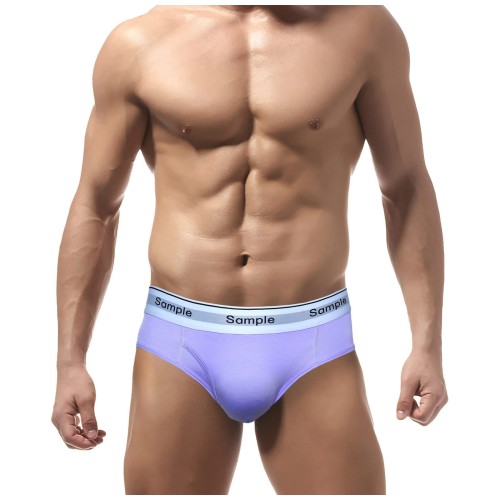
Part of Underwear Fit, Styles & Construction in Finetex Talk — buyer questions answered by the Finetex editorial team.
Customers say a brand's jockstraps have straps that dig into the buttocks or slide inward during wear. The team wants to know where the rear straps should sit and how to fix the comfort problem.
Short answer: Rear straps are comfortable when they follow the natural crease under the buttocks rather than cutting across the cheek or sliding into the middle. That depends on three things: where the straps join the waistband at the back, where they join the pouch at the front, and how wide and firm the elastic is. Straps that start too close to the centre back tend to slide inward; straps that start too far out cut across the buttocks. Most comfort problems are solved by moving the back anchor points, choosing a wider or softer elastic and setting tension so the straps hold without digging.
Anchor points
- Back: the straps join the waistband on each side of centre back. The distance between them sets the angle of the strap.
- Front: the straps join the base of the pouch. Their position decides how the pouch is pulled back and up, which affects support.
- The line between these points should follow the body crease under the buttocks.
Strap angle and length
Strap length, measured relaxed and stretched, decides how much tension pulls the pouch. Too short and the straps dig in; too long and the pouch loses support and the straps slip. Larger sizes need longer straps and usually wider anchor spacing.
Width and elastic
Wider straps spread pressure and are less likely to roll; narrow straps feel lighter but can cut in. Plush or soft-back elastic is gentler against the skin. Compare elastic tension objectively, for example with a tension and elongation method such as ASTM D4964, so that a change of supplier does not change comfort.
Common problems and fixes
- Straps slide inward: move the back anchor points further apart or reduce tension.
- Straps cut across the buttocks: move anchors closer together or lower.
- Straps roll into a cord: use a wider or firmer-edge elastic.
- Pouch pulled down: increase strap tension slightly or move the front anchor forward.
Testing
Wear-test while walking, sitting, climbing stairs and exercising. Ask testers to mark where straps sit and where they rub. Wash with a recognised domestic procedure such as ISO 6330 and re-test, because elastics can lose tension.
Grading
Grade anchor spacing and strap length using consistent waist and hip measurement points, such as those defined in ISO 8559-1.
Limits
Body shapes differ widely; strap placement that suits most testers will not suit everyone. Offering two strap styles is one way some brands cover more customers.
Facts, recommendations and uncertainty
Established: strap anchor points, angle, width and tension decide comfort and support. Recommendation: adjust anchor spacing and elastic together and wear-test each change. Uncertain: which placement suits most of your customers until tested.
Sources and further reading
- ISO 8559-1:2017 — Size designation of clothes: anthropometric definitions for body measurement
- ASTM D4964 — Tension and elongation of elastic fabrics
- ISO 6330:2021 — Domestic washing and drying procedures for textile testing
Standards and regulations are referenced by their published scope. Test parameters, cycles and pass levels should be agreed with your laboratory for the specific product; legal requirements should be confirmed for each destination market.
Three more perspectives
Ask the elastic supplier for softer or wider strap options with tension data, and request samples on the same base. Strap elastic is a small part of the cost but makes a big difference to comfort. Confirm that the factory cuts strap elastics to a fixed length per size rather than by eye, because inconsistent cutting creates inconsistent tension and complaints that look random.
In the pattern, mark the back anchor points as measurements from centre back in each size, and test two or three spacing options. Draw the strap line to follow the under-buttock crease on your fit model. Check that changes at the back do not pull the pouch out of place, since the front and back anchors work together as one system.
In inspection, measure strap lengths relaxed and the distance between back anchors for every size, with tolerances. Check bartacks or stitching at anchor points, because straps that come loose there are a common defect. Track complaints by size: straps sliding inward in small sizes and cutting in large sizes usually indicate the anchor spacing was not graded correctly. Keep approved sealed samples for reference at inspection.
Related products
Related articles
- Jockstraps vs Boxer Briefs for Athletic Brands: Choosing the Right Program
- Sports Underwear Programs: Jockstraps, Compression Briefs, and Athletic Boxers
- Custom Jockstraps for Sports Brands: Sourcing, Materials, and Programs
- Jockstrap Manufacturing in China: Building a Support Garment That Survives Sport
← More in Underwear Fit, Styles & Construction · All Talk topics · Ask us about your programme
More factory-floor notes for brand owners

What should I check on a novelty hoodie such as an eye-mask hood?
What to check on a novelty hoodie such as an eye-mask hood: hood structure and lining, visibility and…
Read more →How should I size a unisex hoodie?
How to size a unisex hoodie: choosing a base block, body measurement ranges, ease, sleeve and body length,…
Read more →What care instructions should a hoodie carry?
What care instructions a hoodie should carry: the elements of a complete washing instruction, warnings for prints and…
Read more →
How do I match colour across hoodie and jogger sets?
How to match colour across hoodie and jogger sets: same fabric lot, rib and trims, dyeing method, shade…
Read more →How many colourways can I order at hoodie MOQ?
How many colourways a hoodie order can include at MOQ: how factories set minimums per style, colour and…
Read more →Why does a dark hoodie stain other clothes?
Why dark hoodies stain other clothes: dye bleeding in washing, rubbing transfer, perspiration, unfixed dye and pigment, and…
Read more →Request a sample & pricing information
Send us your tech pack, target price or a reference sample — we reply with a quotation, a realistic lead time and a fabric recommendation within one working day.
- Free sampling plan & cost breakdown
- MOQ from 300 pcs per style
- Reply within 1 working day