
Why did new underwear bleed colour in the first wash?
Why new underwear bleeds colour in the first wash, when it is a fastness problem rather than normal excess dye, and how to specify, test and…
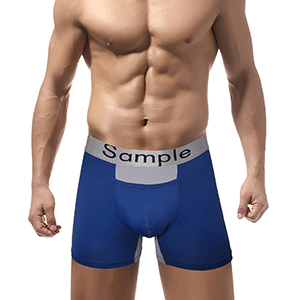
Part of Underwear Fabrics & Comfort in Finetex Talk — buyer questions answered by the Finetex editorial team.
A customer washed new red and navy boxer briefs with white T-shirts, and the T-shirts came out pink and grey. The brand wants to know if the dyeing was faulty and how to prevent it.
Short answer: Some loose dye in the first wash can happen with deep shades, but visible staining of other garments usually means the fabric still carried unfixed or poorly washed-off dye. It is largely controllable through dye selection, fixation and thorough washing-off at the dyehouse, and it can be measured with a colourfastness-to-washing test that rates staining on adjacent fabrics. Clear care instructions help, but they should not be the only safeguard.
Why bleeding happens
In reactive dyeing of cotton and other cellulose fibres, part of the dye reacts with the fibre and part remains unfixed or is hydrolysed. The unfixed dye must be removed by soaping and rinsing after dyeing; if this washing-off is shortened, residual dye comes out in the customer's machine. Deep shades such as red, navy and black carry more dye and so more potential residue. On synthetic fibres, dye migration and surface dye can cause similar staining, especially after heat.
How to test it
ISO 105-C06 assesses colourfastness to domestic and commercial laundering: a specimen is washed together with a multifibre adjacent fabric, and both colour change of the specimen and staining of the adjacent fibres are rated with grey scales. Staining is the result that predicts the "pink T-shirt" complaint. Agree the test conditions and minimum grades with your laboratory and mill for each colour group, and test dark and bright shades from production, not only lab dips.
What to specify
- Minimum staining and colour-change grades after washing for each colour group.
- Rubbing fastness for deep shades.
- That washing-off and fixation follow the dye supplier's recommendations for the shade.
- A pre-shipment test for deep shades on each new dye lot.
Care instructions
Advise washing dark and bright colours separately for the first washes and turning garments inside out. Keep the advice consistent with your wash tests and the care label.
Diagnosing a complaint
Wash a retained garment from the same lot with a white fabric under the label's conditions. If it stains, the dyeing or washing-off needs review. If it does not, check whether the customer washed at a much higher temperature than recommended.
Limits
A grade that passes in the laboratory reduces risk but cannot guarantee zero dye release in every machine, especially at high temperatures or with long soaking.
Facts, recommendations and uncertainty
Established: staining comes from unfixed or poorly removed dye and is measured by ISO 105-C06 with grey scales. Recommendation: set staining grades for deep shades and test production lots. Uncertain: behaviour in very hot or long washes outside the label's instructions.
Sources and further reading
- ISO 105-C06:2010 — Colour fastness to domestic and commercial laundering
- ISO 105-A02:1993 — Grey scale for assessing change in colour
- ISO 6330:2021 — Domestic washing and drying procedures for textile testing
Standards and regulations are referenced by their published scope. Test parameters, cycles and pass levels should be agreed with your laboratory for the specific product; legal requirements should be confirmed for each destination market.
Three more perspectives
For deep and bright colours, ask the mill which dye class it uses and how it controls washing-off, and request colourfastness reports for production lots rather than only for lab dips. A shade that passes on a small lab sample can fail on bulk if production is rushed. Make the staining grade part of the purchase order, so a failing lot can be held before shipment instead of discussed after complaints.
When designing a colour range, consider how often the colours will be washed with whites. Underwear is frequently washed in mixed loads, so very bright reds and deep navies carry more risk than mid-tones. If a strong colour is central to the brand, plan extra testing and a clear first-wash instruction on the packaging, and avoid placing white trims or white print next to deep colours unless fastness is proven.
Test staining on every new dye lot of deep shades and keep the report with the lot number. When complaints arrive, check whether they cluster in one lot or colour; a cluster points to a specific dyeing batch, while scattered complaints across lots may point to washing habits. Keep a few retained pieces from each lot specifically for these comparison washes.
Related products
Related articles
- Garment-Dyed T-Shirts: What the Process Changes in Colour, Shrinkage and Lead Time
- How do vintage wash techniques create worn in looks acid enzyme dye explained: A Manufacturer's Walkthrough
- How Can I Wash and Care for Modal Underwear to Extend Its Life: A Manufacturer's Walkthrough
- Printed Underwear for E-Commerce: Decoration That Survives the Wash
← More in Underwear Fabrics & Comfort · All Talk topics · Ask us about your programme
More factory-floor notes for brand owners

Why did my reorder price go up?
Why an apparel reorder price can go up: fabric and trim costs, smaller quantities, specification changes, labour and…
Read more →
How do I read an underwear quotation line by line?
How to read an underwear quotation line by line: fabric, elastic and trims, labour, packaging, testing, overheads and…
Read more →
How do peak seasons affect apparel factory capacity?
How peak seasons and holidays affect apparel factory capacity and lead times, why fabric and shipping are also…
Read more →
Should I split one style across two factories?
Whether to split one apparel style across two factories: the benefits for capacity and risk, the risks for…
Read more →
What are the biggest risks on a small brand’s first order?
The biggest risks on a small brand's first apparel order, from unclear specifications and sample approval to payment,…
Read more →
What changes should a factory notify before production?
Which changes a factory should notify the buyer about before production, such as fabric, dye, trims, subcontracting or…
Read more →Request a sample & pricing information
Send us your tech pack, target price or a reference sample — we reply with a quotation, a realistic lead time and a fabric recommendation within one working day.
- Free sampling plan & cost breakdown
- MOQ from 300 pcs per style
- Reply within 1 working day