
What fabric works best for underwear sold in hot, humid markets?
How to choose underwear fabric for hot, humid markets: how fibre, weight, knit and mesh zones affect comfort, drying and odour, and what to test.
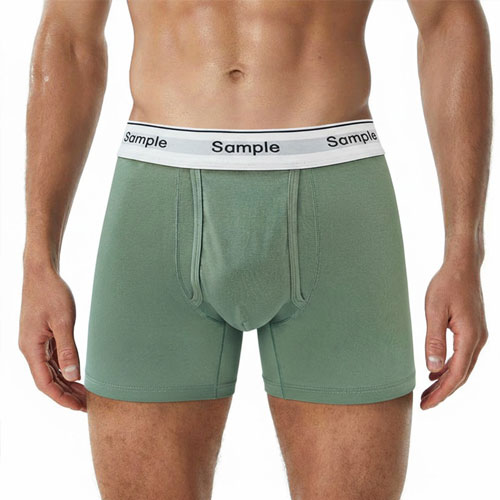
Part of Underwear Fabrics & Comfort in Finetex Talk — buyer questions answered by the Finetex editorial team.
A brand selling in Southeast Asia and the Gulf receives feedback that its cotton boxer briefs feel damp and heavy by midday. The team wants to know which fabric would make a real difference before reworking the range.
Short answer: In heat and humidity, comfort depends less on a single "breathable" fibre and more on how the whole fabric handles sweat: how much it absorbs, how fast it moves moisture away from the skin and how quickly it dries. Lighter weights, finer cellulose fibres such as modal, and synthetic blends designed for moisture management usually feel cooler than a mid-weight cotton. The right choice depends on whether the customer is mostly sitting, commuting or exercising.
How fibres behave in sweat
Cotton absorbs a lot of moisture and feels comfortable when dry, but it holds water and dries slowly, so it can feel damp and heavier after sustained sweating. Modal and other regenerated cellulose fibres also absorb moisture and feel smooth and cool, and fine modal fabrics are often light enough to dry faster than a heavier cotton. Polyester and nylon absorb very little water; well-engineered synthetic fabrics move moisture along the yarn to the outside surface and dry quickly, but a poorly chosen synthetic can feel clammy and hold odour.
What else changes comfort
- Weight: a lighter jersey holds less water and dries faster.
- Knit structure: open or mesh structures improve airflow; dense knits trap heat.
- Fit: a fit that is too tight keeps fabric pressed against wet skin.
- Elastane: needed for shape, but very high content can feel warmer.
- Zoning: mesh panels at the sides or back add ventilation without changing the main fabric.
How to test before switching
- Compare candidate fabrics with a moisture-management test such as AATCC TM195, after washing.
- Check drying time on washed garments under the same conditions.
- Run a wear trial in the target climate or season, with feedback on dampness, cling and odour.
- Weigh fabrics to confirm the finished weight in the specification.
Practical options
For everyday wear, many brands use a lightweight modal or modal blend. For active customers, a nylon or polyester blend with good moisture management, sometimes with mesh zones, often works better. Some ranges keep cotton for core styles and add a "cool" line rather than switching everything.
Limits
Words like "cooling" or "breathable" should match what tests and wear trials show. Comfort is partly personal, so give customers clear descriptions of fabric and weight to choose from.
Facts, recommendations and uncertainty
Established: absorption, moisture transport and drying speed drive comfort in heat. Recommendation: test candidates after washing and in wear trials before changing the range. Uncertain: which option your customers prefer, which depends on activity level and personal preference.
Sources and further reading
- AATCC TM195 — Liquid moisture management properties of textile fabrics
- ISO 6330:2021 — Domestic washing and drying procedures for textile testing
- ISO 3801:1977 — Mass per unit length and mass per unit area (woven fabrics)
Standards and regulations are referenced by their published scope. Test parameters, cycles and pass levels should be agreed with your laboratory for the specific product; legal requirements should be confirmed for each destination market.
Three more perspectives
Ask mills for lightweight running qualities in modal and in moisture-management synthetics, with finished weight and composition stated. Running qualities are easier to reorder for core styles. Ask about available colours too: hot-market ranges often lean towards lighter shades, and minimums for those colours can differ from your core black, navy and grey.
Test whether the real issue is the whole fabric or specific zones. Often a lighter gusset fabric, mesh side panels or a slightly relaxed leg solves most of the dampness complaint while keeping the range's look. If you launch a separate cool line, keep sizes and fit consistent with the core line so customers can switch without reorienting themselves on the size chart.
Include drying time and moisture-management results in the approval file for the new fabric, and keep washed reference samples. Hot-climate complaints often grow after washing, when finishes wear and fabrics change. If you make a cooling claim on packaging, keep the test that supports it with the lot record and re-check it when the fabric or finish changes.
Related products
← More in Underwear Fabrics & Comfort · All Talk topics · Ask us about your programme
More factory-floor notes for brand owners

What should I check on a novelty hoodie such as an eye-mask hood?
What to check on a novelty hoodie such as an eye-mask hood: hood structure and lining, visibility and…
Read more →How should I size a unisex hoodie?
How to size a unisex hoodie: choosing a base block, body measurement ranges, ease, sleeve and body length,…
Read more →What care instructions should a hoodie carry?
What care instructions a hoodie should carry: the elements of a complete washing instruction, warnings for prints and…
Read more →
How do I match colour across hoodie and jogger sets?
How to match colour across hoodie and jogger sets: same fabric lot, rib and trims, dyeing method, shade…
Read more →How many colourways can I order at hoodie MOQ?
How many colourways a hoodie order can include at MOQ: how factories set minimums per style, colour and…
Read more →Why does a dark hoodie stain other clothes?
Why dark hoodies stain other clothes: dye bleeding in washing, rubbing transfer, perspiration, unfixed dye and pigment, and…
Read more →Request a sample & pricing information
Send us your tech pack, target price or a reference sample — we reply with a quotation, a realistic lead time and a fabric recommendation within one working day.
- Free sampling plan & cost breakdown
- MOQ from 300 pcs per style
- Reply within 1 working day