
Will micro modal boxer briefs pill after repeated washing?
Why micro modal boxer briefs can pill, what drives it (yarn, knit, blend, laundering) and how to specify and test pilling before bulk production.
Part of Underwear Fabrics & Comfort in Finetex Talk — buyer questions answered by the Finetex editorial team.
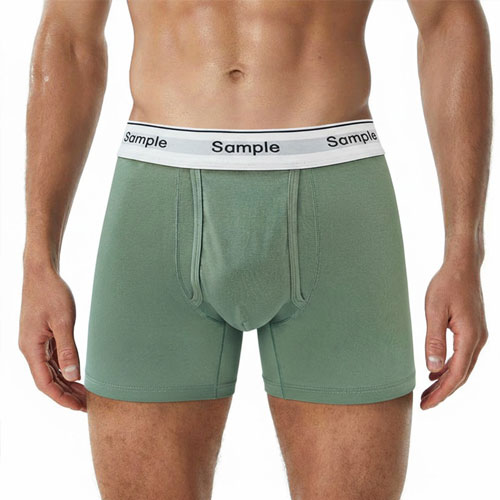
A brand is moving its best-selling boxer brief from combed cotton to a micro modal blend. Customers love the softness of the sample, but the buyer has seen reviews of other modal underwear "going fuzzy" after a few weeks and wants to know whether that is inevitable.
Short answer: Micro modal boxer briefs can pill, but pilling is not a fixed property of the fibre. It depends on yarn quality and twist, the knit construction, how much elastane is in the blend and, above all, how the garment is washed and dried. A well-specified fabric tested before bulk can keep pilling within a level the brand has agreed in writing.
What actually causes pilling
Pills form when short or loose fibres work out of the yarn surface during wear and laundering, tangle together and stay anchored to the fabric. Fine fibres such as micro modal produce a very soft hand precisely because each fibre is thin, so the surface can feel the effects of friction sooner than a coarser cotton jersey. Lenzing describes its Modal with Micro technology as a finer fibre intended for light, soft, next-to-skin fabrics; that softness is a design trade-off rather than a defect.
In underwear the highest friction points are the inner thigh, the seat and the areas rubbed by trousers. If pilling appears first in those zones and not elsewhere, it is wear-driven; if it appears all over after a few washes, look at the yarn, the knit or the laundering.
When the risk is higher
Risk rises with loosely twisted or short-staple yarns, open or very light constructions, high tumble-drying heat, washing with rough items such as jeans or towels, and heavy-duty detergents with strong mechanical action. Blends behave differently: a modal/elastane jersey and a modal/cotton jersey will not pill in the same way, so a result for one is not proof for the other.
How to specify and check it
- Ask the mill or factory for the exact composition, yarn count and fabric weight of the micro modal quality being offered, and keep a swatch as the approved standard.
- Agree a pilling method and a minimum grade in the purchase specification. ISO 12945-2 (modified Martindale) is commonly used for knitted fabrics; the number of rub cycles and the grade must be agreed with your lab rather than assumed.
- Test after laundering as well as on fresh fabric. Washing to an agreed ISO 6330 procedure first gives a more realistic picture of the garment in use.
- Check wear zones on wear-test samples, not only flat swatches.
Risk limits and what not to promise
No fabric can be called "pill-free" without a test basis, and a lab grade predicts ranking rather than an exact number of washes. If the brand wants a care-related claim, align the care label with the tested washing procedure and keep the report on file. Where the customer base is likely to tumble dry on high heat, a cooler drying instruction on the label and product page is a real mitigation, not a marketing line.
Facts, recommendations and uncertainty
Established: pilling is a surface-fibre effect that standard methods can grade. Recommendation: specify method, cycles and grade. Uncertain: how a lab grade translates into a number of home washes for your customers, which depends on their washing and drying habits.
Sources and further reading
- Lenzing — TENCEL™ Modal with Micro technology
- ISO 12945-2:2020 — Pilling, fuzzing or matting, modified Martindale method
- ISO 6330:2021 — Domestic washing and drying procedures for textile testing
- U.S. FTC — Care Labeling Rule (16 CFR Part 423)
Standards and regulations are referenced by their published scope. Test parameters, cycles and pass levels should be agreed with your laboratory for the specific product; legal requirements should be confirmed for each destination market.
Three more perspectives
Ask for the pilling result on the exact quality you will buy, not on a "similar" modal from the mill's library. A change of yarn supplier or count between sample and bulk is the most common reason a good sample turns into a pilling complaint, so lock the quality code and require notice of any change.
If the softness target allows it, consider whether a slightly heavier jersey or a modal/cotton blend gives a better balance for a high-friction style such as a long-leg boxer brief. The main answer applies to everyday boxer briefs; for performance or sports styles a different fibre may simply be the better fit.
Inspect retained samples after the same wash routine your customers are told to use. Record which zone pills first and photograph it against the approved standard; that evidence makes the conversation with the factory specific instead of subjective.
Related products
Related articles
- Micro Modal Underwear: Building a Softness Story That Converts
- Modal Underwear Manufacturing: Micro Modal, Modal Air and Choosing a Softness Tier
- Which fabric is best for you, micromodal or Tencel: A Manufacturer's Comparison
- How Can I Wash and Care for Modal Underwear to Extend Its Life: A Manufacturer's Walkthrough
- Modal T-Shirt Manufacturing: Specifying a Softness Fabric So It Keeps Its Shape
- Which Fabric Is Best for Men's Underwear: Cotton, Modal, Bamboo or Nylon: A Manufacturer's Comparison
- Why is modal popular for summer pajamas and underwear: The Manufacturing Reality Behind It
- How is sustainable modal fabric made from beechwood: A Manufacturer's Walkthrough
- Undershirt Fabrics for E-Commerce: Cotton, Bamboo, Modal, and TENCEL Compared
← More in Underwear Fabrics & Comfort · All Talk topics · Ask us about your programme
More factory-floor notes for brand owners

Why did my reorder price go up?
Why an apparel reorder price can go up: fabric and trim costs, smaller quantities, specification changes, labour and…
Read more →
How do I read an underwear quotation line by line?
How to read an underwear quotation line by line: fabric, elastic and trims, labour, packaging, testing, overheads and…
Read more →
How do peak seasons affect apparel factory capacity?
How peak seasons and holidays affect apparel factory capacity and lead times, why fabric and shipping are also…
Read more →
Should I split one style across two factories?
Whether to split one apparel style across two factories: the benefits for capacity and risk, the risks for…
Read more →
What are the biggest risks on a small brand’s first order?
The biggest risks on a small brand's first apparel order, from unclear specifications and sample approval to payment,…
Read more →
What changes should a factory notify before production?
Which changes a factory should notify the buyer about before production, such as fabric, dye, trims, subcontracting or…
Read more →Request a sample & pricing information
Send us your tech pack, target price or a reference sample — we reply with a quotation, a realistic lead time and a fabric recommendation within one working day.
- Free sampling plan & cost breakdown
- MOQ from 300 pcs per style
- Reply within 1 working day