
Which measurement points and tolerances matter for underwear?
Which measurement points and tolerances matter for men's underwear: the core points on a spec sheet, how to measure them consistently, setting tolerances and using them…
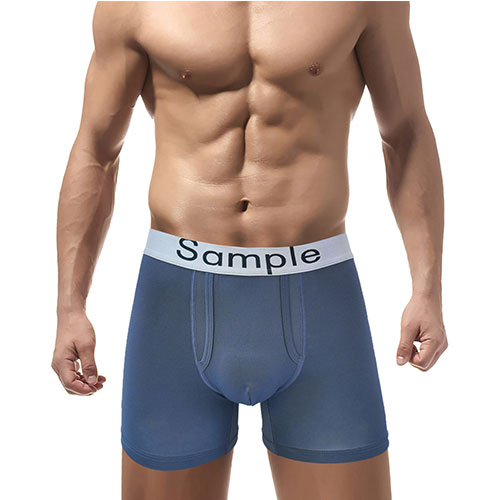
Part of Underwear Fit, Styles & Construction in Finetex Talk — buyer questions answered by the Finetex editorial team.
A brand is writing its first measurement specification for boxer briefs and briefs. The team wants to know which measurement points matter, how to measure them consistently and how to set tolerances that the factory can meet.
Short answer: The points that matter most are the ones that control fit and comfort: waist relaxed and stretched, front and back rise, leg opening relaxed and stretched, leg length or inseam for boxer briefs, waistband width, and pouch and gusset dimensions. Each point needs a clear written method, with the garment laid flat and relaxed, and a defined start and end point, ideally with a diagram. Tolerances should be tight enough to protect fit but realistic for knit garments, which vary more than wovens. There is no single industry tolerance table; brands agree tolerances with the factory based on sample results and the importance of each point.
Core measurement points
- Waist relaxed: measured flat along the top edge.
- Waist stretched: the waist stretched to a defined extension, showing elastic capacity.
- Front rise and back rise: from crotch seam to waistband top.
- Leg opening relaxed and stretched.
- Leg length or inseam (boxer briefs and trunks).
- Waistband width.
- Pouch depth and width, gusset width and length.
- Hip or seat width at a defined point.
Measuring consistently
- Lay the garment flat on a smooth table without stretching.
- Use the same tape and method each time.
- Define stretched measurements precisely: how far, and by hand or by fixture.
- Measure after conditioning if possible, since knits relax after packing.
- Use diagrams with clear start and end points.
Setting tolerances
- Key fit points, such as waist and leg opening, usually have tighter tolerances.
- Less critical points can have looser tolerances.
- Tolerances should reflect knit behaviour; very tight tolerances on stretch fabrics may be impossible to meet consistently.
- Agree tolerances with the factory before production.
Using them in inspection
Measure a sample from each size in pre-production, in-line and final inspections. Sampling plans based on ISO 2859-1 (AQL) are often used to decide how many pieces to check. Record results and investigate trends, not just failures.
After washing
Measure dimensional change after washing with a method such as ISO 5077, and set limits for it separately from the garment tolerances.
Body reference
Link garment measurements to body measurement definitions such as ISO 8559-1 for size charts, so customers' measurements and garment specs are aligned.
Limits
Tolerances are a balance between fit consistency and production cost. Too tight leads to rejects; too loose leads to complaints.
Facts, recommendations and uncertainty
Established: waist, rise, leg openings, leg length and waistband width are core underwear measurements. Recommendation: define methods clearly and agree tolerances with the factory. Uncertain: the right tolerance values for your styles until you see production variation.
Sources and further reading
- ISO 8559-1:2017 — Size designation of clothes: anthropometric definitions for body measurement
- ISO 2859-1:2026 — Sampling procedures for inspection by attributes (AQL)
- ISO 5077:2007 — Determination of dimensional change in washing and drying
Standards and regulations are referenced by their published scope. Test parameters, cycles and pass levels should be agreed with your laboratory for the specific product; legal requirements should be confirmed for each destination market.
Three more perspectives
Ask the factory for its standard measurement methods and tolerances, then compare them with yours. Differences in method cause disputes even when garments are the same. Agree a single document before sampling. Request measurement reports with each sample and production lot, so you can see how close the factory works to the specification over time. Keep that agreed document version-controlled for every style.
Choose measurement points that relate to fit problems customers mention, such as leg opening for digging or rise for waistband position. A short, well-measured list is more useful than a long one nobody checks. Update tolerances after the first production run, when you can see real variation, instead of guessing them before production. Review the list whenever return reasons change noticeably.
Train inspectors to measure exactly as the specification says, including stretched measurements. Check measuring tools are consistent. Use the sealed sample as a reference when a measurement is borderline. Track measurement results by lot and size, because repeated borderline results in one size can signal a pattern or cutting problem before it becomes a failed inspection. Share trend charts with the factory regularly.
Related products
Related articles
← More in Underwear Fit, Styles & Construction · All Talk topics · Ask us about your programme
More factory-floor notes for brand owners

What should I check on a novelty hoodie such as an eye-mask hood?
What to check on a novelty hoodie such as an eye-mask hood: hood structure and lining, visibility and…
Read more →How should I size a unisex hoodie?
How to size a unisex hoodie: choosing a base block, body measurement ranges, ease, sleeve and body length,…
Read more →What care instructions should a hoodie carry?
What care instructions a hoodie should carry: the elements of a complete washing instruction, warnings for prints and…
Read more →
How do I match colour across hoodie and jogger sets?
How to match colour across hoodie and jogger sets: same fabric lot, rib and trims, dyeing method, shade…
Read more →How many colourways can I order at hoodie MOQ?
How many colourways a hoodie order can include at MOQ: how factories set minimums per style, colour and…
Read more →Why does a dark hoodie stain other clothes?
Why dark hoodies stain other clothes: dye bleeding in washing, rubbing transfer, perspiration, unfixed dye and pigment, and…
Read more →Request a sample & pricing information
Send us your tech pack, target price or a reference sample — we reply with a quotation, a realistic lead time and a fabric recommendation within one working day.
- Free sampling plan & cost breakdown
- MOQ from 300 pcs per style
- Reply within 1 working day